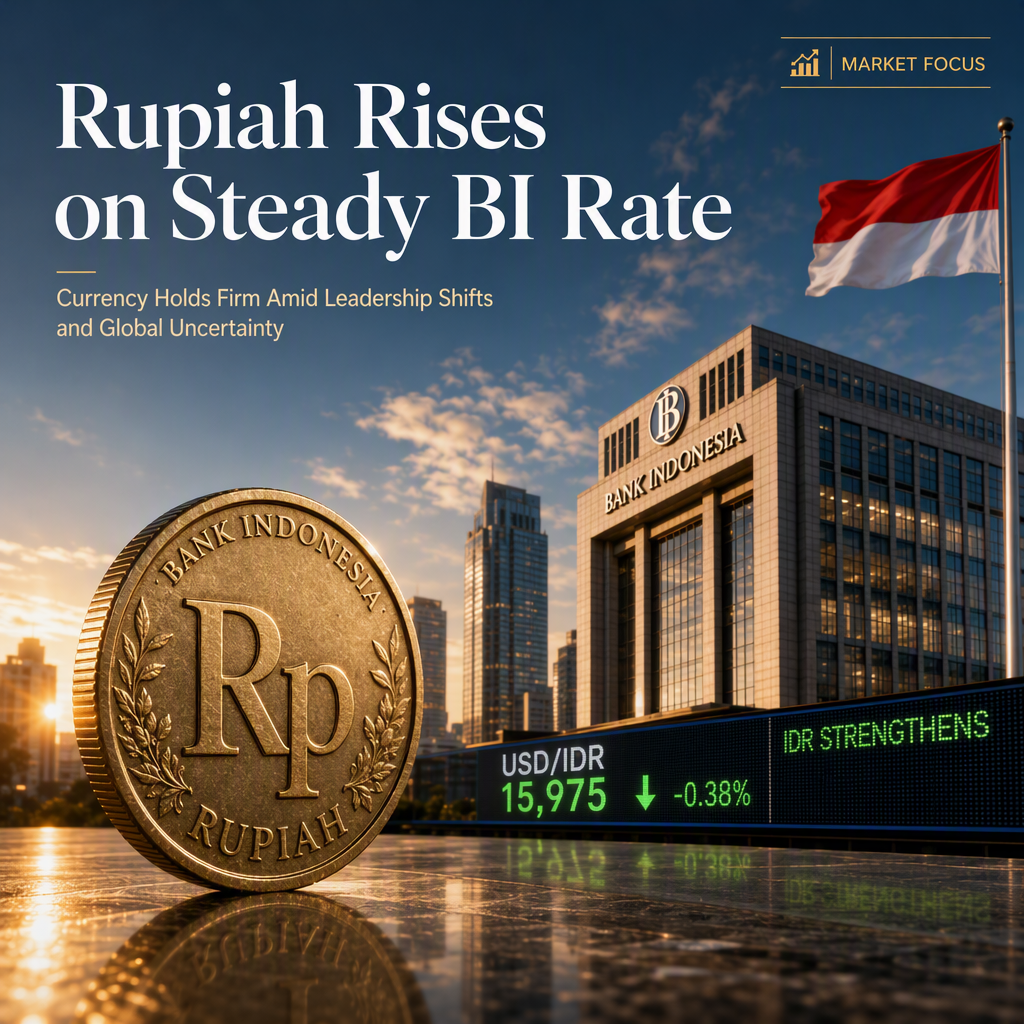
Bank Indonesia (BI) kept its benchmark interest rate unchanged at 5.75% for the third consecutive meeting in August, aligning with market forecasts and consensus expectations [1]. This decision comes in the wake of the sudden resignation of former governor Perry Warjiyo last month and the appointment of Senior Deputy Governor Destry Damayanti as interim chief, which has raised concerns regarding the central bank's independence from political influence [1]. Following the rate announcement, the Indonesian Rupiah (IDR) remained firm, with the USD/IDR pair trading around 17,870 during European hours on Wednesday, marking losses for the US Dollar after modest gains the previous day [1].
The strength of the Rupiah was further supported by a weakening US Dollar, as market participants adjusted their expectations for a US interest rate hike next month. US Retail Sales dropped in July for the first time in nine months, adding to worries after unexpected job losses and subdued CPI inflation figures [1]. The Federal Reserve left its interest rates unchanged at its last meeting, though three officials dissented in favor of a hike. Traders are now closely watching the upcoming Fed minutes for insights into internal divisions, with the CME FedWatch tool showing only a 32.8% probability of a rate hike at the September meeting, down from 51.2% a month earlier [1].
US Treasury yields reversed course after a recent rally stalled, as weaker US housing and industrial data prompted the Atlanta Fed to lower its Q3 GDPNow estimate. This allowed yields to retreat from their recent highs and contributed to a softer tone for the Dollar, according to analysts at Deutsche Bank [1].
The BI rate decision, announced on August 19, 2026, was consistent with previous releases, maintaining the rate at 5.75% [1]. The move reflects BI's ongoing monetary policy stance amid leadership changes and global economic uncertainties [1].
CONCLUSION
Bank Indonesia's decision to keep its benchmark rate steady at 5.75% has bolstered the Indonesian Rupiah, with the USD/IDR pair losing ground amid a weaker US Dollar. Market sentiment remains cautious, influenced by leadership changes at BI and shifting expectations for US monetary policy. The outcome signals stability for Indonesia's currency in the near term, though concerns about central bank independence persist.