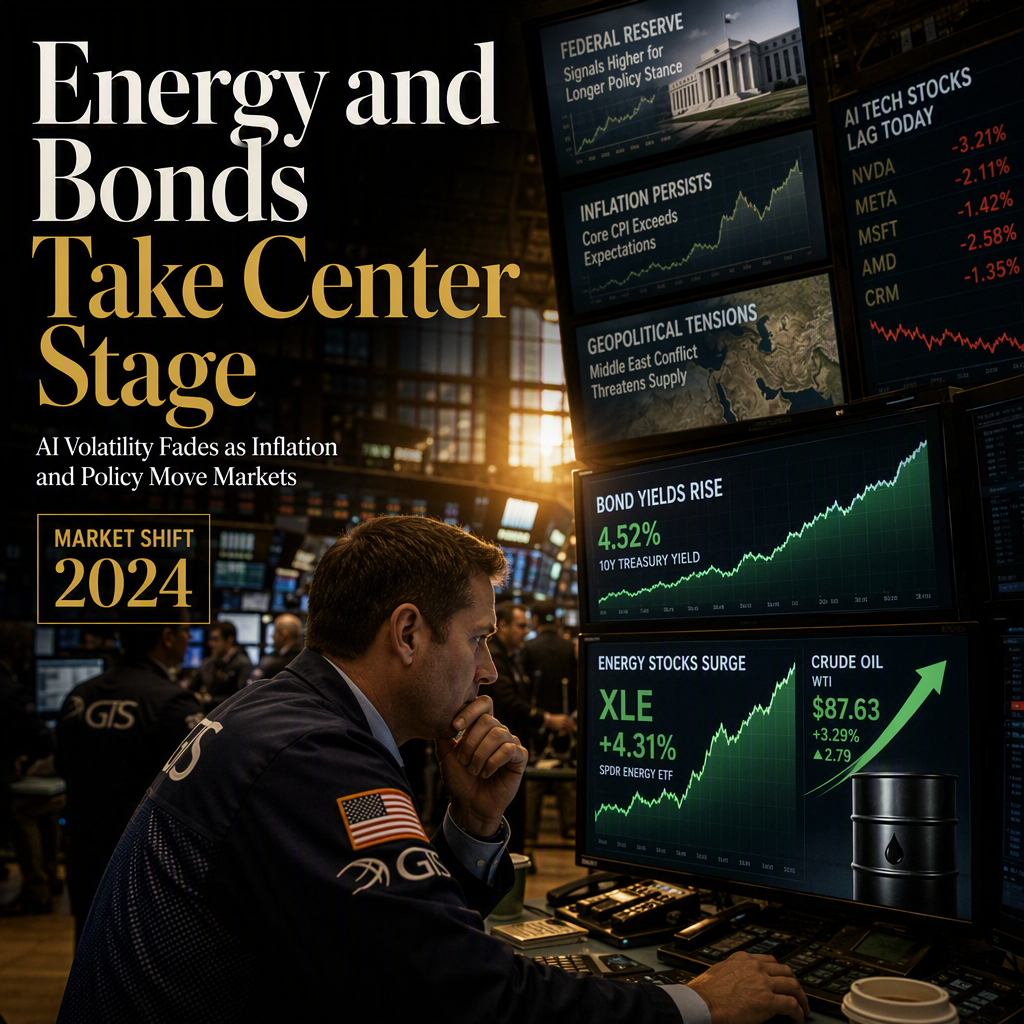
A significant shift is underway in the U.S. stock market as the dominance of artificial intelligence (AI)-driven volatility gives way to macroeconomic and policy concerns, according to recent market data and expert commentary [1]. The spread between the volatility of major tech stocks and the broader market, measured by the difference between the Cboe's VIXEQ and VIX indexes, reached record highs over the summer due to massive daily moves in tech giants associated with the AI boom, while the rest of the market remained relatively stagnant. However, this trend is now reversing, with traders selling broad index-wide equity exposure and the VIX jumping to its highest level since April relative to VIXEQ [1].
This reversal coincides with an accelerating sell-off in U.S. Treasury bonds, as the 10-year yield approaches a three-year high of 5 percent, signaling a shift in investor focus toward macroeconomic factors and policy decisions as primary market drivers [1]. Scott Nations, president at Nations Indexes, noted that "resurgent inflation—fueled by higher oil prices—the Fed's response at its September 16th meeting, and other political and geopolitical concerns dominate thinking" [1]. Crude oil futures have surged above $100 for the first time since May, and energy stocks in the S&P 500, represented by the State Street Energy Select Sector SPDR ETF (XLE), have reached new highs, making energy the best-performing sector of the year with a 43 percent gain [1].
Volatility in 18 of 19 stocks tracked by Nations Indexes' VolDex metric collapsed on Thursday, with Exxon Mobil as the sole exception [1]. The end of earnings season has also contributed to reduced volatility in AI-related stocks, as the absence of major binary events naturally lowers implied volatility. For example, implied volatility in Micron dropped from a high of 112 before its late June earnings to as low as 58 last week, even as the share price declined. Similarly, SpaceX saw its volatility fall from 122 to 56 despite a 30 percent share price gain since its August report [1]. Kevin Davitt, head of index options content at Nasdaq, stated that "the cross market/single stock to index volatility relationship has normalized," highlighting the earlier divergence in the semiconductor sector [1].
CONCLUSION
The U.S. stock market is experiencing a transition from AI-driven volatility to a focus on macroeconomic factors, with energy stocks and bond yields now leading market movements. This shift suggests that investors are increasingly attentive to inflation, Federal Reserve policy, and geopolitical developments as key market catalysts.