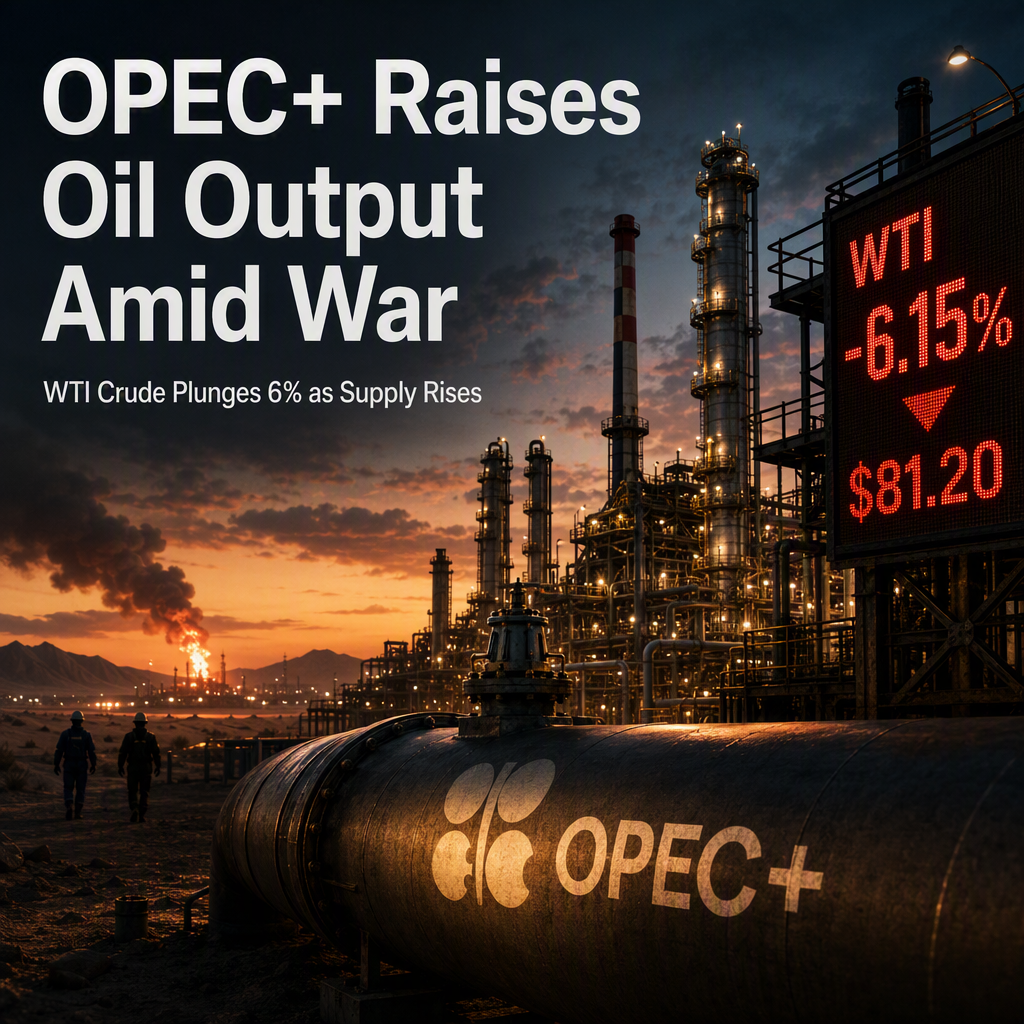
OPEC+ has agreed to raise oil production by 188,000 barrels per day starting in September, as confirmed in a joint statement released on Sunday. This decision comes against the backdrop of ongoing disruptions caused by the Mideast war, which has constrained supply from the region. Despite these challenges, OPEC+ has continued to increase quotas each month throughout the Iran war, signaling a commitment to stabilizing global oil supply [1].
The production adjustment involves seven participating countries, though specific names and individual quota changes were not disclosed in the article. The move is intended to address supply issues stemming from regional conflict and maintain market balance [1].
Market reaction to the announcement was swift, with West Texas Intermediate (WTI) crude oil prices falling 6.15% on the day to $81.20. This significant drop reflects investor concerns about increased supply potentially outweighing demand, especially given the ongoing geopolitical instability [1].
No forward-looking statements or analyst opinions were provided in the article. The immediate market response suggests that traders anticipate further volatility as OPEC+ adjusts its production strategy in response to evolving regional dynamics [1].
CONCLUSION
OPEC+'s decision to boost oil production by 188,000 barrels per day in September has led to a sharp decline in WTI prices, highlighting market sensitivity to supply changes amid geopolitical tensions. The move underscores OPEC+'s ongoing efforts to manage global oil supply during the Iran war. Investors should monitor further developments as the group continues to adjust quotas in response to regional disruptions.