
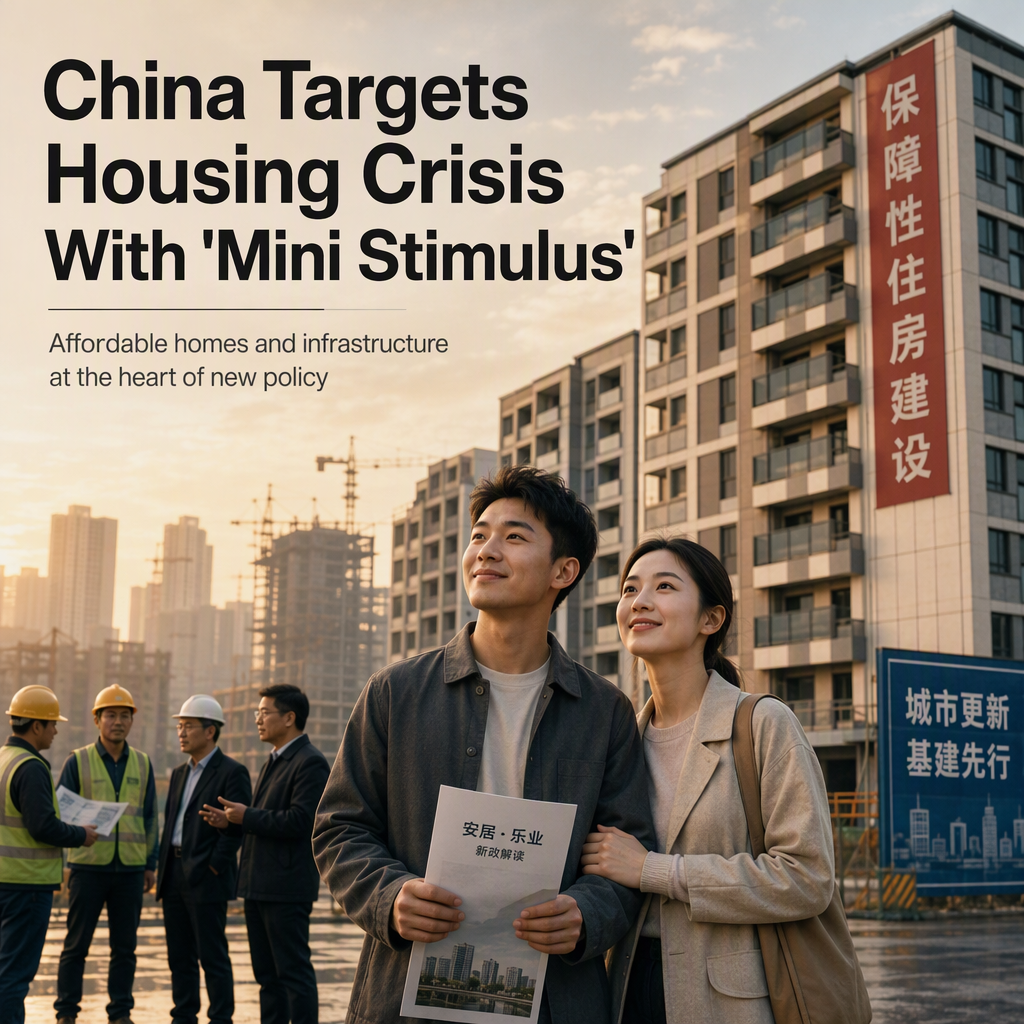
On September 29, 2026, China announced a new 'mini stimulus' package aimed at revitalizing its struggling property market and supporting infrastructure projects [1]. The measures include subsidizing mortgages for first-time homebuyers purchasing properties up to 120 square meters and costing 1.5 million yuan ($223,000-$224,000) or less [1]. This targeted approach is intended to address the persistent downturn in the real estate sector, which has significantly impacted China's economic growth [1].
The stimulus package also extends support to infrastructure projects, although specific details regarding the scale and sectors involved were not disclosed at the time of the announcement [1]. Policymakers have faced increasing pressure to act as falling home prices and sluggish sales continue to erode household wealth and consumer confidence [1]. Analysts cited in the article note that the focus on affordable homes is designed to assist first-time buyers and younger families, while minimizing the risk of inflating a new property bubble [1].
The policy is expected to provide relief to cash-strapped developers and local governments, both of which have been grappling with declining revenues and rising debt [1]. Despite these efforts, some market watchers remain cautious about the potential impact of the stimulus, suggesting that broader structural reforms may be necessary to address deeper issues within the sector [1].
No trading advice, chart descriptions, or technical indicators were provided in the article [1].
CONCLUSION
China's latest 'mini stimulus' targets affordable housing and infrastructure in an effort to stabilize the property market and support economic growth. While the measures are expected to offer relief to developers and local governments, analysts remain cautious and emphasize the need for broader reforms. The market reaction is likely to be moderate, reflecting both optimism and lingering concerns about structural challenges.