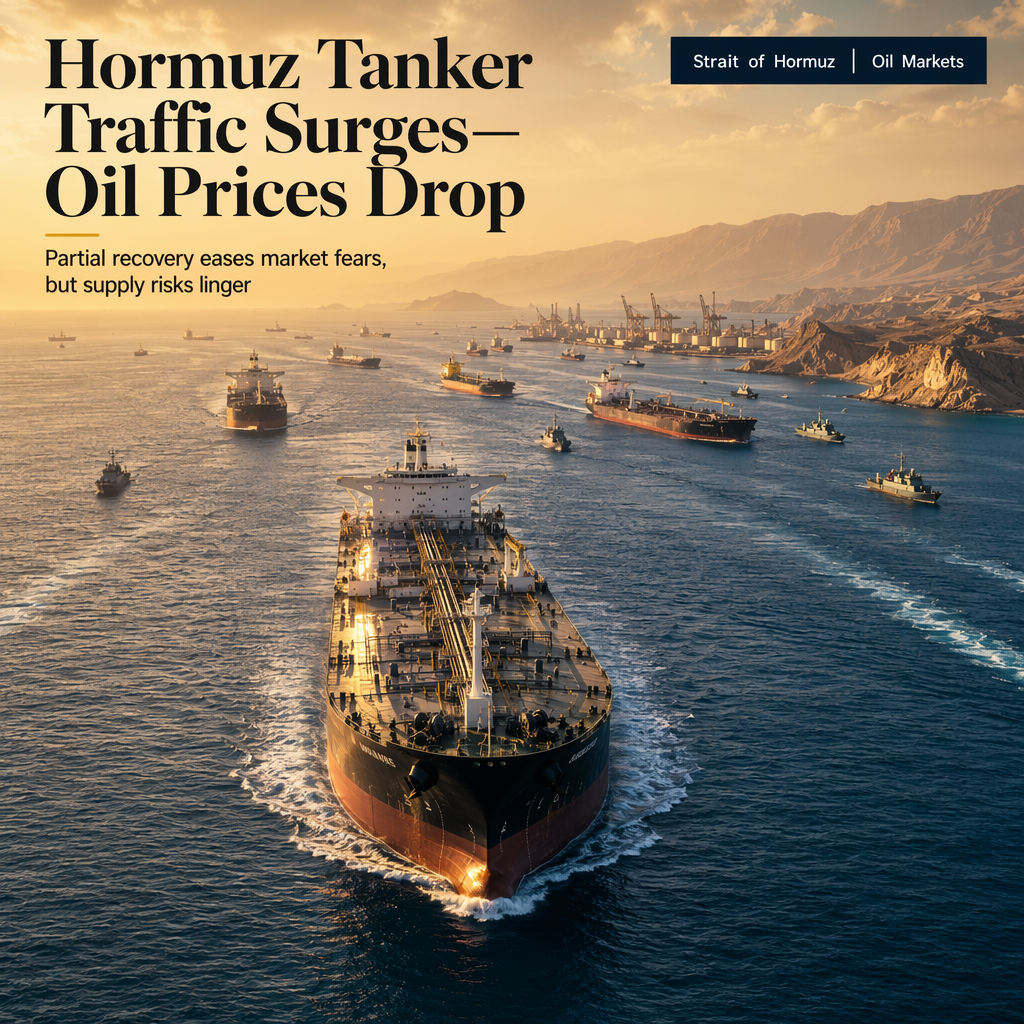
The number of tankers passing through the Strait of Hormuz has climbed to 98 in the week following the signing of a memorandum of understanding between the U.S. and Iran, marking the highest traffic since the onset of the conflict and representing approximately 25% of prewar volumes [1]. This increase in tanker movements has coincided with crude oil prices falling back to prewar levels, as the market anticipates a normalization of shipping activity and easing geopolitical tensions [1].
Despite the uptick in traffic, the article notes that more tankers are leaving the region than arriving, which could indicate ongoing supply constraints. This imbalance suggests that while exports are resuming, inbound traffic necessary for resupply and further exports remains limited, potentially sustaining supply risks [1]. Analysts caution that if this trend persists, it could continue to support oil prices despite the recent decline [1].
A Tokyo-based energy analyst highlighted that the increase in outbound traffic, coupled with lagging inbound flows, points to ongoing logistical challenges in the region [1]. Market sentiment is described as cautiously optimistic, with traders closely monitoring the balance of ship movements for further signs of normalization or continued disruption [1].
No explicit trading advice or technical analysis was provided, but the article underscores the importance of tracking tanker traffic patterns for insights into future supply and price dynamics [1].
CONCLUSION
Tanker traffic through the Strait of Hormuz has partially recovered, leading to a drop in crude oil prices to prewar levels. However, ongoing logistical imbalances and supply constraints mean that the market remains watchful, with analysts emphasizing the need to monitor future shipping flows for further normalization or renewed risks.