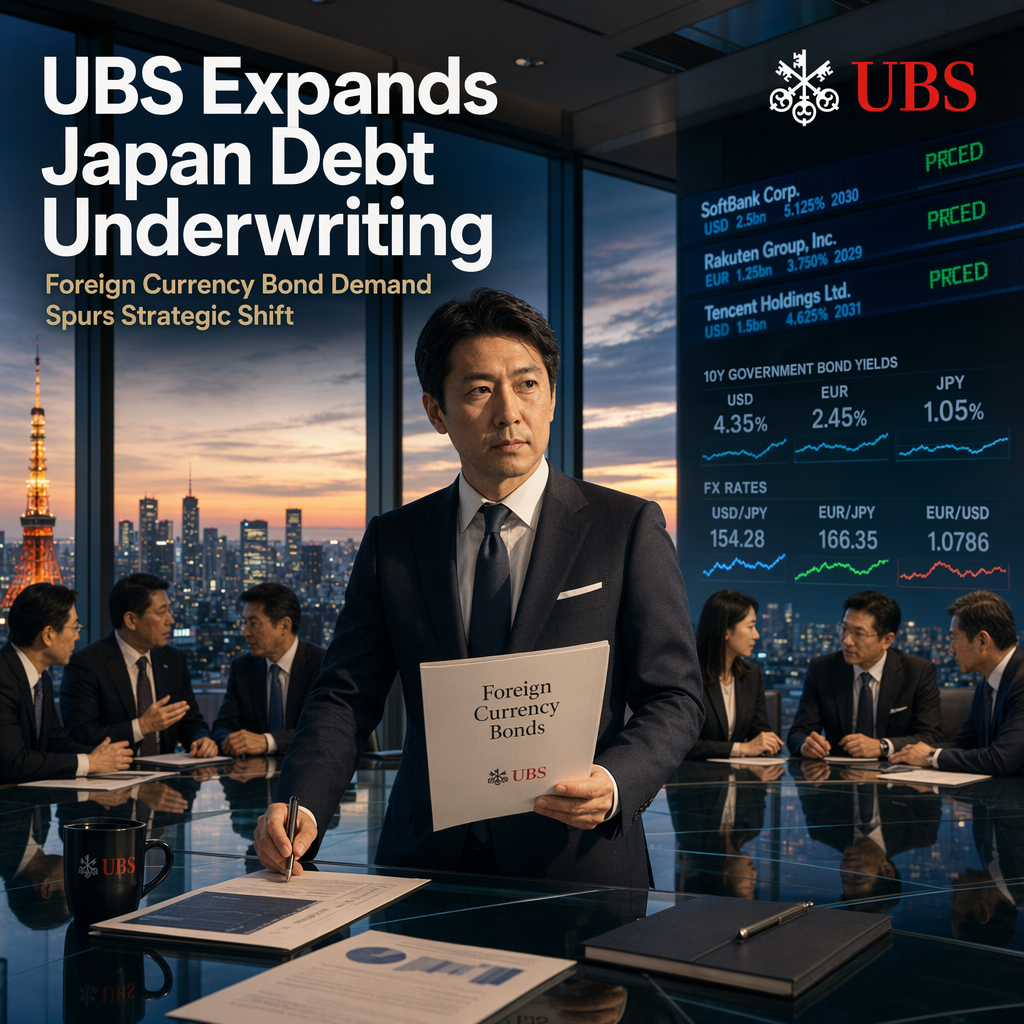
UBS has announced a strategic expansion of its bond-underwriting business in Japan, appointing Takehiro Sakuramoto as the first dedicated head of the bond section in four years, signaling a renewed focus on this segment [1]. The move is driven by an anticipated increase in Japanese companies seeking to issue debt denominated in foreign currencies, as they look to capitalize on low borrowing costs and diversify their funding sources [1]. UBS expects this trend to persist, particularly as volatility in the yen prompts issuers to consider alternatives such as the U.S. dollar and euro [1].
A UBS spokesperson stated, "We see robust demand from Japanese corporates for foreign currency bonds. Our expanded team is positioned to capture these opportunities and support clients in navigating global markets" [1]. The competitive landscape in Japan's debt capital markets is intensifying, with recent high-profile bond deals by companies like SoftBank and Rakuten attracting significant attention from retail investors seeking higher yields [1]. Additionally, Tencent's recent $4.6 billion dual dollar and yuan bond issuance underscores the growing importance of multi-currency offerings in Asia [1].
UBS's strategy involves providing broader underwriting and advisory services to Japanese issuers, especially those considering cross-border transactions [1]. The company is closely monitoring market dynamics, including changing interest rate environments and shifts in investor appetite for Asian currency debt as dollar exposure is reduced [1]. Technical indicators show that Japanese bond yields are trending higher, with some analysts projecting yields could approach 3% amid fiscal concerns, which may further accelerate Japanese companies' exploration of foreign currency funding options [1].
CONCLUSION
UBS's renewed focus on debt underwriting in Japan reflects growing demand for foreign currency bonds among Japanese corporates. As market conditions evolve and competition intensifies, UBS aims to leverage its expanded team and advisory capabilities to capture new opportunities in cross-border debt issuance.