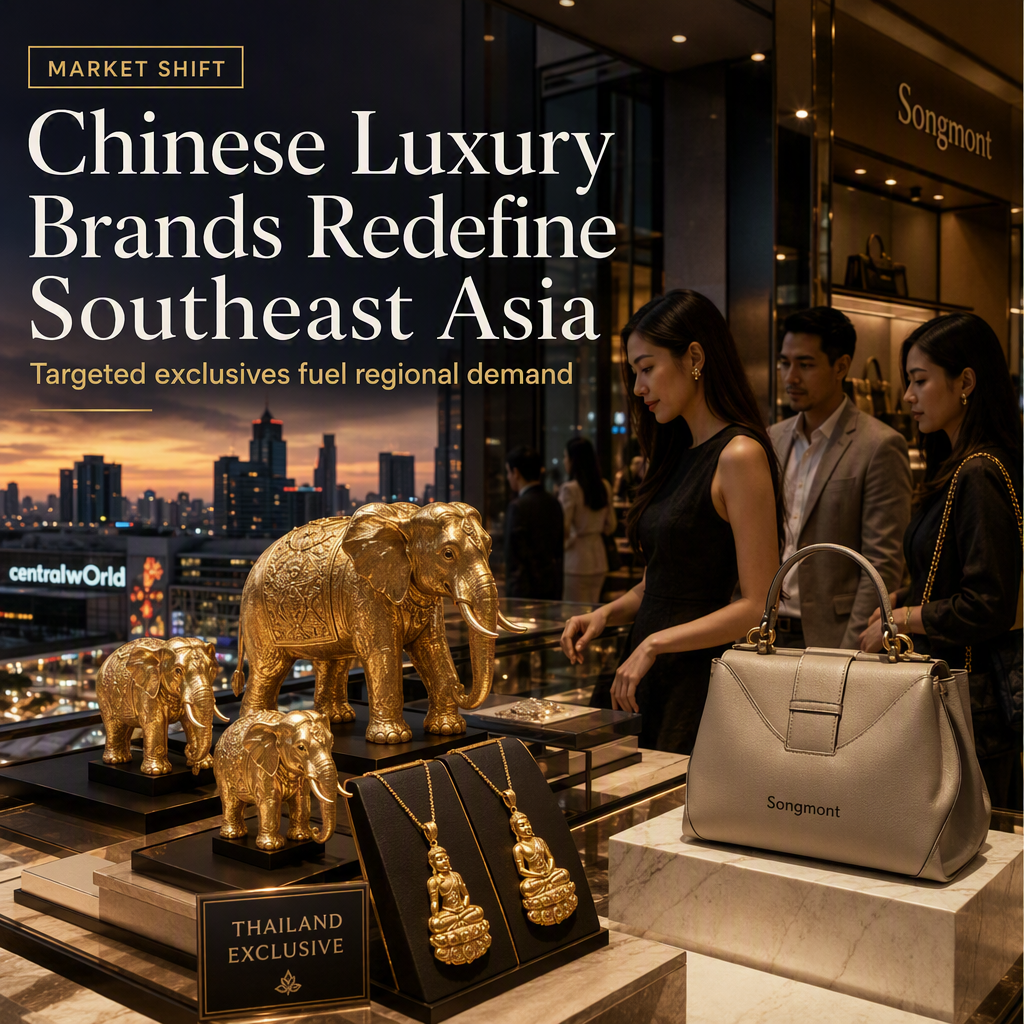
Chinese brands are increasingly targeting Southeast Asia's affluent consumers with luxury products, marking a strategic shift in China's export focus from mass-market goods to high-end offerings such as jewelry, watches, and wine [1]. At Chow Tai Fook's Bangkok store, the company is showcasing Thailand-exclusive items like gold elephant figurines and Buddha pendants, reflecting a tailored approach to local tastes and an effort to build brand loyalty among Southeast Asian shoppers [1].
Songmont, a Chinese handbag brand, has launched its first overseas pop-up store in Bangkok's centralwOrld shopping center, aiming to attract both local and international buyers, including tourists from countries like India [1]. The presence of Shanghai-based designer Pane's products further illustrates the growing appeal of Chinese luxury fashion outside China [1].
Market analysis in the article suggests that Southeast Asia is serving as a valuable testbed for Chinese luxury brands, who are experimenting with product exclusivity and localized marketing strategies to better understand consumer preferences in the region [1]. The competitive landscape is intensifying as Chinese brands position themselves alongside established global luxury players [1].
While the article does not provide specific trading advice or technical indicators, it notes that price levels and market sentiment remain positive, driven by Southeast Asia's rising middle class and wealthy elite seeking new luxury experiences [1].
CONCLUSION
Chinese luxury brands are leveraging Southeast Asia as a strategic market to test and expand their high-end offerings, using localized products and marketing to attract affluent consumers. The positive market sentiment and growing demand in the region suggest potential for further growth in Chinese luxury exports.