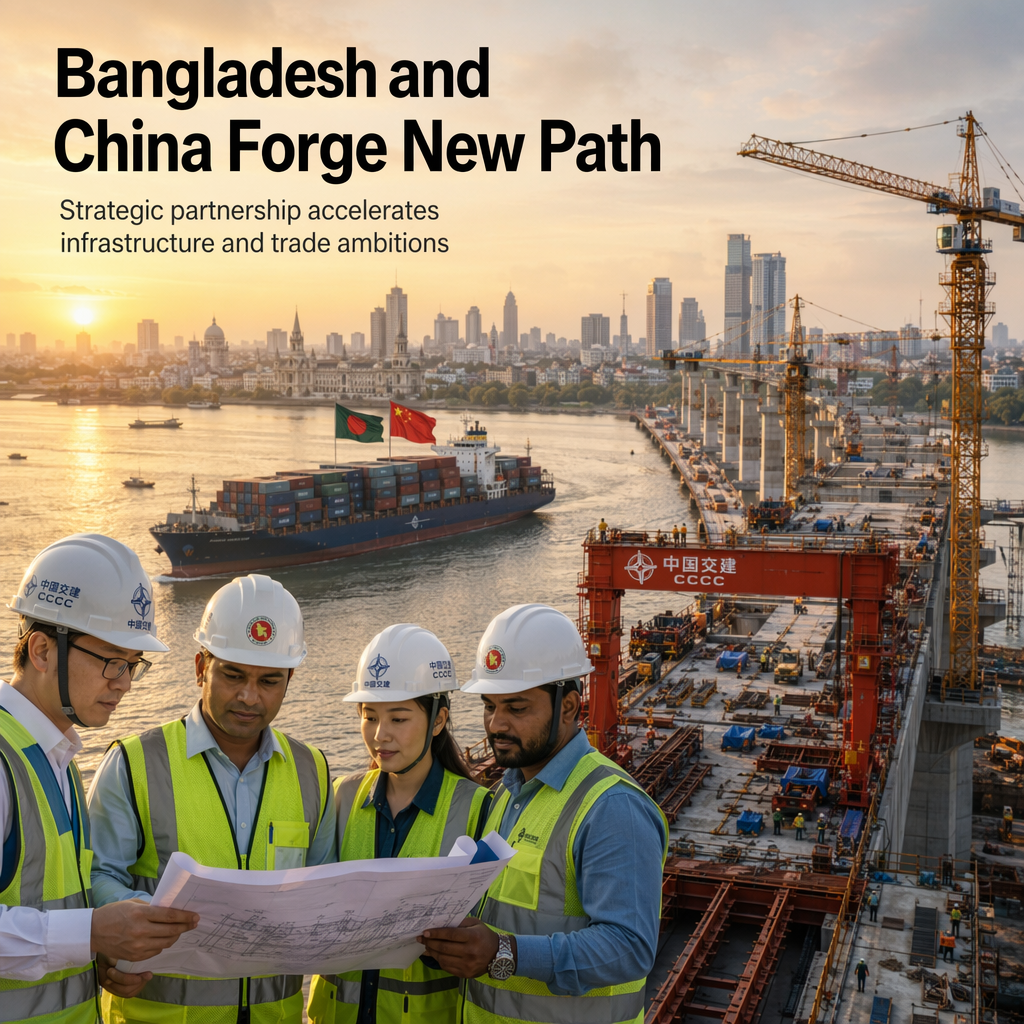
Bangladesh and China have agreed to expand cooperation in trade, infrastructure, and investment following Bangladeshi Prime Minister Tarique Rahman's visit to Beijing, where he met with Chinese President Xi Jinping on Friday [1]. The discussions centered on Bangladesh's efforts to diversify its international partnerships, reduce reliance on India, and secure financial assistance for major infrastructure projects, including road, rail, and energy initiatives [1].
The talks focused on attracting Chinese investment and technical expertise to accelerate both ongoing and planned infrastructure upgrades in Bangladesh [1]. While specific financial figures and commitments were not immediately disclosed, officials stated that the discussions included concessional loans and direct investments [1]. Both countries expressed interest in reducing trade barriers and enhancing market access, with expectations of several joint ventures and financing agreements to be announced in support of Bangladesh's infrastructure agenda [1].
Rahman's visit to China precedes a planned trip to New Delhi, signaling a shift in Bangladesh's diplomatic priorities and raising regional interest in the evolving relationship [1]. The strengthened partnership with China is anticipated to boost bilateral trade and support Bangladesh's economic growth strategy, while also potentially impacting regional dynamics such as water-sharing with India and competition for foreign direct investment in South Asia [1].
Analysts cited in the article view Bangladesh's outreach to China as part of a broader trend among South Asian nations seeking alternative sources of capital and technical expertise to drive domestic growth [1]. The development of this partnership will be closely monitored for its effects on regional trade flows, infrastructure development, and the balance of power in South Asia [1].
CONCLUSION
Bangladesh's deepening engagement with China marks a strategic shift in its diplomatic and economic approach, with a focus on securing investment for large-scale infrastructure projects. While concrete financial details remain undisclosed, the partnership is expected to have significant implications for regional trade and development. Market participants will be watching for forthcoming joint ventures and financing agreements that could shape South Asia's economic landscape.