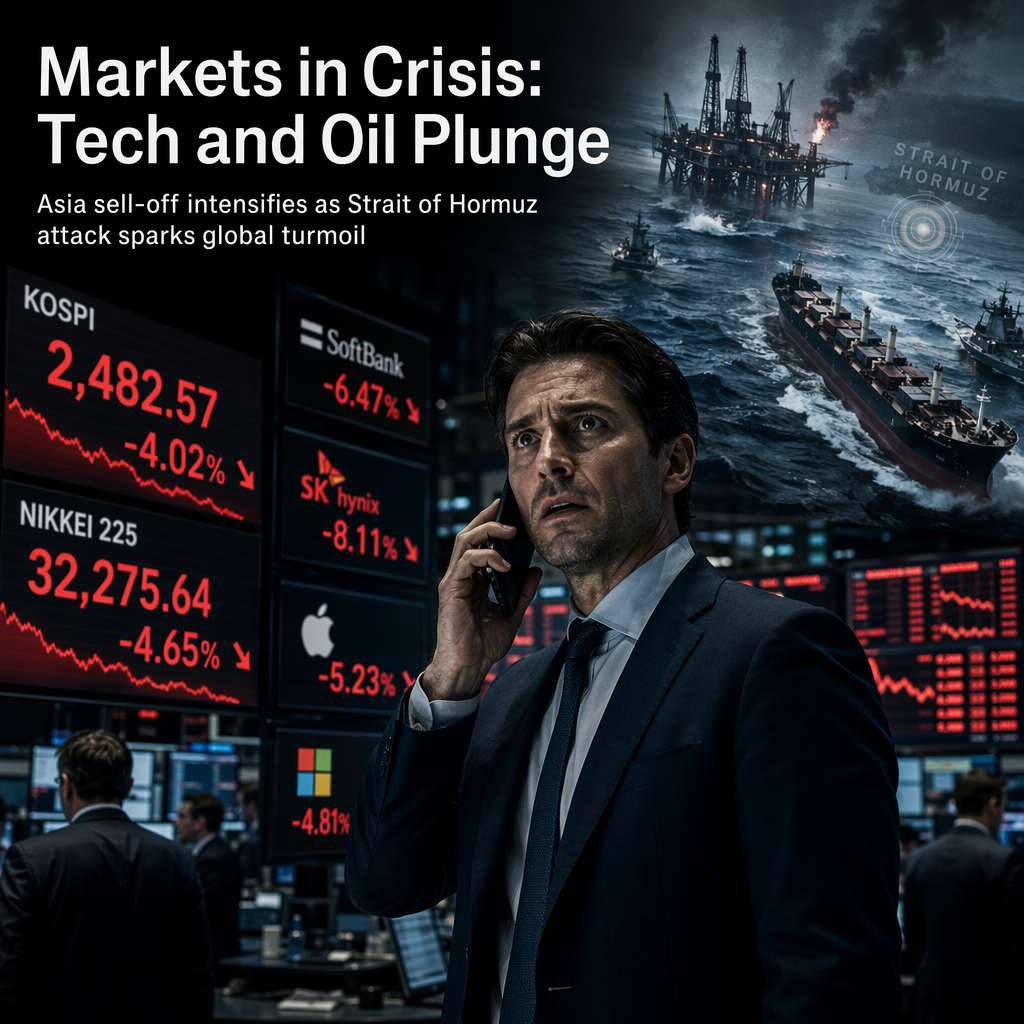
Global markets experienced significant turbulence as two major sell-offs dominated Friday's session, closing out a volatile week across asset classes. The technology sector was at the center of the storm, with Wall Street's ongoing sell-off triggering even sharper declines in Asia. South Korea's Kospi index plummeted over 8%, prompting a 20-minute trading halt, while Japan's Nikkei also suffered steep losses. Major tech stocks such as Softbank and SK Hynix faced intense selling pressure due to concerns over the rising costs associated with artificial intelligence infrastructure [1].
The sell-off followed another difficult day for U.S. tech giants. Apple shares dropped 6% after the company announced price increases for its iPads and MacBooks, attributing the hikes to growing demand for memory and storage. Microsoft fell more than 3% after raising prices on its Xbox gaming consoles, citing surging component costs. Alphabet and Meta Platforms also closed lower, and early U.S. futures indicated further declines at the open [1].
In commodities, crude oil prices continued to fall on both major benchmarks, even after a fresh attack in the Strait of Hormuz. A U.S. official told MS NOW that Iran was responsible for an attack on a Singapore-flagged cargo ship near Oman, marking the first such incident since a peace framework was reached between the U.S. and Iran the previous week. The United Kingdom Maritime Trade Operations reported no casualties or environmental damage from the attack [1].
OPEC is also facing instability, with Iraq reportedly seeking a higher production quota and threatening to leave the cartel if its demands are not met, following the United Arab Emirates' exit in May [1]. In the U.K., political uncertainty is mounting as Prime Minister-in-waiting Andy Burnham faces pressure to clarify his economic policies, with Ed Miliband and Wes Streeting considered leading candidates for Chancellor of the Exchequer. The Gilt market and borrowing costs have become focal points as traders anticipate a potentially more interventionist fiscal approach [1].
CONCLUSION
Markets are under significant pressure from both a deepening global tech sell-off and falling oil prices, despite geopolitical tensions in the Strait of Hormuz. Political and OPEC-related uncertainties are adding to the volatility, with investors bracing for further market swings. The outlook remains cautious as traders await clarity on both economic policy and commodity supply dynamics.