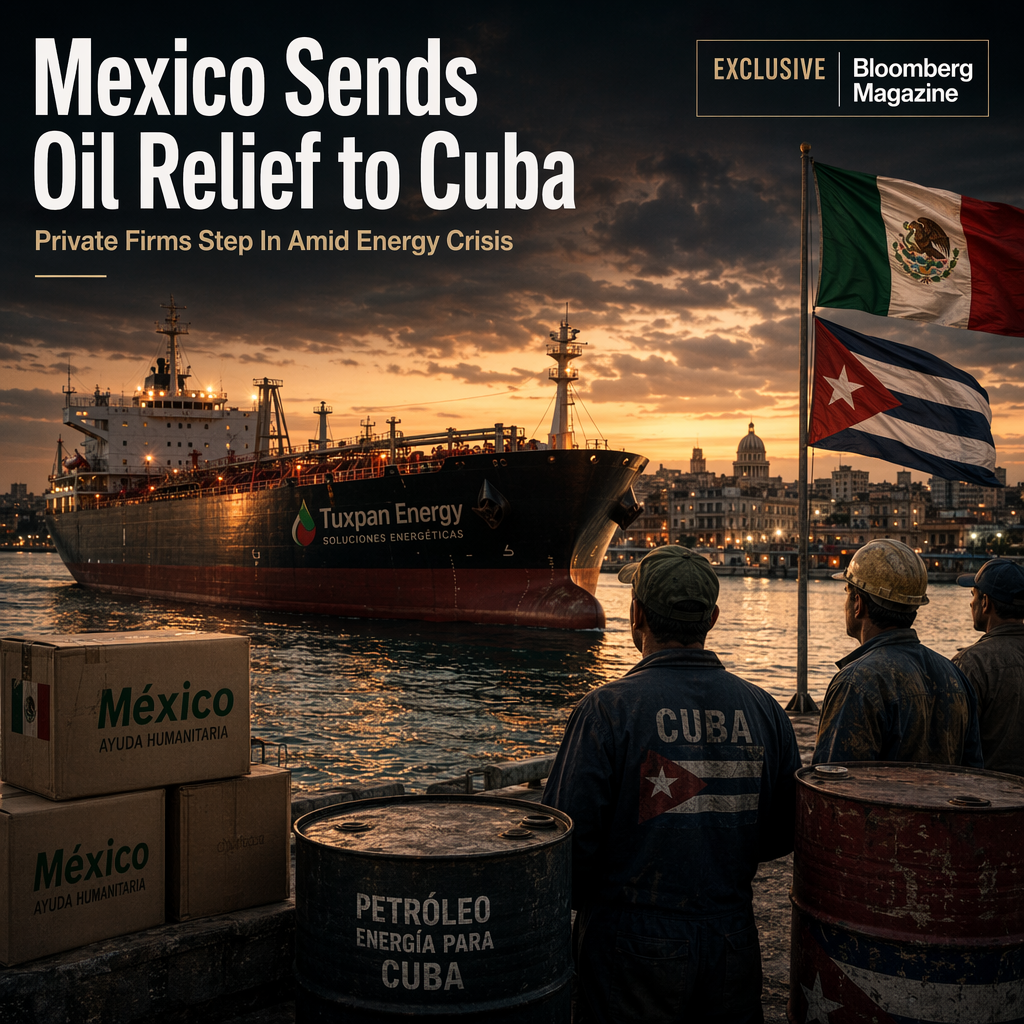
Mexican President Claudia Sheinbaum announced that Mexico intends to restart oil shipments to Cuba in the near future, aiming to alleviate the island's deepening energy crisis caused by a severe lack of petroleum [1]. Sheinbaum specified that, unlike previous shipments conducted through state-owned companies, the new plan involves sending oil via commercial and privately owned firms, leveraging recent free-market reforms approved by the Cuban government and the presence of Mexican business owners on the island [1].
The urgency of the move is underscored by the fact that, since the U.S. attacked Venezuela in early January and halted critical oil shipments, Cuba has received only one oil shipment—a Russian tanker carrying 730,000 barrels, which was consumed within a month [1]. The resulting fuel shortage has exacerbated Cuba's energy crisis, with the island producing only 40% of its petroleum needs. This has led to severe power outages, reduced work hours, water shortages, suspended surgeries, and spoiled food [1].
Sheinbaum did not provide a specific timeline for when commercial oil transport might resume but expressed hope that it would happen soon. She also confirmed that Mexico would continue to send humanitarian aid to Cuba [1].
CONCLUSION
Mexico's plan to resume oil shipments to Cuba through private firms could provide critical relief to the island's worsening energy crisis. While no timeline was given, the initiative signals a shift in approach and could have significant humanitarian and economic implications for Cuba.