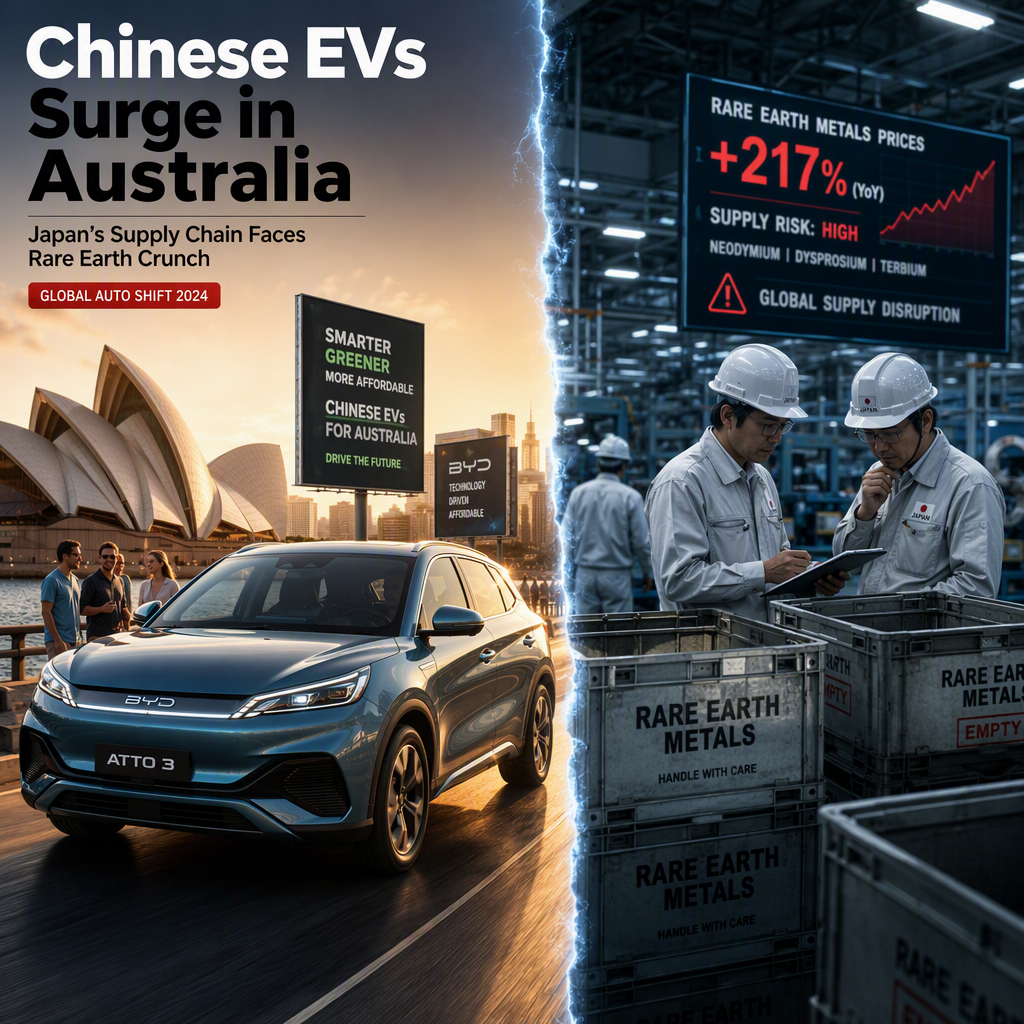
Australia's electric vehicle (EV) market is undergoing a significant transformation as Chinese manufacturers, led by BYD, rapidly increase their market share at the expense of long-dominant Japanese automakers such as Toyota and Mazda. This shift is driven by a combination of rising global gas prices—exacerbated by the ongoing U.S.-Iran war—and supportive Australian government policies that incentivize EV adoption. Chinese brands, particularly BYD with its Atto 3 model, have capitalized on these conditions by offering competitively priced EVs, resulting in a marked increase in registrations of Chinese vehicles compared to Japanese makes. Industry analysts highlight that this aggressive pricing and export strategy is putting substantial pressure on Japanese incumbents, who are struggling to match the affordability and speed of rollout of their Chinese rivals. Japanese automakers are responding by introducing more hybrid and electric models, but their higher prices and slower market entry have left them vulnerable to further market share erosion [1].
Simultaneously, Japanese manufacturers are grappling with a severe supply chain challenge as China tightens its grip on rare earth exports, crucial for both EVs and semiconductor manufacturing equipment. Imports of dysprosium and yttrium—key elements for permanent magnets in EV motors—have dropped by approximately 80% compared to two years ago. Japanese materials companies are depleting their inventories to maintain deliveries, but this is seen as a temporary solution. The supply squeeze has led to rare-earth prices rising by over 20% for Japanese firms, and there is growing concern about the sustainability of production if alternative sources are not secured. Efforts to diversify supply chains include outreach to countries like Ecuador and Mercosur members, but Japan remains heavily dependent on China for these critical materials. Market analysts warn that continued shortages could disrupt Japan's high-tech manufacturing sector and erode its competitiveness, prompting calls for stronger government action to secure stable supplies [2].
The convergence of these trends—Chinese EV makers gaining ground in Australia and Japanese manufacturers facing rare earth shortages—underscores the shifting dynamics in the global automotive and technology supply chains. As Chinese companies leverage both cost advantages and control over key materials, Japanese firms are under increasing pressure to adapt both their product strategies and supply chain management.
CONCLUSION
Chinese EV manufacturers are rapidly expanding their presence in Australia, challenging the dominance of Japanese automakers through aggressive pricing and timely market entry. At the same time, Japan's manufacturing sector faces mounting risks from rare earth supply constraints due to Chinese export restrictions, threatening production stability and competitiveness. These developments signal a pivotal moment for both Japanese automakers and materials suppliers as they navigate intensifying global competition and supply chain vulnerabilities.