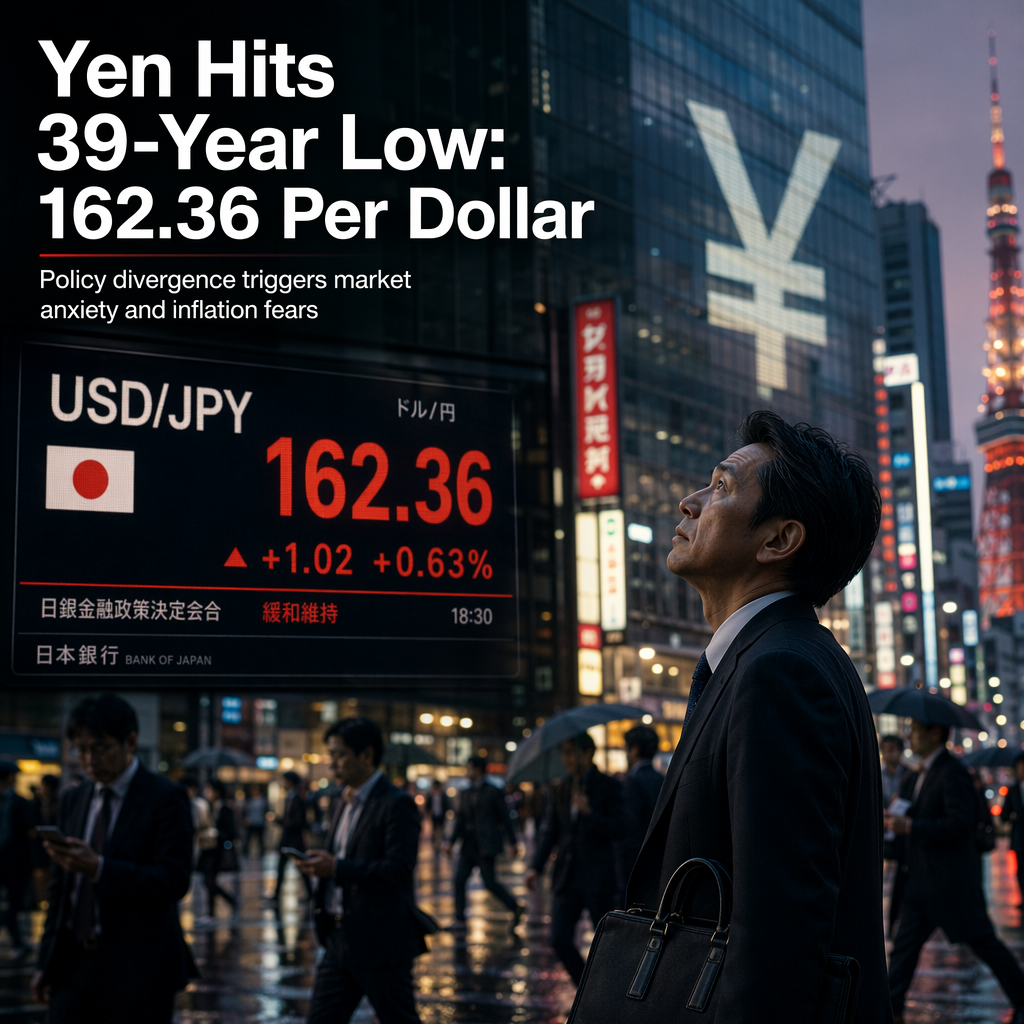
The Japanese yen fell to its lowest level in 39 years, reaching 162.36 per U.S. dollar during Tokyo trading on Tuesday, June 30, 2026, marking a significant milestone in the currency's ongoing depreciation trend [1]. This sharp decline extends a months-long slide, with the yen slipping into the 162-per-dollar range for the first time since 1987 [1].
The primary driver behind the yen's weakness is the widening interest rate differential between Japan and the United States. While the Bank of Japan continues to maintain its ultra-loose monetary policy, the U.S. Federal Reserve has kept interest rates elevated, increasing the appeal of the dollar relative to the yen [1].
Analysts have expressed concerns about the rapid pace of the yen's decline, warning of potential imported inflation and negative impacts on Japanese households and businesses [1]. The breach of the 162.36 level is seen as a significant psychological barrier, with technical analysts noting a lack of major support levels below this point, which could lead to further depreciation if the trend persists [1].
Market sentiment remains cautious, with traders closely monitoring for any signs of intervention or policy shifts from Japanese authorities, including the Ministry of Finance and the Bank of Japan. The possibility of increased volatility and official statements aimed at stemming the yen's weakness is a key focus for market participants [1].
CONCLUSION
The yen's drop to a 39-year low underscores mounting market anxiety over Japan's monetary policy stance and the risk of further depreciation. Market participants are on high alert for potential intervention or policy changes as the currency's weakness threatens to exacerbate inflation and economic pressures in Japan.