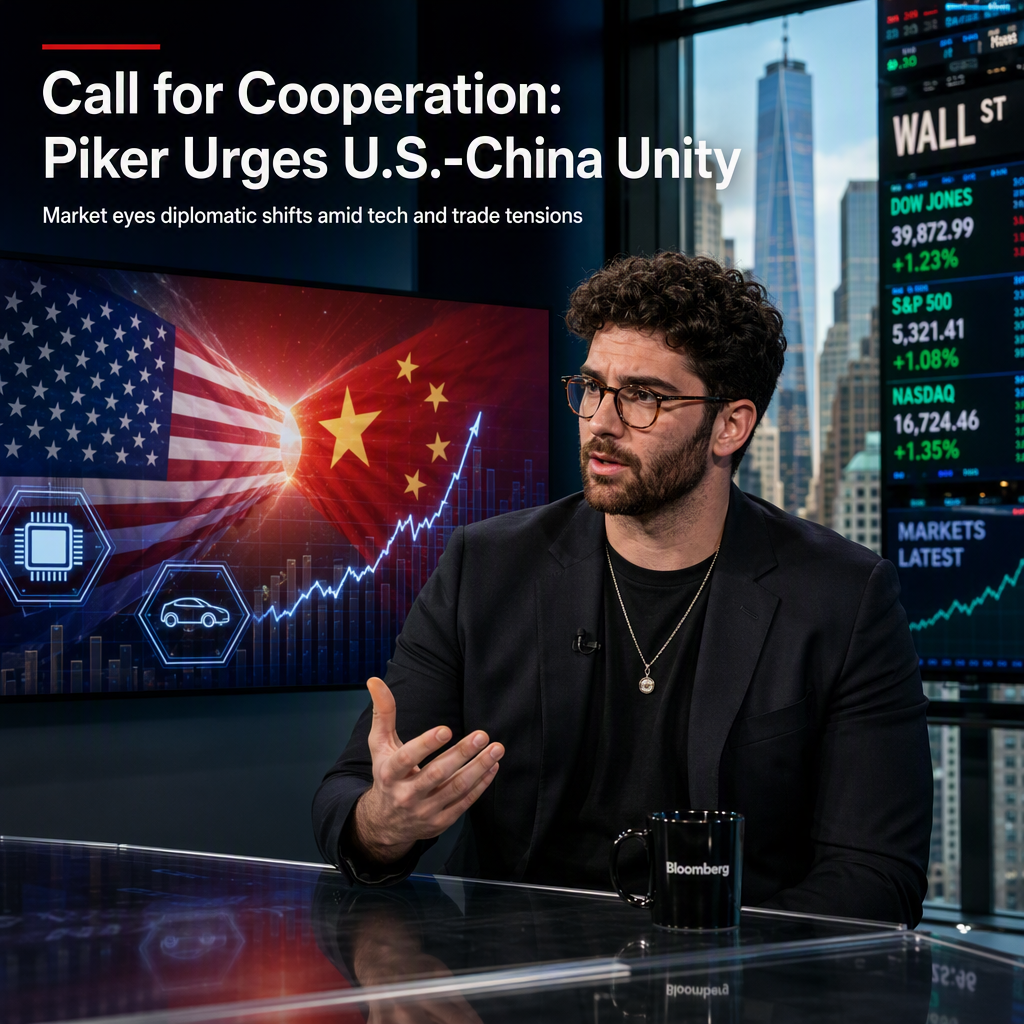
Political commentator Hasan Piker, known for his far-left views and advocacy for socialist policies, has called for the United States to pursue cooperation with China rather than engaging in threats, especially in the context of ongoing U.S.-China tensions over tariffs, supply chains, and the role of Chinese carmakers in the American market [1]. In an interview, Piker stated, 'Trading threats does little to resolve the underlying issues. Cooperation is essential for global stability and economic growth,' emphasizing the need for a shift in U.S. policy towards China [1].
The interview comes at a time when the U.S. and Japan are reportedly discussing the construction of a chip factory as part of a tariff deal, a development that could have significant implications for the semiconductor market [1]. Financial analysts are closely monitoring these discussions, as any changes in diplomatic tone between the U.S. and China could impact price levels and support/resistance zones for sectors sensitive to bilateral relations, such as semiconductor manufacturers and automotive companies [1].
Piker's comments reflect a sentiment among some market participants that increased cooperation could reduce volatility and support long-term growth. While he does not provide specific trading advice, his perspective aligns with a broader market desire for stability and constructive dialogue between the two economic powers [1]. Technical analysis cited in the article suggests that improved diplomatic relations could provide support for stocks in industries affected by U.S.-China policy [1].
Piker concludes that markets respond positively to certainty and constructive dialogue, advocating for policies that foster collaboration rather than escalation [1].
CONCLUSION
Hasan Piker's call for U.S.-China cooperation highlights a potential shift in market sentiment towards stability and long-term growth. Market participants are advised to monitor diplomatic developments, as improved relations could benefit sectors sensitive to U.S.-China policy, particularly semiconductors and automotive companies.