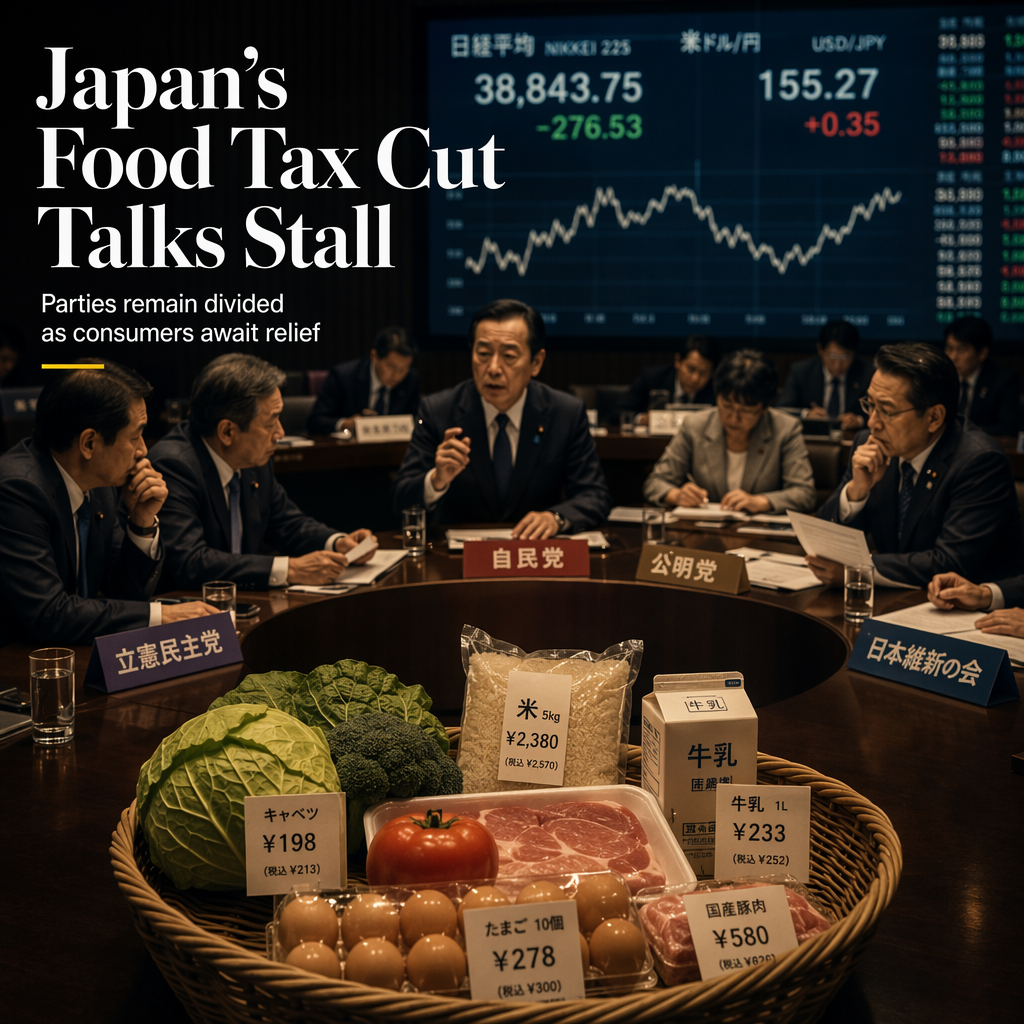
On July 22, a working-level meeting involving various Japanese political parties was held to discuss a proposed reduction of the consumption tax on food items to 1%. However, the parties were unable to reach an agreement on this tax cut proposal [1]. The government had presented the 1% tax rate reduction plan, but opinions among the parties remained divided, particularly regarding the specific rate and the scope of items to be covered [1].
After the meeting, a participant stated that while there is shared recognition of the need for a tax reduction to address rising prices, there are differences among the parties concerning the details, such as the exact tax rate and which food items should be included [1]. Discussions also continued on how to secure financial resources for the tax cut, the practical implementation of the system, and the duration of the measure, with further negotiations expected in the future [1].
Market participants have expressed heightened expectations that a reduction in the food consumption tax could alleviate household financial burdens and support consumer spending. However, there are also concerns about the potential impact on government finances and uncertainty regarding the timing of implementation [1].
CONCLUSION
Japanese political parties have yet to reach a consensus on reducing the food consumption tax to 1%, with key issues such as scope, funding, and implementation still under debate. While markets are hopeful for consumer relief and economic support, uncertainty remains due to fiscal concerns and the lack of a clear timeline.