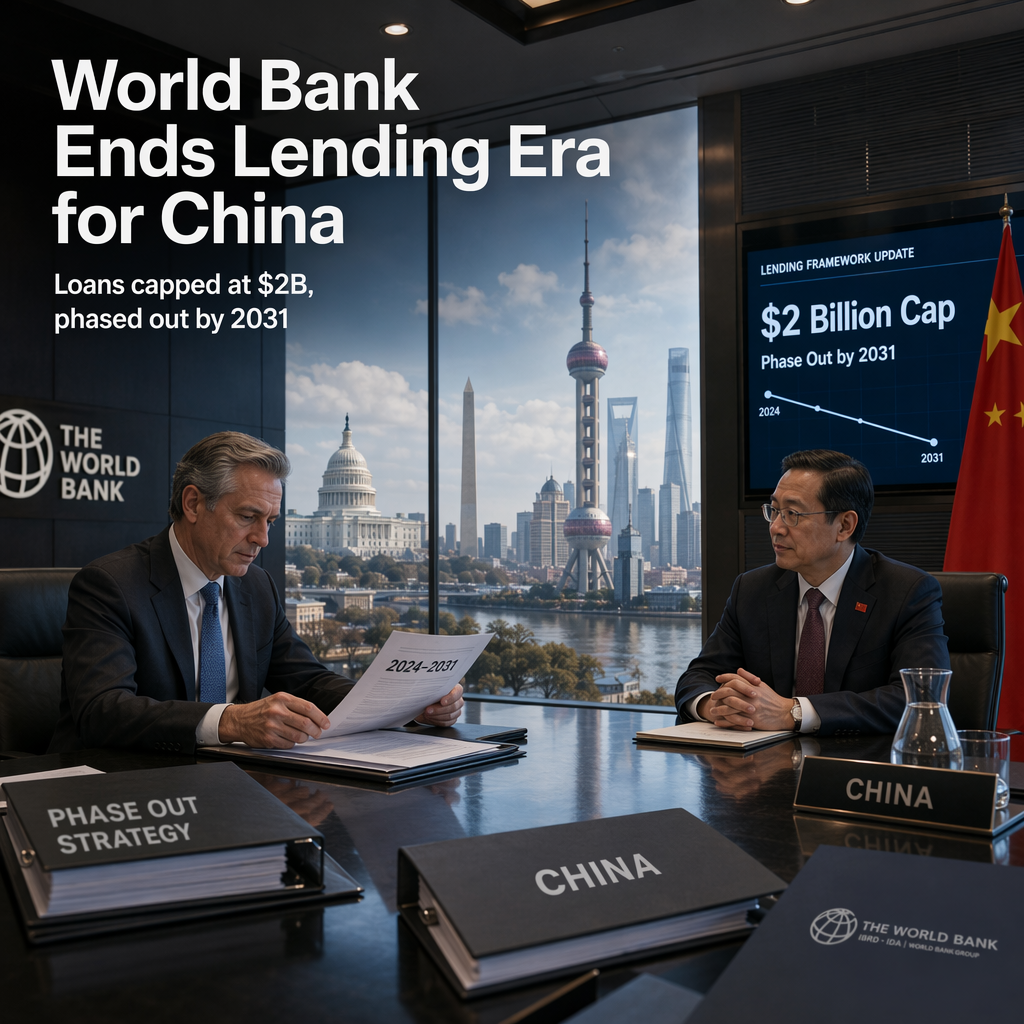
The World Bank has announced a decision to phase out its lending to China by 2031, citing the country's economic development as the primary reason for this policy shift [1]. According to the announcement, the World Bank will cap its lending to China at less than $2 billion through 2031 [1]. This move reflects Beijing's transformation from an aid recipient to a development financier, which has significantly altered the global financial landscape [1].
The decision marks a significant change in the World Bank's engagement with China, one of the world's largest economies. By setting a clear timeline and financial cap, the World Bank signals its recognition of China's advanced economic status and its reduced need for development assistance [1].
While the article does not specify immediate market reactions or analyst opinions, the phasing out of World Bank loans to China could have implications for international development finance and may influence how other multilateral institutions engage with China in the future [1].
CONCLUSION
The World Bank's decision to phase out lending to China by 2031, with a cap of less than $2 billion, underscores China's shift from aid recipient to global financier. This policy change signals a recalibration of international development finance relationships as China's economic status continues to evolve.