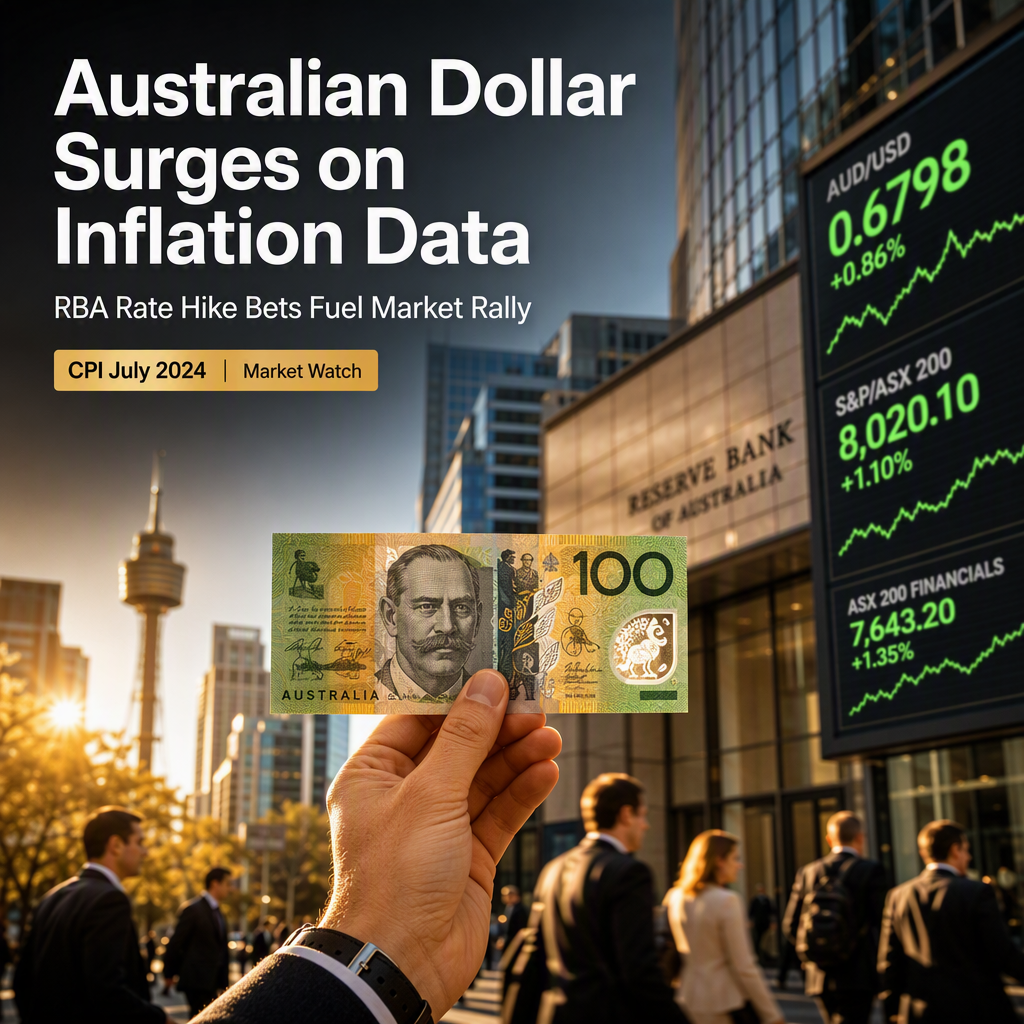
The Australian Dollar (AUD) has outperformed following the release of hotter-than-expected July Consumer Price Index (CPI) data, which has significantly increased market expectations for a Reserve Bank of Australia (RBA) rate hike by the end of the year [1]. According to Brown Brothers Harriman’s (BBH) Elias Haddad, headline CPI rose 1.0% month-on-month in July, surpassing the consensus estimate of 0.9% and reversing a -0.1% decline in June. This increase was driven in part by higher prices for automotive fuel and clothing [1].
On an annual basis, headline CPI inflation eased less than anticipated to 3.5% (consensus: 3.3%) from 3.8% in June, while the trimmed mean CPI remained steady at 3.6% for the second consecutive month, exceeding the RBA’s end-December forecast of 3.3% [1]. In response to the data, RBA cash rate futures now almost fully price in a 25 basis point hike to 4.60% by year-end, a notable increase from the 60% probability priced in before the July CPI release [1].
Despite the market’s reaction, Haddad notes that risks remain skewed toward an extended pause in the RBA tightening cycle, citing already restrictive policy settings and a softening labor market as offsetting factors. Nevertheless, Australia’s attractive carry and strategic exposure to commodities linked to energy, artificial intelligence, and defense continue to provide key tailwinds for the AUD [1].
CONCLUSION
The Australian Dollar has strengthened on the back of unexpectedly strong July inflation data, which has heightened expectations for an RBA rate hike by year-end. However, analysts caution that restrictive policy and labor market softness may temper the central bank’s tightening path, even as Australia’s carry and commodity exposure support the currency.