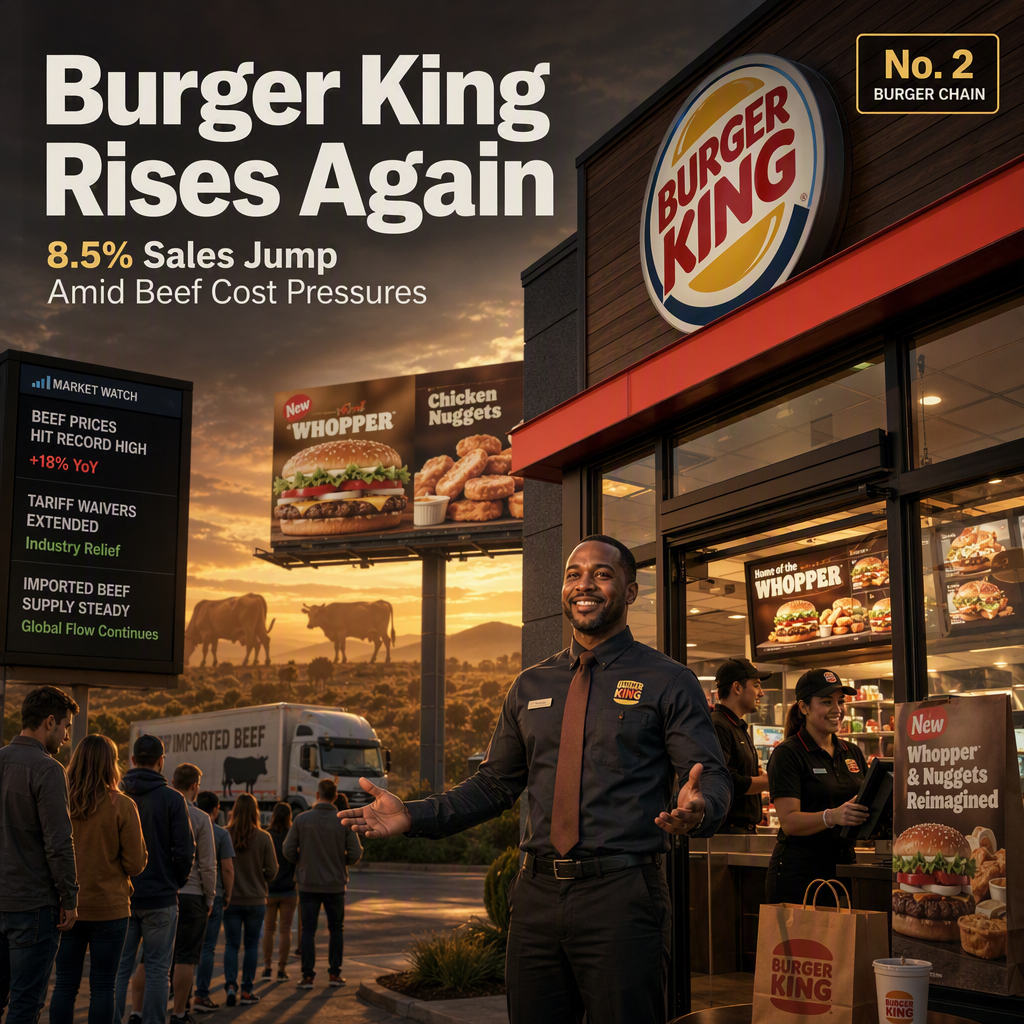
Burger King has reclaimed its position as the nation’s No. 2 burger chain in U.S. systemwide sales, surpassing Wendy’s and trailing only McDonald’s, while posting an 8.5% U.S. same-store sales growth in the second quarter [1]. This achievement comes as the company faces significant challenges from soaring beef prices, which are impacting both restaurants and consumers. American ranchers are currently dealing with the smallest cattle herd in 75 years, contributing to increased beef costs [1]. In response to these pressures, President Trump announced a 90-day waiver on beef tariffs for imported ground beef to help bring prices down and support the rebuilding of the U.S. cattle herd [1].
Burger King’s turnaround strategy, dubbed 'Reclaim the Flame,' was launched in 2022 and involved investing hundreds of millions of dollars to improve restaurant operations, food quality, and company culture [1]. According to Tom Curtis, President of Burger King U.S. and Canada, the company is focusing on driving customer traffic rather than raising menu prices, asking franchisees to absorb higher costs to avoid passing them on to consumers [1]. This approach was previously applied during the relaunch of the Whopper and is now being tested further as beef prices continue to rise [1].
A key part of Burger King’s strategy has been responding to customer feedback. After receiving critical feedback about its chicken nuggets, the company revamped its nugget recipe to be crispier and juicier, with the new version rolling out nationwide on September 1, alongside updated dipping sauces [1]. Head Chef Amy Alarcon emphasized the importance of addressing customer concerns, stating, 'You don't ever want someone saying that about your food. So we fixed it' [1].
Curtis noted that the company’s efforts to elevate its menu and maintain price stability are resonating with consumers, as evidenced by the recent sales growth [1]. However, he acknowledged that the strategy is challenging for franchisees, who are being asked to 'hold tight' and not raise prices despite cost pressures, in order to support cost-strained customers during tough economic times [1].
CONCLUSION
Burger King’s focus on menu improvements, customer feedback, and price stability has driven strong sales growth and helped the chain reclaim its No. 2 position in the U.S. market. However, the company’s strategy of absorbing higher beef costs rather than passing them on to consumers is putting pressure on franchisees. The market takeaway is that Burger King’s customer-centric approach is yielding positive results, but ongoing cost challenges will continue to test the resilience of its franchise network.