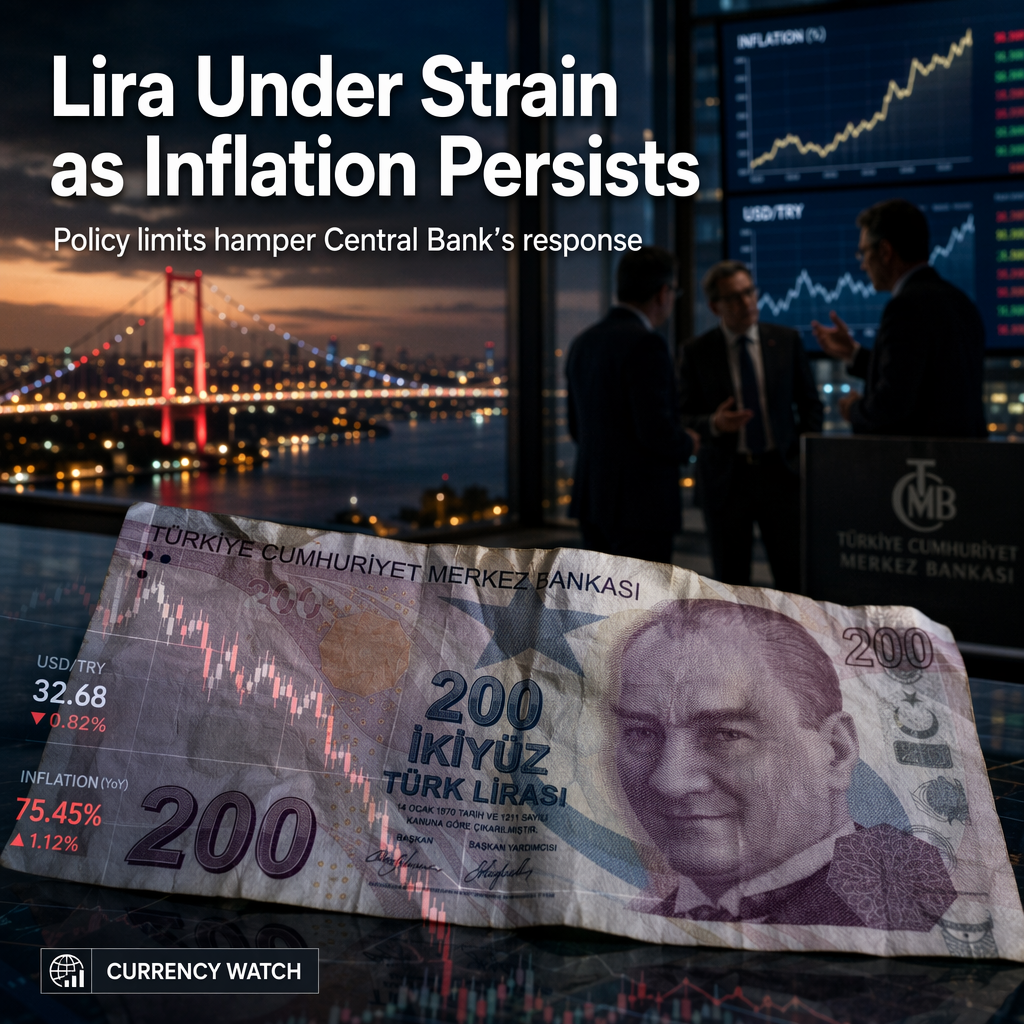
Commerzbank’s Tatha Ghose highlights a divergence in messaging from Turkey’s central bank (CBT) leadership regarding the country’s inflation outlook. While CBT governor Fatih Karahan expressed optimism at an investor forum, stating that disinflation is 'on course' despite delays caused by the Iran conflict, deputy governor Gazi Ishak Kara presented a more cautious view, emphasizing that core inflation has re-accelerated and that service prices, particularly rents, remain persistently high. Data cited by Kara shows service prices rising by 2.3% month-on-month (seasonally adjusted), with broader prices increasing by 1.8%-2.0% m/m. Seasonally-adjusted core CPI is reportedly still running above 2% m/m, and annualized inflation rates are clustered in the 30%-35% range, which is inconsistent with a credible path toward single-digit inflation and exceeds the CBT’s own year-end forecast trajectory [1].
The analysis notes that this disconnect between policymakers’ rhetoric and actual inflation data is significant, especially as external conditions have worsened. Oil prices have risen again, reversing some of the relief seen in June, which could have prompted the FX market to demand further rate hikes or at least the maintenance of high rates. However, Governor Karahan is already discussing the possibility of lowering rates, and Commerzbank doubts that the CBT can raise rates further due to political constraints, even if inflation does not improve [1].
The report concludes that while policymakers may sound rational in their public statements, the combination of persistent inflation momentum and an inability to tighten policy further leaves the Turkish lira exposed to continued pressure. The current policy stance is seen as inconsistent with achieving single-digit inflation, and the lira is likely to remain under strain as a result [1].
CONCLUSION
The Turkish lira remains vulnerable due to persistent inflation and political limits on further monetary tightening. Despite optimistic rhetoric from central bank officials, the current policy stance is not seen as credible for achieving single-digit inflation, suggesting ongoing pressure on the currency.