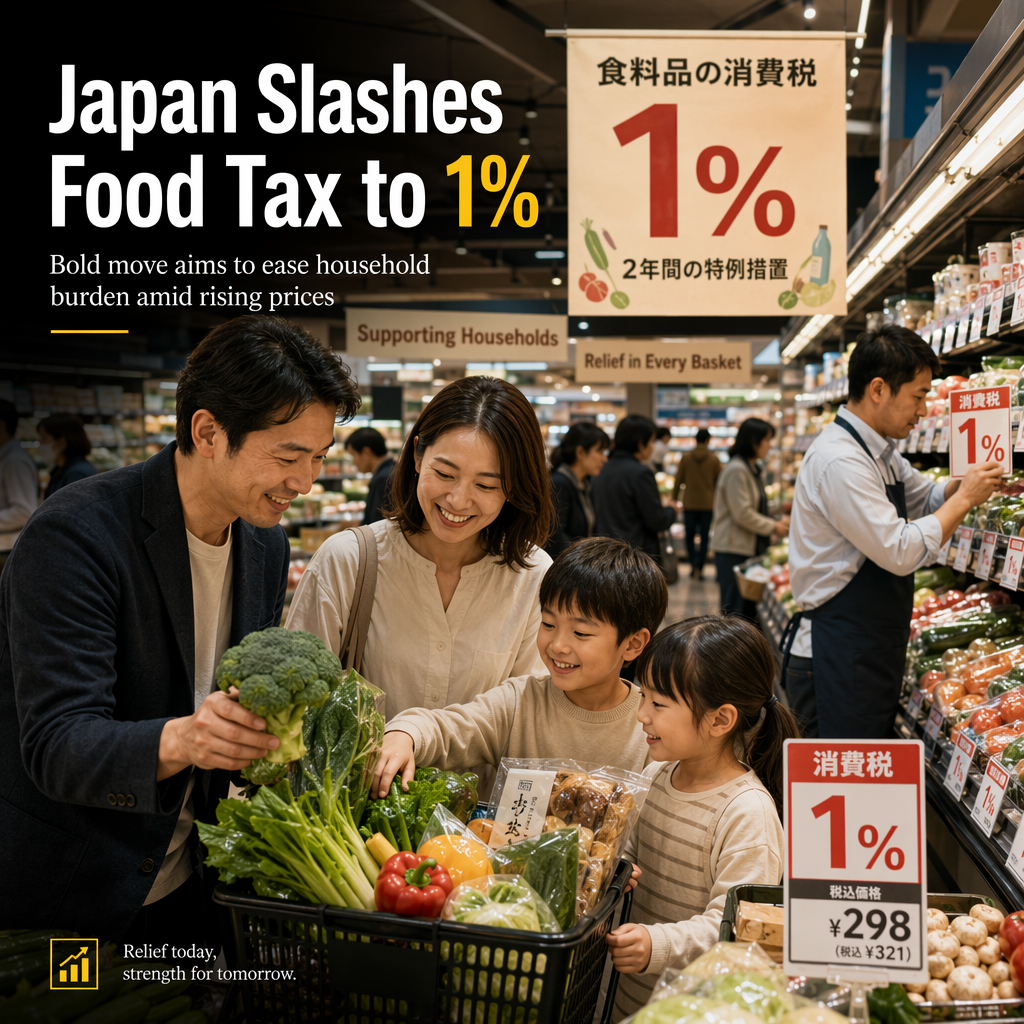
On July 30, Prime Minister Takaichi announced at an executive meeting that Japan will significantly reduce the consumption tax rate on food items to 1% for two years starting April next year, down from the current rate of 8% [1]. Takaichi emphasized that this bold measure is necessary to protect citizens' livelihoods amid rising prices, stating, 'Given the current situation where household burdens are increasing due to high prices, decisive action is needed to safeguard the lives of the people' [1].
If implemented, this policy would represent a substantial tax cut and is expected to have a major impact on domestic consumption trends as well as the retail and distribution sectors [1]. Market participants noted that the tax reduction could provide a significant boost to consumption, but also expressed concerns about the potential fiscal impact and the risk of a consumption downturn when the tax is raised again after two years [1].
The government and ruling party are expected to begin full-scale discussions on the specifics of the system and measures to secure financial resources for the tax cut [1]. Within the retail industry, some stakeholders welcomed the move, saying it would stimulate consumer purchasing and revitalize the entire food sector, while others pointed out challenges such as increased administrative burdens and the need for system modifications due to the policy change [1].
Experts commented that while the tax cut could serve as an effective short-term economic stimulus, balancing this with medium- to long-term fiscal health remains a key issue [1].
CONCLUSION
Japan's planned reduction of the food consumption tax to 1% for two years is expected to stimulate consumer spending and support the food industry, though concerns remain about fiscal sustainability and post-policy risks. The initiative is likely to have a significant market impact, with further details and implementation strategies to be determined through upcoming government and party discussions.