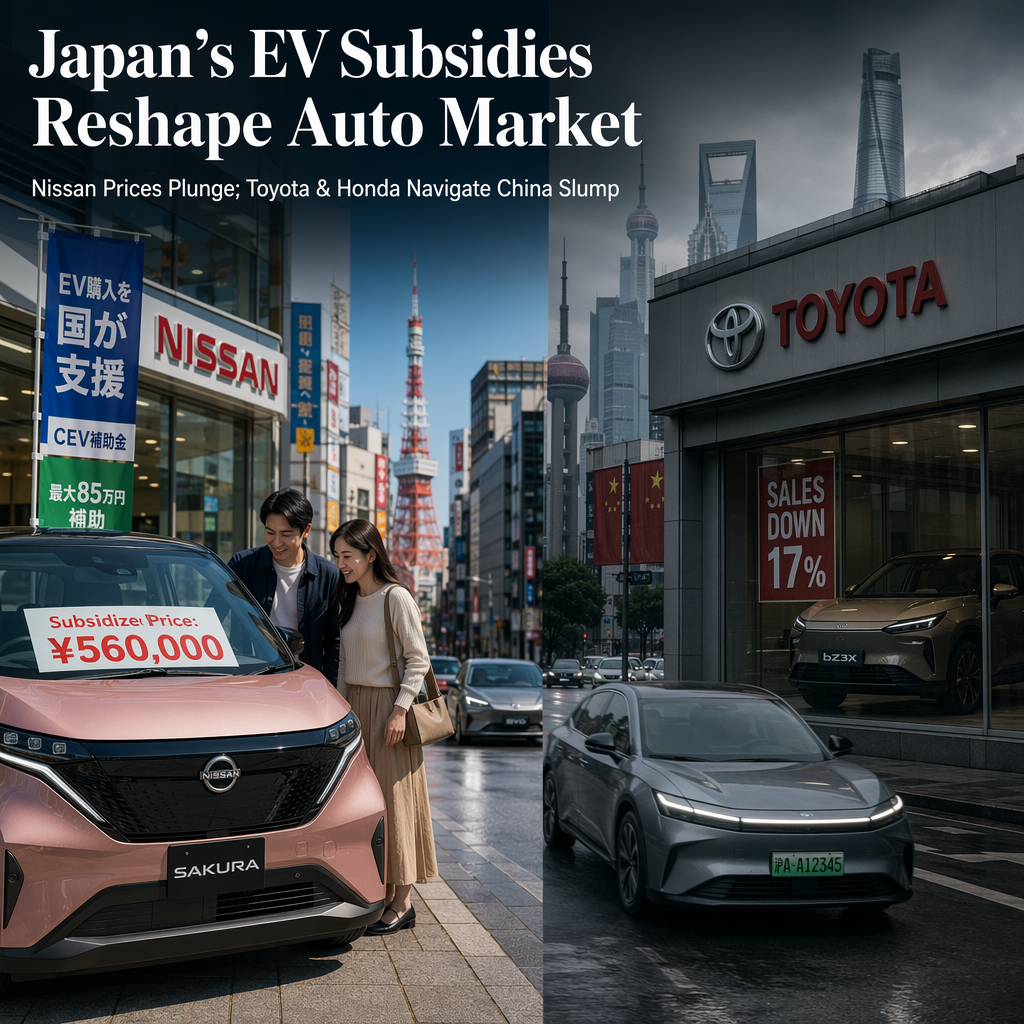
Japan's central and Tokyo municipal governments have implemented generous subsidies for electric vehicles, reducing the effective price of a new Nissan Motor EV to as low as 560,000 yen ($3,450), which is cheaper than purchasing a used version of the same model [1]. The Honda Super-One and Nissan Sakura are among the models eligible for these subsidies, which are spurring increased purchases of new EVs in Japan [1]. Industry observers caution that these subsidies could distort the market by making new EVs more attractive than pre-owned ones, potentially impacting the used-car market and leading to overproduction or misallocation of resources in the automotive sector [1].
Meanwhile, in China, Toyota Motor reported a 17% year-on-year decline in new vehicle sales for the January-June period, attributing the drop to a consumer shift toward electric vehicles and other electrified models amid high crude oil prices [2]. The bZ3X SUV, an EV model sold by GAC Toyota, exemplifies automakers' efforts to adapt to changing preferences [2]. Honda also experienced a decline in China sales due to the same factors, though specific figures were not provided [2]. Both Toyota and Honda are facing intensified competition from Chinese brands that have aggressively developed and marketed electric vehicles, further eroding the market share of traditional gasoline-powered models [2].
Industry analysts cited in the sources note that the transition to EVs in China is accelerating, driven by supportive government policies and ongoing volatility in global oil prices [2]. The impact on Japanese automakers is expected to persist, with further output reductions likely unless they can expand their EV offerings and adapt to the evolving market landscape [2].
The developments in both Japan and China highlight the rapid transformation of the automotive industry, with government intervention and shifting consumer preferences significantly affecting market dynamics and the competitive positions of established automakers.
CONCLUSION
Generous EV subsidies in Japan are making new electric vehicles cheaper than used ones, potentially disrupting the used-car market and production dynamics [1]. In China, Japanese automakers like Toyota and Honda are experiencing significant sales declines as consumers shift to electric vehicles, a trend expected to continue unless these companies accelerate their EV strategies [2]. The market impact is high, reflecting a pivotal moment for the global automotive industry.