
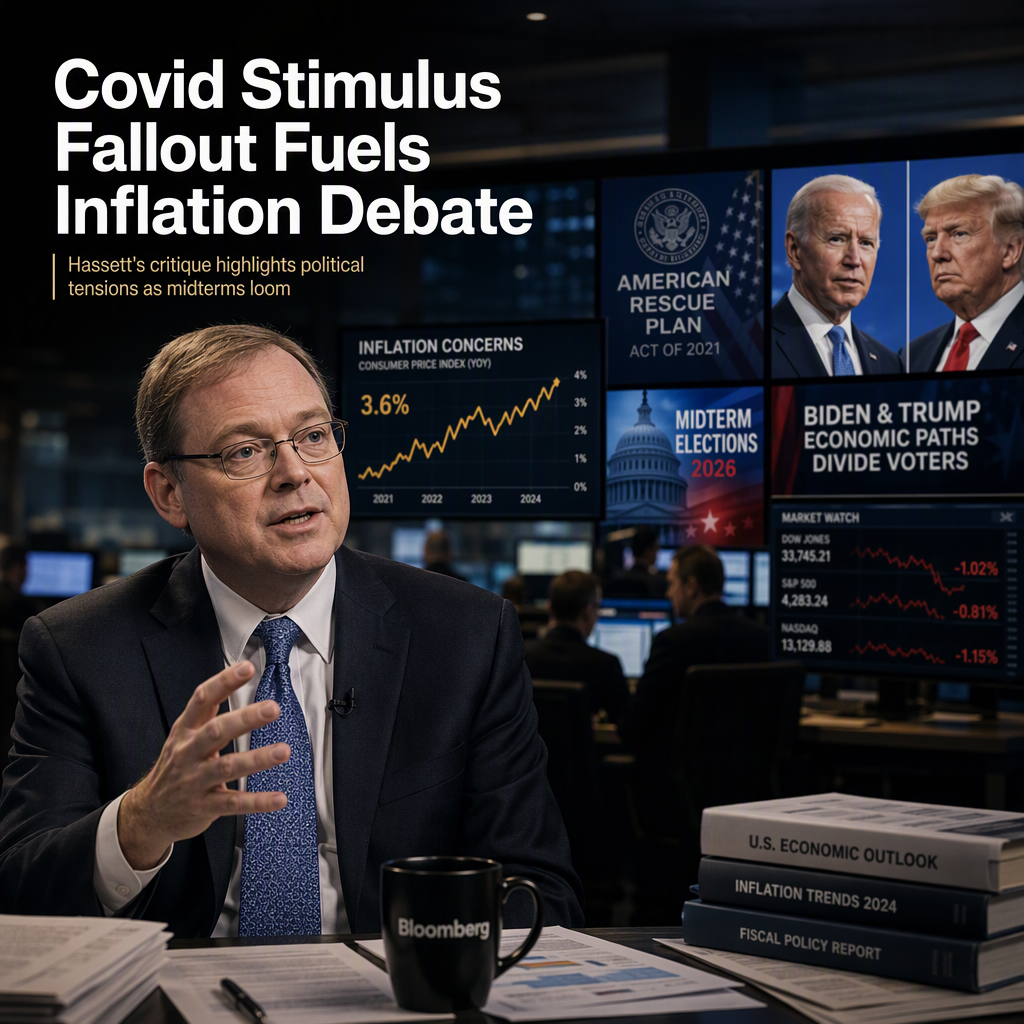
National Economic Council Director Kevin Hassett stated that the U.S. economy is still grappling with the effects of Covid-19-related stimulus spending from President Joe Biden's first year in office, describing it as 'the big mistake that we're still working our way out from' [1]. Hassett contrasted the Trump administration's approach to pandemic stimulus, claiming they 'wanted to fill the hole, but not do more than that,' while Biden 'decided to spend it on other things, even though we didn't need it' [1].
Hassett highlighted that inflation was at 1.5% when President Trump left office, but surged after Biden signed the $1.9 trillion American Rescue Plan in March 2021 [1]. Inflation peaked around 9% in the summer of 2022, then declined to 3% by January 2025 when Trump returned to the White House. However, inflation has edged higher in 2026, attributed to ongoing global conflicts, including the U.S. war against Iran and Russia's war in Ukraine, which are pressuring energy supplies [1].
The interview took place during the final weeks of a midterm election cycle, with affordability and inflation as central issues. Democrats appear poised to make gains in Congress, and recent polls indicate voters are increasingly disapproving of Trump on the economy and in general, suggesting that claims blaming Biden's policies for economic woes are losing potency [1].
Many economists reportedly say the American Rescue Plan exacerbated U.S. inflation, though there is debate about the extent of its impact [1]. No specific forward-looking analyst opinions were provided, but Hassett's remarks imply continued concern about lingering inflation and its political ramifications.
CONCLUSION
Kevin Hassett's comments underscore ongoing concerns about the lingering effects of Biden-era Covid stimulus on inflation and affordability, especially as these issues dominate the midterm election cycle. While inflation has moderated since its 2022 peak, recent global conflicts are contributing to renewed upward pressure. The political debate over economic stewardship remains intense, with both parties facing scrutiny from voters.