
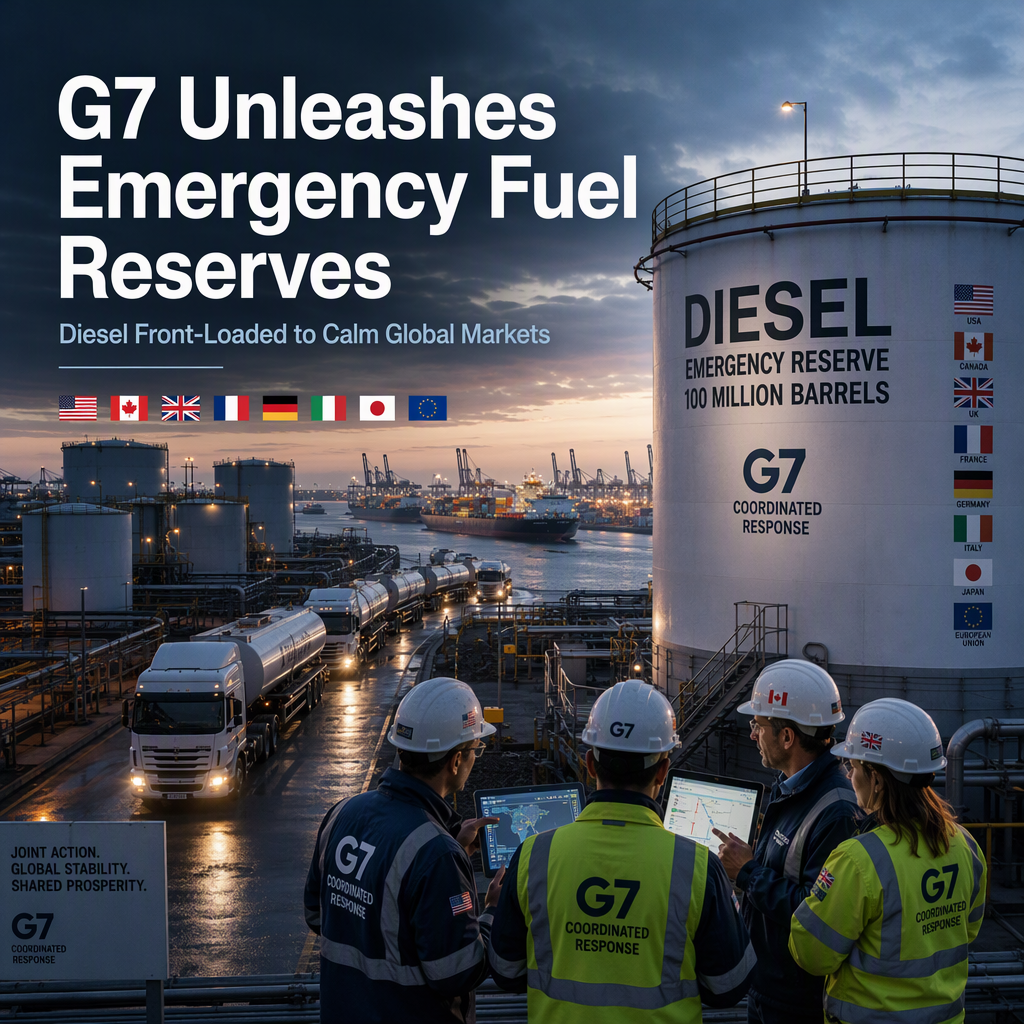
The G7 countries have reached an agreement to coordinate the release of 100 million barrels of crude oil and refined fuel products from their emergency reserves over a four-month period, with a significant portion of diesel to be released within the first 20 days. This decision comes after pressure from the Trump administration, which has been urging U.S. allies to increase the supply of refined petroleum products to the market in an effort to ease fuel prices following recent global supply disruptions [1].
White House National Economic Council Director Kevin Hassett emphasized the potential impact of this move, stating that the release of European diesel reserves could have a 'massive positive effect' on U.S. fuel prices. Hassett highlighted the distinction between the U.S. Strategic Petroleum Reserve, which consists of crude oil, and European reserves, which include refined products such as diesel. This allows refined fuel reserves to be supplied directly to markets without the need for additional refining, potentially accelerating relief for consumers [1].
President Donald Trump, in a post on Truth Social, announced that Europe had agreed to release a 'massive amount of their heavily stocked Diesel Oil' and that the process would begin immediately. The G7 leaders, in a joint statement, committed to 'decisive, coordinated measures to stabilize immediate energy supplies, shield households and businesses from price shocks, and strengthen the long-term resilience of global energy systems.' They also agreed to coordinate refinery maintenance schedules to prevent simultaneous capacity shutdowns and to temporarily increase utilization rates where feasible [1].
The International Energy Agency (IEA) noted that emergency stocks can include both crude oil and refined products, depending on how individual member countries structure their reserves. The IEA also stated that Europe’s contribution to an earlier coordinated emergency release in March primarily consisted of refined oil products [1].
CONCLUSION
The G7's coordinated release of 100 million barrels from emergency reserves, with an emphasis on diesel, is expected to provide significant relief to fuel markets and stabilize prices. U.S. officials and G7 leaders anticipate that these measures will help shield consumers from price shocks and enhance global energy security in the near term.