
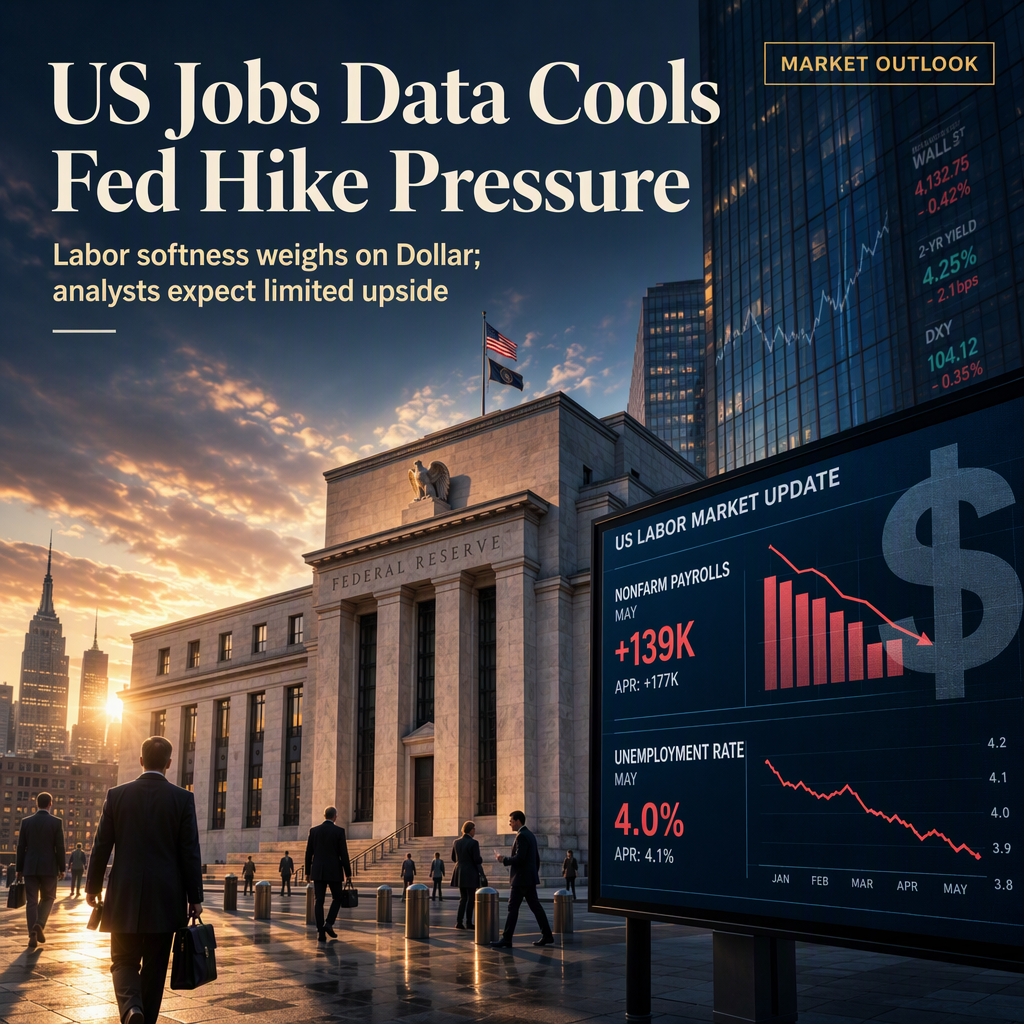
Recent US labor market data has come in weaker than expected, with September payrolls at 29,000 compared to a consensus estimate of 90,000, and prior months revised down by 60,000 [3]. The unemployment rate rose to 4.2%, largely due to a 0.2 percentage point increase in the participation rate, indicating that more people are re-entering the workforce [3]. Average hourly earnings increased by a modest 0.1% month-over-month, lowering the year-over-year rate to 3.0% [3]. ABN Amro’s Rogier Quaedvlieg notes that while the headline numbers point to a soft report, the underlying picture is mixed, as the rise in unemployment is partly attributable to increased labor supply [3]. The three-month average of 51,000 payrolls is considered solid given labor supply, but does not indicate a hot or tight market [3]. This report, along with a downside surprise in the PCE report earlier in the week, reduces pressure on the Federal Reserve to hike rates in October [3]. However, ABN Amro still expects persistent inflationary pressure from the energy shock to prompt one more Fed hike in December, aiming to prevent pass-through to consumer prices and wages [3].
TD Securities’ Macro Research FX team observes that the softer payrolls data is only marginally negative for the US Dollar, with the labor market described as buoyant and neither overheating nor deteriorating [1]. They argue that market pricing for Fed hawkishness has likely peaked, and see near-term rate hike expectations easing in both the US and Europe [1]. TD Securities expresses greater conviction in fading USD rallies than chasing for any return to 2025 highs, noting limited upside for the Dollar [1].
Regarding the upcoming September FOMC minutes, TD Securities analysts characterize them as largely outdated due to subsequent employment and PCE data releases [2]. The minutes are expected to show disagreement over how much further tightening is needed, but broad consensus that policy should remain more restrictive [2]. Most participants likely saw no urgency in their next move, in line with the SEP and recent Fedspeak [2].
According to [1], the softer payrolls report is marginally weighing on the USD, but TD Securities does not see macro fundamentals justifying a move into a new higher orbit for the Dollar or a reversion back to peak safe haven era. Meanwhile, ABN Amro’s base case is that the weaker jobs report removes immediate pressure for an October Fed hike, but persistent inflationary pressures could still prompt a December hike [3].
CONCLUSION
US labor market data has softened, easing immediate Fed rate hike risks and marginally weighing on the Dollar. Analysts from TD Securities and ABN Amro see limited upside for the USD, with market pricing for Fed hawkishness likely peaking. While October rate hike pressure has diminished, persistent inflationary concerns may still lead to a December hike.