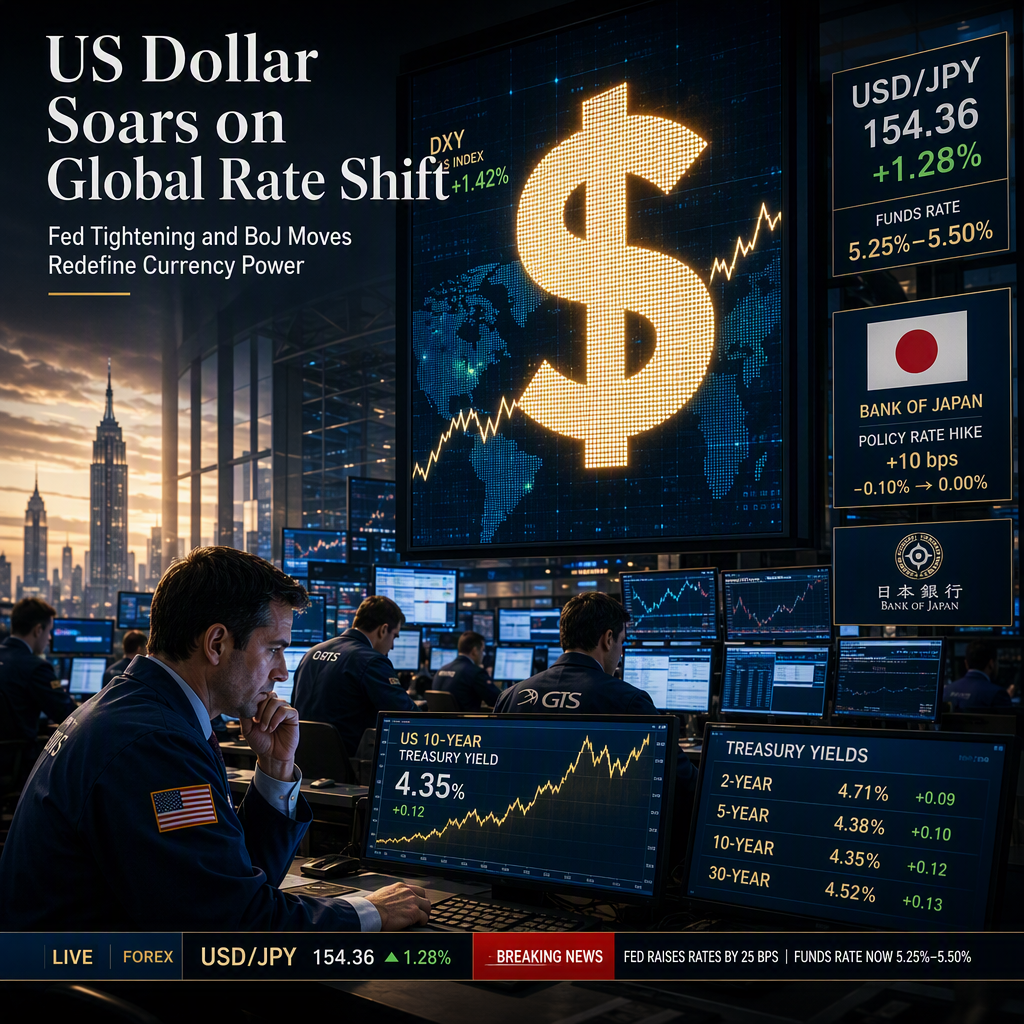
The US Dollar strengthened significantly on Friday, with the USD/JPY pair advancing sharply to around 156.95, up 0.63% on the day, after reaching a daily high of 158.06. This movement occurred despite the Bank of Japan (BoJ) raising its policy rate by 25 basis points from 1% to 1.25%, marking its highest level in 31 years. The BoJ's decision was approved by a seven-to-two vote, with Toichiro Asada and Ayano Sato opposing the increase. BoJ Governor Kazuo Ueda stated that further rate hikes would be considered if warranted by economic and price developments, but highlighted uncertainties such as Middle East tensions, AI-related demand, and FX volatility. Japan's National CPI remained unchanged in August, and underlying inflation stayed below the BoJ's 2% target, tempering expectations for aggressive future tightening and weighing on the Yen [1].
Meanwhile, the US Dollar was bolstered by the Federal Reserve's hawkish stance. The Fed raised its benchmark interest rate by 25 basis points to a range of 3.75%-4% on Wednesday, its first hike since 2023, citing persistent inflation risks driven by rising energy prices. Kansas City Fed President Jeffrey Schmid supported the hike, noting inflation trending above 3% and broadening across goods and services. Schmid emphasized that tightening policy is necessary to return to the Fed's 2% inflation target, with the labor market and economic growth described as solid. The US Dollar was the strongest against the Japanese Yen, with a 0.12% gain, according to currency heat maps [2].
Market expectations for further Fed tightening increased, with money markets assigning a 55% probability of another 25 basis point hike in October, up from 40% prior to the Fed meeting [1][3]. US Treasury yields rebounded, with the benchmark 10-year yield climbing to around 4.98%, close to the 5.04% peak seen earlier in the week, reinforcing the Dollar's yield advantage over the Yen [1][4]. The US Dollar Index (DXY) traded above 100.50, near a seven-week high, and was on track for a weekly gain of more than 1% [1][4].
Analysts at UOB Group revised their outlook, now expecting two additional Fed rate hikes in December 2026 and Q1 2027, with a pause thereafter as inflation fades. They ruled out a back-to-back hike in October due to the proximity of US mid-term elections but warned of further tightening if inflation persists, driven by energy prices, tariffs, and AI-related factors. Technical analysis showed the DXY maintaining a bullish bias above key moving averages, with upside momentum still in play but becoming stretched [4].
Elsewhere, the British Pound retraced after upbeat UK retail sales data, as renewed oil supply shocks reignited inflation fears. The GBP/USD traded at 1.3356, down 0.03%. Despite solid consumer spending, the interest rate differential between the US and UK widened after both central banks' September meetings, favoring the Dollar [3].
CONCLUSION
The US Dollar's strength was driven by hawkish Fed policy and rising Treasury yields, while the Japanese Yen weakened despite the BoJ's rate hike due to subdued inflation and market expectations. Analysts anticipate further Fed hikes, supporting the Dollar's bullish outlook. The widening rate differentials and persistent inflation risks suggest continued Dollar dominance in the near term.