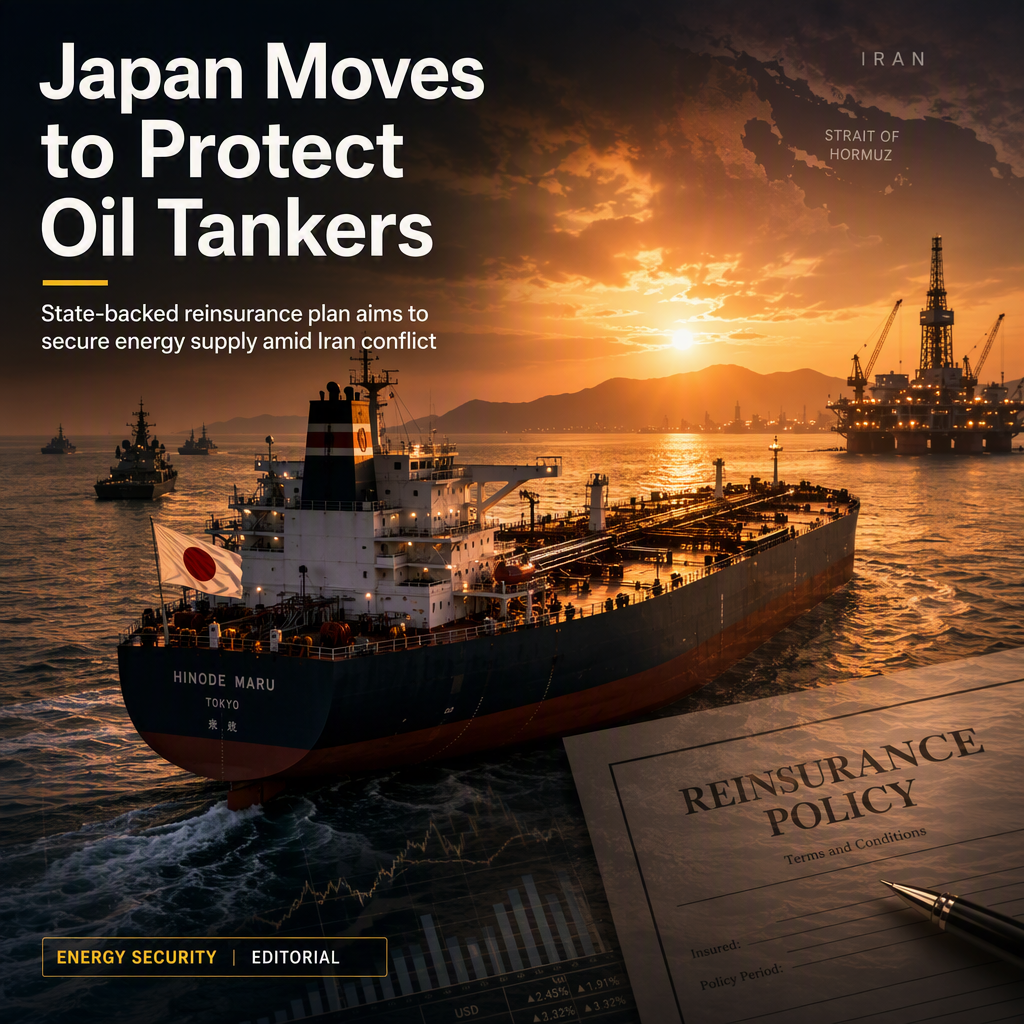
Japan is evaluating the introduction of state-backed reinsurance for oil tankers operating in high-risk regions such as the Middle East, particularly in response to the ongoing Iran war and its impact on global energy supply chains [1]. The proposed initiative is intended as a last-resort safety net for domestic insurers, who are currently facing mounting challenges due to escalating premiums and the potential withdrawal of coverage for tankers navigating dangerous waters like the Strait of Hormuz [1]. This strategic move aims to ensure that crude oil shipments to Japan can continue uninterrupted, even if private insurers restrict or suspend their services in light of the conflict [1].
The government’s plan is motivated by concerns over Japan’s energy security and the potential for disruptions in oil flows to affect both domestic and global commodity markets [1]. Industry sources indicate that the reinsurance scheme would provide financial protection to shipping companies and insurers, especially if war-related incidents lead to a surge in losses or claims [1]. This measure is expected to help stabilize the market and maintain critical supply chains for crude oil imports [1].
Market analysts have highlighted that US oil exports have recently declined amid stretched inventories and stagnant production, further emphasizing the necessity of reliable shipping routes and robust insurance coverage [1]. Japan’s efforts to build naphtha reserves following shortages caused by the Iran war underscore broader concerns about supply disruptions and increased price volatility in energy markets [1].
According to quotes from officials and industry stakeholders, the reinsurance proposal remains under review, with key details such as coverage limits, premium levels, and eligibility criteria yet to be determined [1]. The prevailing market sentiment is described as cautious but supportive, with recognition of the need for government intervention to safeguard energy flows and mitigate financial risks [1].
CONCLUSION
Japan’s consideration of state reinsurance for oil tankers reflects a proactive approach to maintaining energy security amid heightened geopolitical risks. While the plan is still under review, market participants generally support government intervention to ensure stable crude oil imports and reduce financial uncertainty. The move is seen as a stabilizing factor for both the insurance and energy markets.