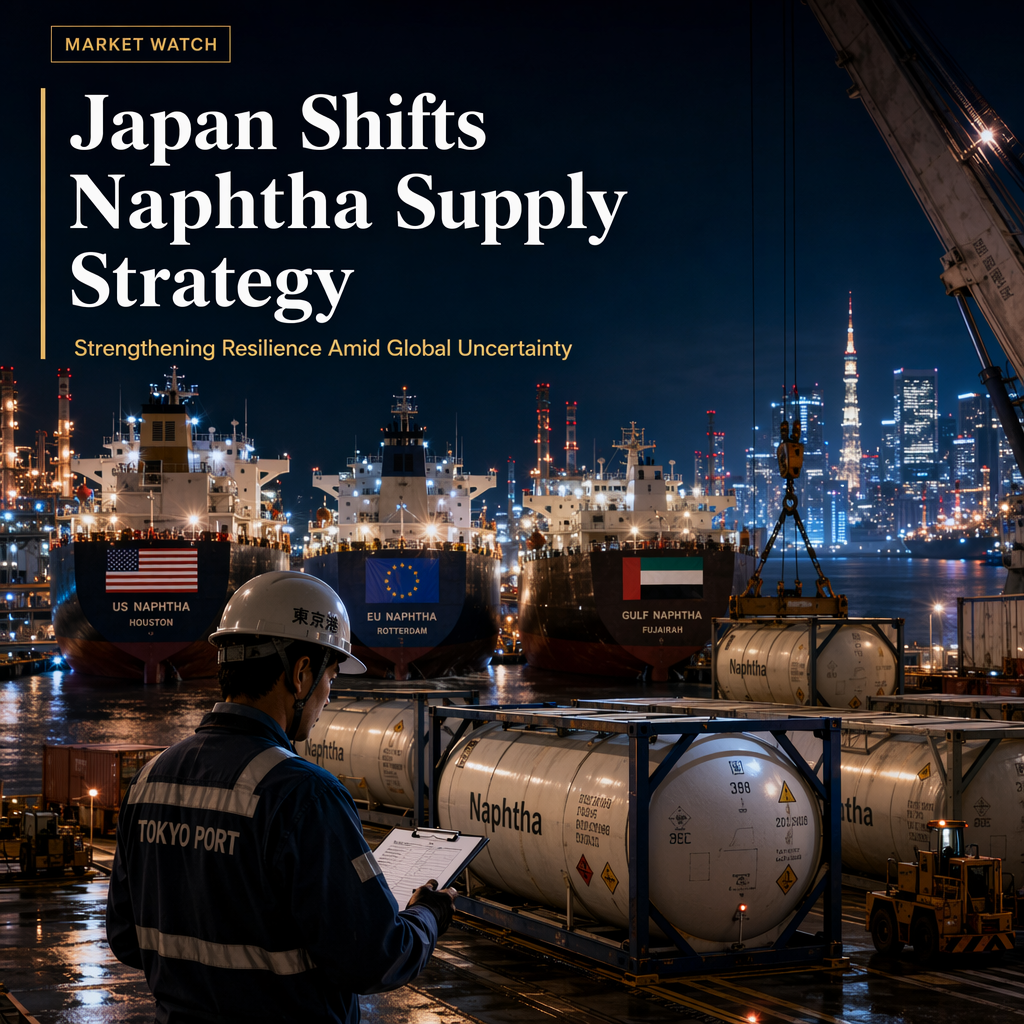
Japan has reduced its reliance on Middle Eastern naphtha imports, as evidenced by government trade data for May, which showed an easing in the year-on-year decline of naphtha imports compared to the previous month [1]. The country has increased its procurement of naphtha from the U.S., Europe, and other regions, reflecting a strategic shift in response to ongoing uncertainties and disruptions in Middle Eastern supply chains [1]. This diversification marks a significant change from Japan's traditional dependence on the Middle East for naphtha, a key raw material for petrochemical production [1].
Industry analysts suggest that this shift is likely to influence naphtha pricing and could have downstream effects on chemical markets [1]. A Tokyo-based commodities analyst described the diversification as a strategic response to persistent risks in the Middle East and noted that it also reflects heightened global competition for petrochemical feedstocks [1].
Market sentiment remains mixed, with traders considering the advantages of broader supply options against the potential for increased volatility in global naphtha prices [1]. Technical analysis indicates that naphtha prices have stabilized over the past month, with support levels forming around recent lows and resistance near previous highs [1]. The improved supply outlook has helped temper upward price pressure, though geopolitical risks continue to be a concern [1].
In addition to diversifying import sources, Japanese chemical companies are exploring alternatives to naphtha, such as lighter feedstocks and biofuels, to further reduce exposure to volatile international markets [1]. Some industry participants are promoting naphtha-light alternatives for use in products like diapers and pads [1]. Overall, Japan's efforts to broaden its naphtha supply base are part of a larger initiative to enhance supply chain resilience amid ongoing global uncertainties [1].
CONCLUSION
Japan's diversification of naphtha import sources has eased the decline in imports and stabilized market prices, though geopolitical risks persist. The move is seen as a strategic effort to strengthen supply chain resilience and reduce vulnerability to Middle Eastern disruptions. Market sentiment is mixed, with attention focused on both the benefits of diversification and the potential for price volatility.