
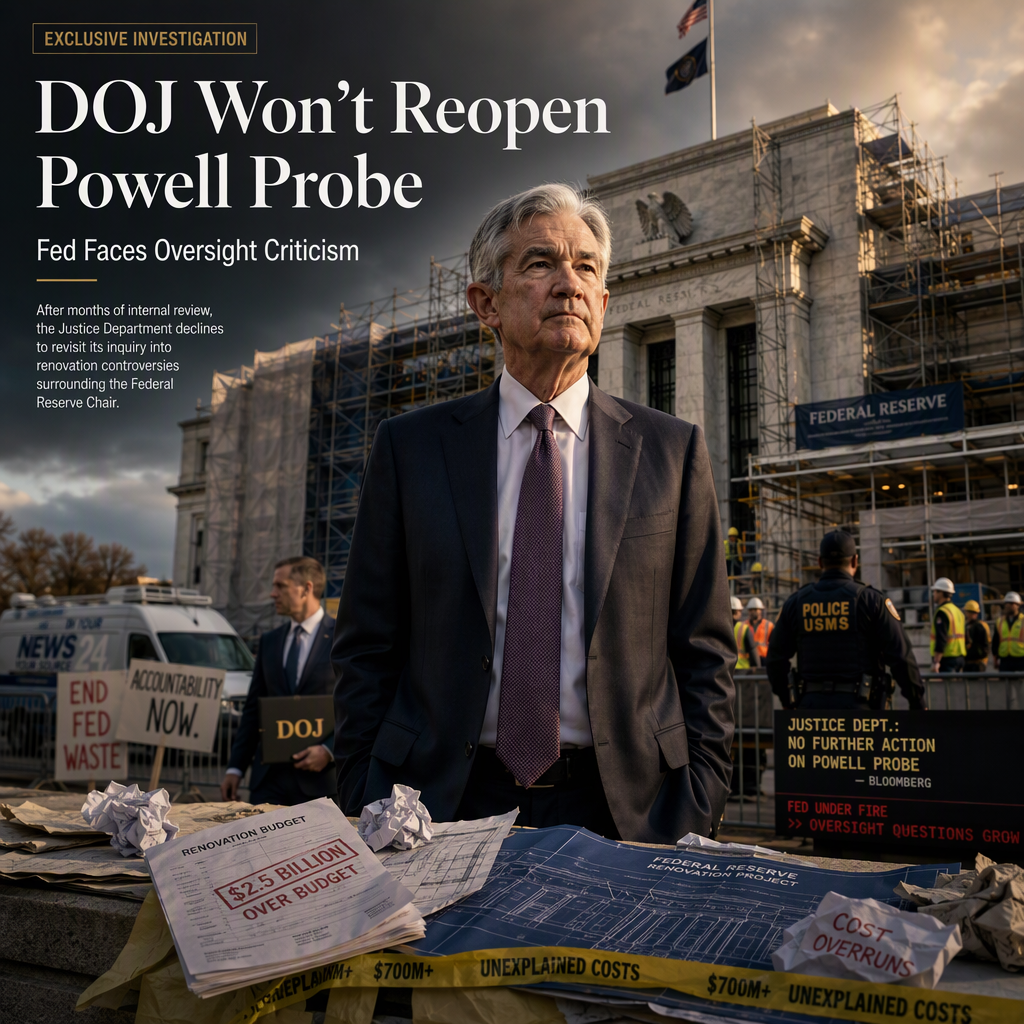
The U.S. Department of Justice (DOJ) announced it will not reopen its criminal investigation into former Federal Reserve Chair Jerome Powell regarding the central bank's overbudget multibillion-dollar headquarters renovation, according to a department spokesperson [1]. DOJ spokesperson Blanche stated, "We're not reopening a criminal investigation into him," but did not rule out future action, noting that an independent audit could prompt an investigation if evidence of criminal wrongdoing emerges [1].
This decision follows a report from the Federal Reserve's inspector general, which found no reasonable grounds to believe a federal crime had occurred that would require a referral to the attorney general. However, the inspector general criticized the central bank for significant management and oversight failures that led to the project's costs more than doubling [1]. Despite the absence of criminal findings, the watchdog's report highlighted major oversight issues.
The DOJ initially opened its investigation in January, issuing grand jury subpoenas for related records. However, a federal judge quashed these subpoenas in March, citing improper purpose and a lack of evidence against Powell. The DOJ disputed the ruling but ultimately closed the investigation instead of appealing [1].
President Donald Trump criticized the DOJ's decision, calling for Powell to resign from the Fed's Board of Governors and questioning his management abilities, particularly in relation to interest rate policy [1]. Meanwhile, current Fed Chairman Kevin Warsh, who succeeded Powell in May, announced plans to bring in an independent auditor and strengthen project oversight. Powell remains on the Board of Governors, with his term running through January 31, 2028, despite ongoing pressure from Trump to step down [1].
CONCLUSION
The DOJ's decision not to reopen the criminal probe into Jerome Powell removes immediate legal uncertainty for the former Fed Chair, though criticism over project management and political pressure persist. The Fed's commitment to independent auditing and improved oversight aims to address governance concerns, but the situation continues to attract scrutiny from political figures.