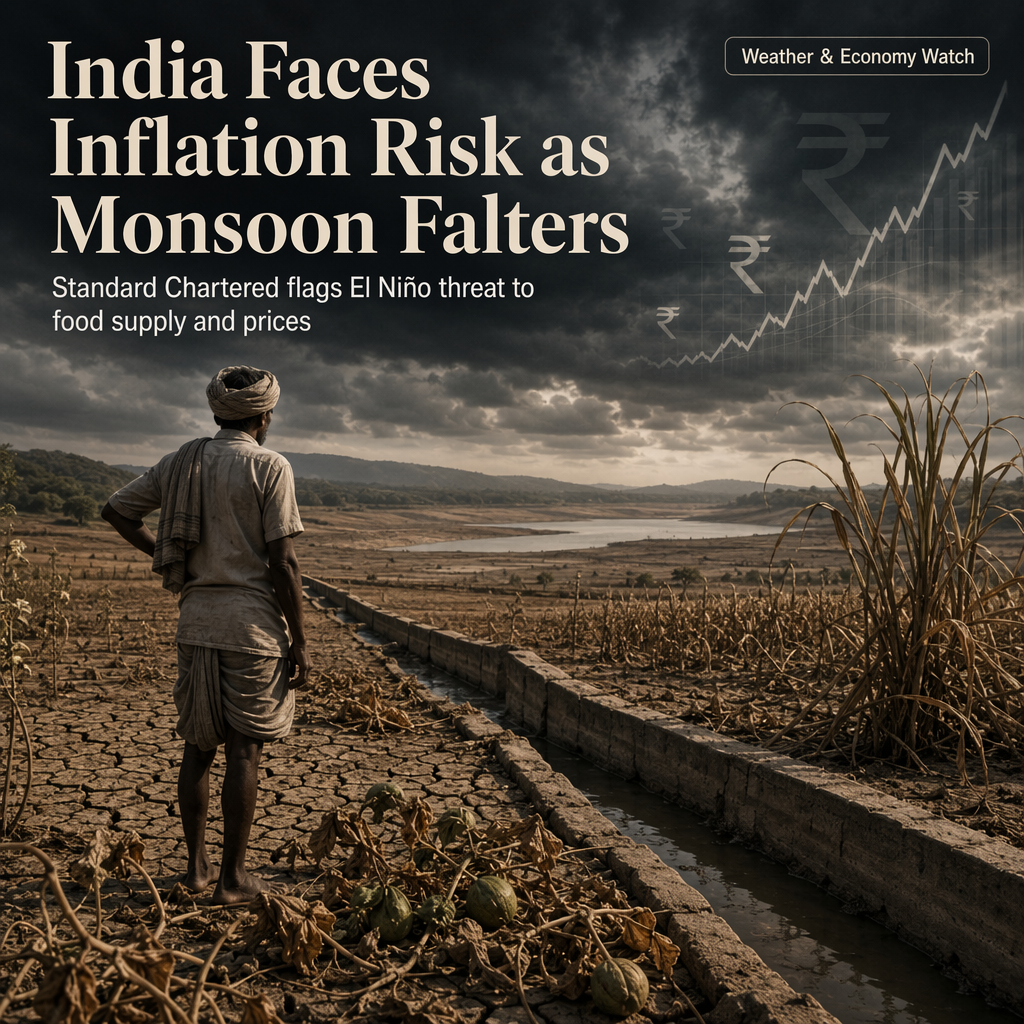
Standard Chartered Bank economist Saurav Anand has raised concerns about increasing inflation risks in India due to deficient monsoon rains and the ongoing El Niño phenomenon, which are threatening the country's food output [1]. The report highlights that sowing activity is currently down and reservoir levels are low, with pulses, vegetables, sugar, and oilseeds identified as the most exposed crops to these adverse weather conditions [1].
The bank's analysis points out that with El Niño conditions persisting and the likelihood of drier weather after mid-August, there is a high risk of a significant rainfall deficit by the end of the monsoon season. This could have a spillover effect on both the current summer and the upcoming winter crops, further exacerbating inflationary pressures [1]. According to the report, a double-digit rainfall deficit would notably increase the upside risk to inflation [1].
While the lower weight of food in the Consumer Price Index (CPI) basket, improved irrigation coverage, and potential policy interventions could partially mitigate the inflationary impact, Standard Chartered cautions that these factors are unlikely to fully offset the effects of a large monsoon deficit or persistent El Niño on crop output and prices [1]. The authors see upside risks to FY27 CPI inflation and suggest that repo rate hikes may be considered if food prices surge [1].
CONCLUSION
Standard Chartered's analysis underscores the heightened inflation risks facing India due to adverse weather conditions impacting food production. While some mitigating factors exist, the potential for significant inflationary pressures remains, with possible implications for monetary policy if food prices rise sharply.