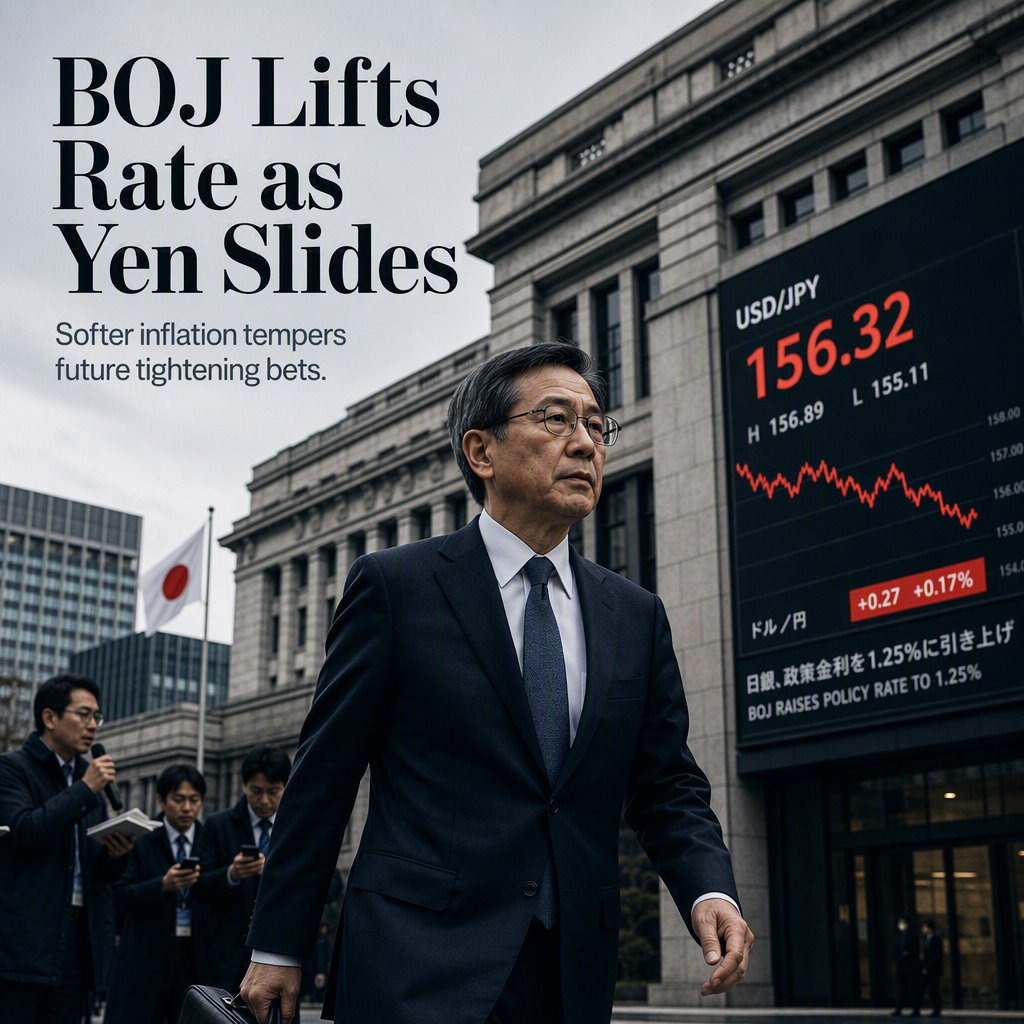
The Bank of Japan (BOJ) announced a widely expected hike of its benchmark interest rate to 1.25%, marking a multidecade high for Japan's uncollateralized overnight call rate. This decision was made following a two-day board meeting and is part of the central bank's accelerated monetary tightening in response to persistent inflation and a weakened yen, which has fallen to the 156-level against the dollar [1]. The BOJ's move aligns with similar actions by other major central banks amid global yield surges and inflation-driven bond sell-offs [1].
Hours before the BOJ's policy announcement, the yen eased to around 156.30 per dollar from 155.68-70 late Thursday, following lower-than-expected consumer inflation in August. This softer inflation print dented expectations for aggressive BOJ tightening, causing currency traders to reassess the likelihood of swift rate increases [2]. A Tokyo-based currency analyst noted, "The lower-than-expected inflation data is causing the market to rethink the likelihood of swift rate increases by the BOJ" [2].
Market participants had anticipated the BOJ’s rate hike, but the recent inflation data has introduced uncertainty regarding the pace of future tightening. Traders and analysts are closely monitoring the BOJ chief's news conference for hints on upcoming policy moves, especially as the yen's decline past the 156 level establishes a new support area and raises concerns about potential interventions or signals from authorities [2].
The BOJ's stance has shifted toward a more proactive approach, with hawkish board members advocating for rate hikes as their terms near expiration. The central bank governor has indicated that rate hikes will be considered at every meeting, suggesting further tightening could occur if inflationary pressures persist or the yen continues to weaken [1]. However, the softer inflation data has tempered expectations for aggressive action, and the market remains cautious with volatility expected depending on the BOJ's guidance [2].
CONCLUSION
The Bank of Japan's rate hike to 1.25% represents a significant shift in monetary policy, but softer August inflation has tempered expectations for further aggressive tightening. The yen's decline to the 156-level against the dollar underscores ongoing currency volatility, with traders awaiting additional signals from the BOJ. Market participants remain cautious, closely watching for future guidance and potential interventions.