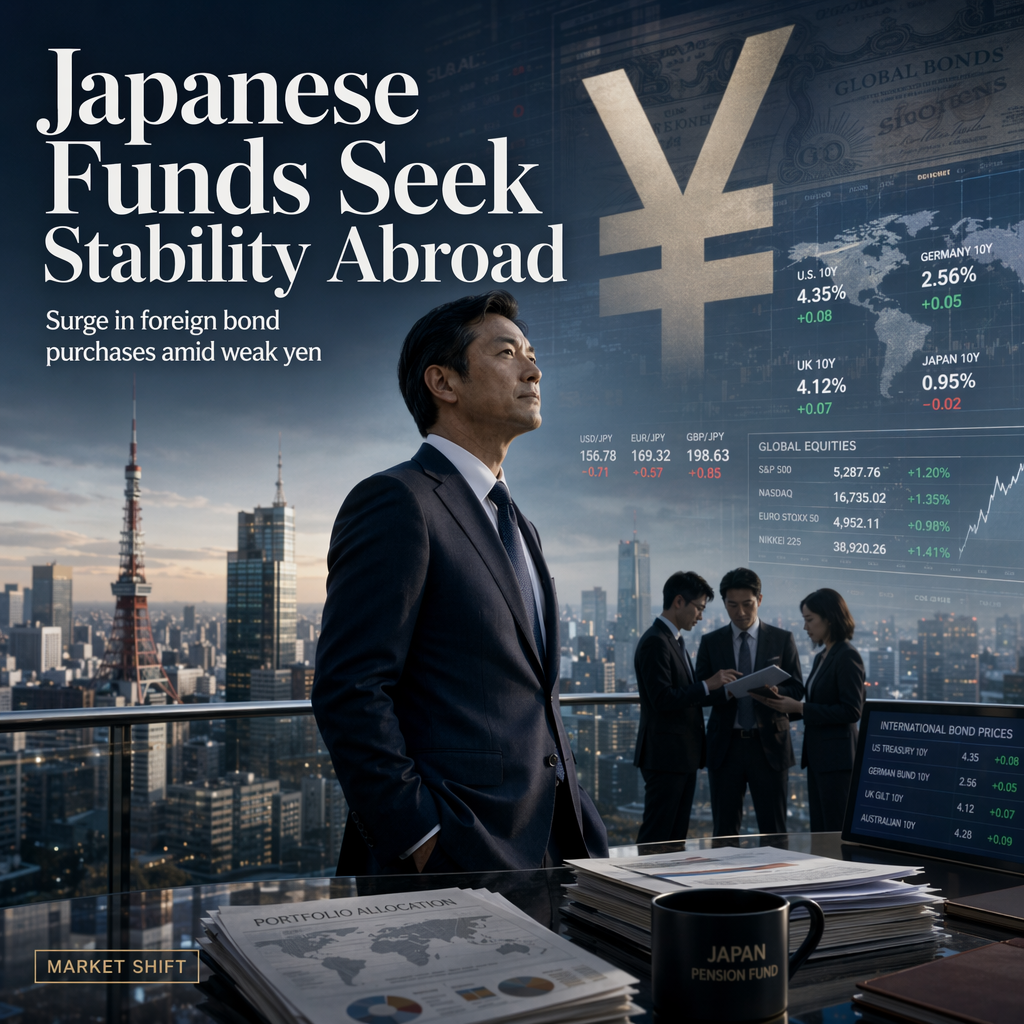
Japanese pension fund managers are increasing their investments in foreign bonds to maintain portfolio stability, as a combination of soaring global equity prices, a weakening yen, and rising overseas interest rates prompts a strategic rebalancing of assets [1]. The surge in global stock prices has elevated the value of equity holdings for these funds, resulting in an overweight position in equities and an underweight position in fixed income assets [1]. In response, pension funds are purchasing foreign bonds at record levels to realign their portfolios with target asset allocations and manage overall risk [1].
Market analysts attribute this shift to the relative attractiveness of foreign bonds, which now offer higher yields compared to domestic assets due to elevated overseas interest rates and the depreciating yen [1]. A Tokyo-based portfolio manager stated, "With the yen remaining at a weak level and overseas interest rates staying elevated, foreign bonds offer a compelling risk-return profile for Japanese pension funds. Rebalancing is necessary to keep portfolio risk within target bands, especially after the surge in equity prices" [1].
The record pace of foreign bond purchases highlights the increasing importance of global fixed income in Japanese institutional portfolios and may have implications for currency and bond markets in the coming quarters [1]. No specific figures, dates, or ticker symbols were provided in the article [1].
CONCLUSION
Japanese pension funds are responding to market dynamics by significantly increasing their foreign bond holdings, aiming to rebalance portfolios after a surge in global equities and a weakening yen. This trend underscores the growing influence of global fixed income in Japan's institutional investment landscape and could impact currency and bond markets in the near future.