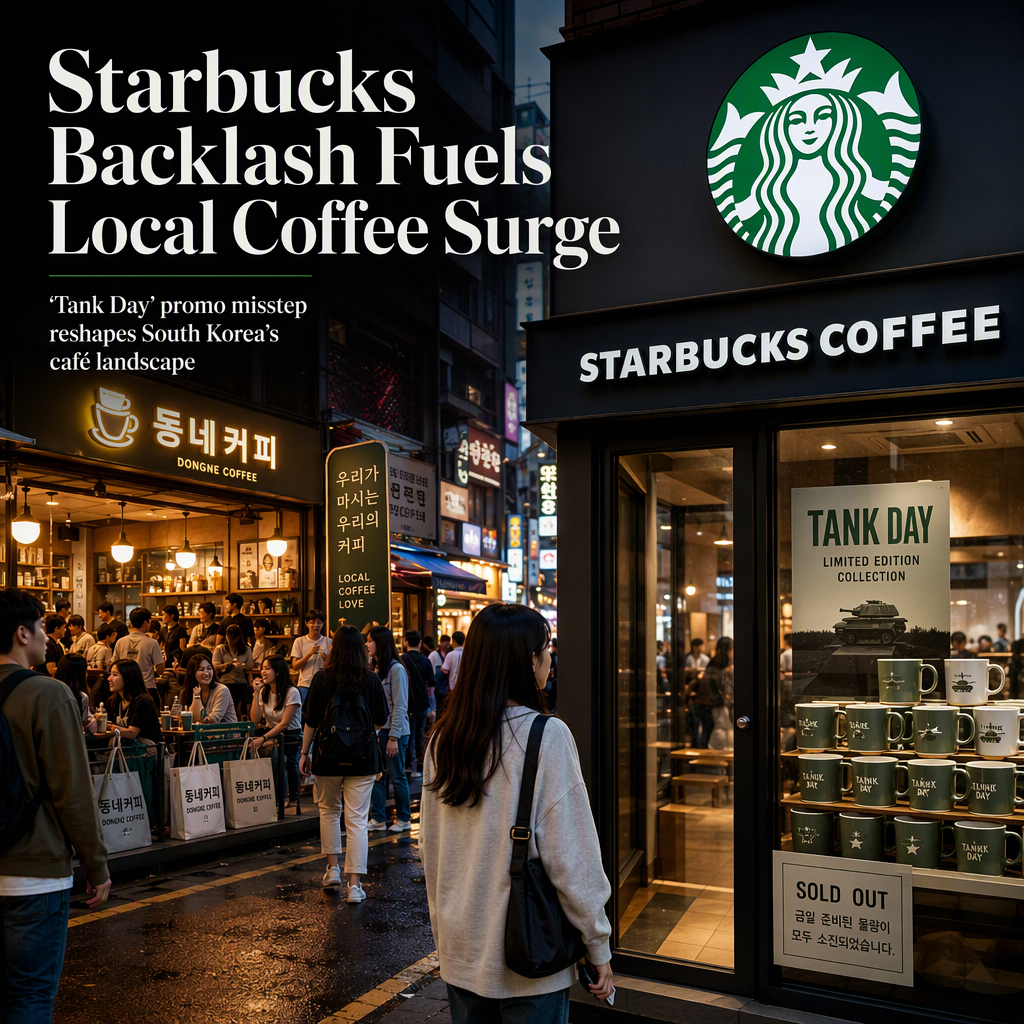
Starbucks Korea recently encountered a significant marketing setback following its 'Tank Day' mug promotion, which led to a consumer boycott and dissatisfaction among South Korean customers [1]. This misstep has provided an opening for local coffee shop chains and independent operators to capture market share, as customers shifted their loyalty in response to the global chain's promotional error [1]. The incident underscores the fierce competition within South Korea's coffee market, where branding and promotional campaigns can rapidly influence consumer preferences [1].
Local competitors have responded by highlighting their unique merchandise offerings, consistent product quality, and a more localized customer experience to attract former Starbucks patrons [1]. Industry observers cited in the article note the rapid growth of South Korea's coffee shop sector, emphasizing the importance of both aesthetic appeal and reliability in product offerings [1]. Bang Jong-koo, an independent coffee shop owner, remarked, 'Customers prefer to know exactly what their coffee will taste like,' pointing to the value of consistency for major market players [1].
While Starbucks continues to maintain a strong presence in the market, the recent promotional blunder has created increased opportunities for South Korean coffee brands to strengthen their positions [1]. The article does not provide specific financial figures, trading data, or analyst forecasts, but the overall market sentiment suggests a positive outlook for local competitors in the aftermath of Starbucks' marketing error [1].
CONCLUSION
Starbucks Korea's 'Tank Day' mug promotion misstep has triggered a consumer backlash, allowing local coffee brands to gain traction in a highly competitive market. The event highlights the volatility of consumer loyalty and the importance of effective branding in South Korea's coffee sector.