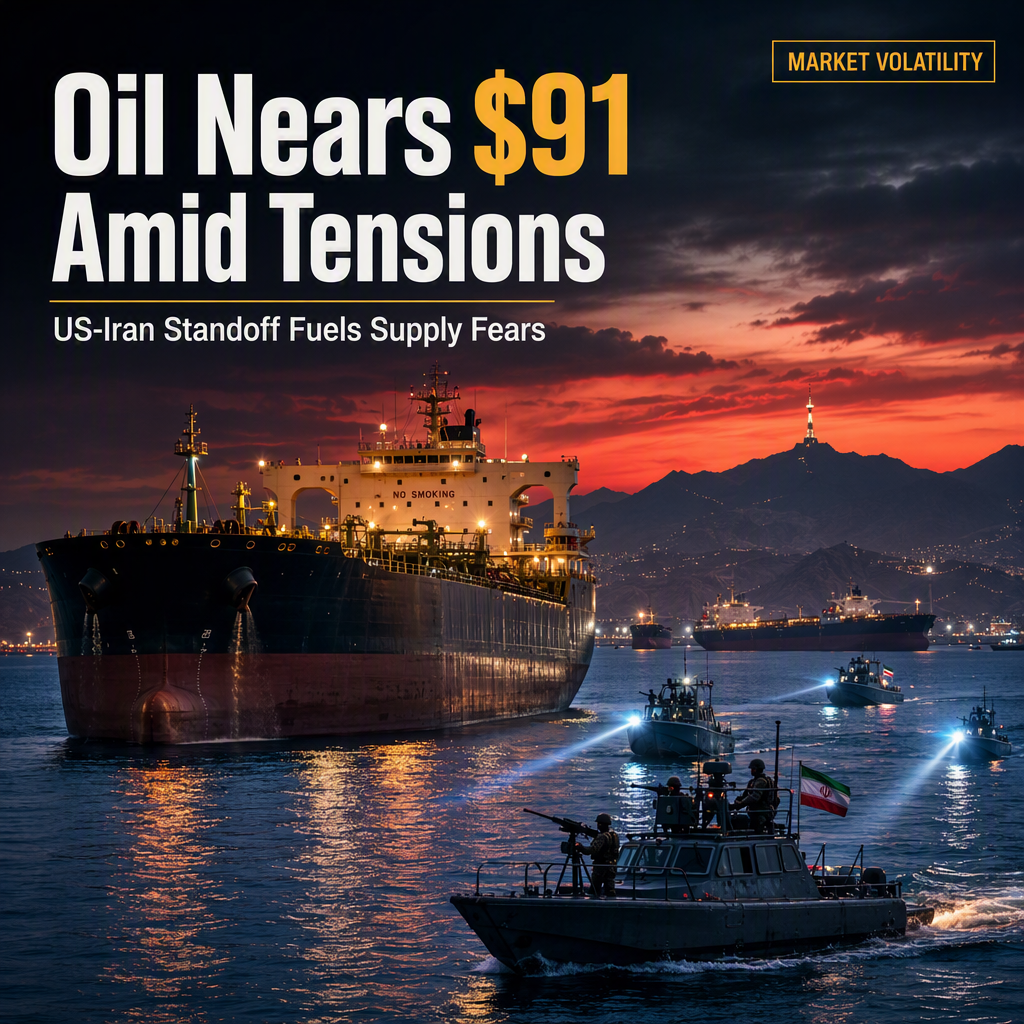
West Texas Intermediate (WTI) crude oil prices surged on Thursday, reaching session highs just below $91.00 per barrel, marking an increase of nearly 10% for the week to date [1]. This sharp rise follows renewed hostilities between the United States and Iran, which have heightened fears of a broader conflict in the Middle East that could further disrupt crude exports from Gulf countries [1]. US President Donald Trump issued a warning to Iran, stating that the US could strike Iran 'at a much harder and higher level' in response to accusations from Tehran that US military strikes targeted a civilian wedding, resulting in four deaths and dozens of injuries [1].
Amid these geopolitical tensions, oil traffic through the Strait of Hormuz remains severely restricted. While US Energy Secretary Chris Wright claimed that more than 17 million barrels of oil crossed the strategic corridor on Monday—a record since the war began in late February—data from ship tracking service Kpler contradicts this, reporting only five ships crossing Hormuz on the same day. This represents a 50% decline from ten days prior and is a fraction of the pre-war average of 130 ships per day [1].
Further supporting the upward movement in oil prices, the US Energy Information Administration (EIA) reported a significant drawdown in commercial crude oil inventories. Stocks declined by 4.45 million barrels in the last week of August, far exceeding the 1.1 million barrel drawdown forecasted by market analysts and reversing a modest 0.095 million barrel increase in the previous week [1].
The combination of escalating geopolitical risks, constrained supply routes, and declining inventories has contributed to the bullish sentiment in the oil market. Market participants are closely monitoring the situation for further developments that could impact global oil supply and prices [1].
CONCLUSION
WTI oil prices have climbed sharply due to renewed US-Iran tensions, restricted traffic through the Strait of Hormuz, and a larger-than-expected drawdown in US crude inventories. The market is reacting strongly to these supply risks, with prices nearing $91 per barrel and volatility likely to persist as the situation evolves.