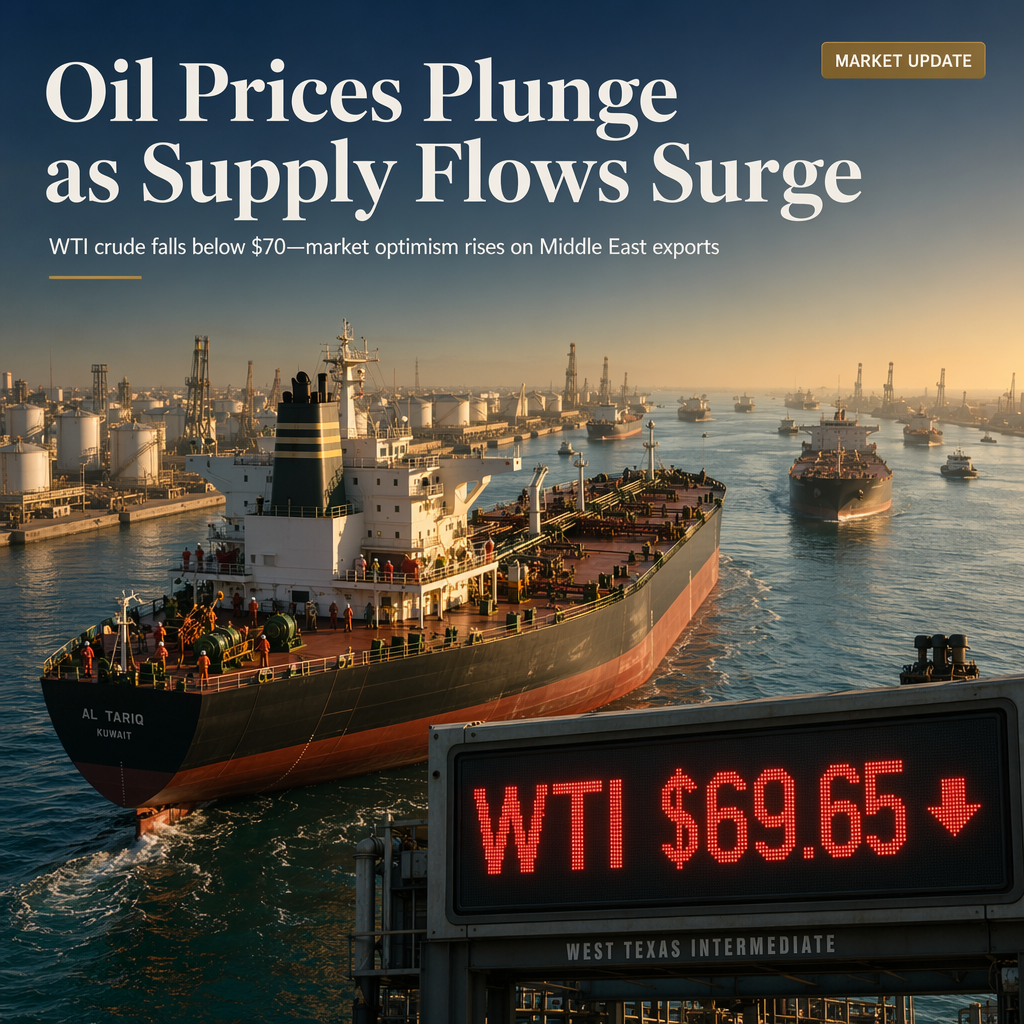
West Texas Intermediate (WTI) crude oil prices continued their downward trend on Friday, with the US benchmark trading at $69.65 per barrel, marking the lowest level since February 27. This decline extends a more than 30% drop in WTI prices since late May. The sell-off has been driven by a partial reopening of the Strait of Hormuz and growing market expectations of increased oil supply from Middle Eastern countries, which are counterbalancing concerns about rising demand as the western holiday season begins [1].
US Energy Secretary Chris Wright stated earlier in the week that crude oil flows through the Strait of Hormuz have returned to pre-war levels, with approximately 20 million barrels passing through the key waterway on Wednesday. Wright also noted a significant increase in oil exports from Venezuela, administered by the US since the capture of former president Nicolas Maduro, and suggested these exports could double by the end of US President Donald Trump’s term in 2029. This anticipated increase in supply has contributed to downward pressure on oil prices [1].
Despite the resumption of regular flows, it is expected to take weeks for crude oil shipments to fully normalize after the nearly three-month closure of the Strait of Hormuz. Nevertheless, investors remain optimistic that higher supplies from Gulf countries, along with additional Iranian exports following a US waiver during the ceasefire, will help quickly replenish depleted global oil reserves [1].
CONCLUSION
WTI crude oil prices have fallen sharply, driven by the restoration of Middle East supply routes and expectations of increased exports from both the region and Venezuela. The market is responding to these supply-side developments with a significant price decline, reflecting optimism about a swift recovery in global oil inventories.