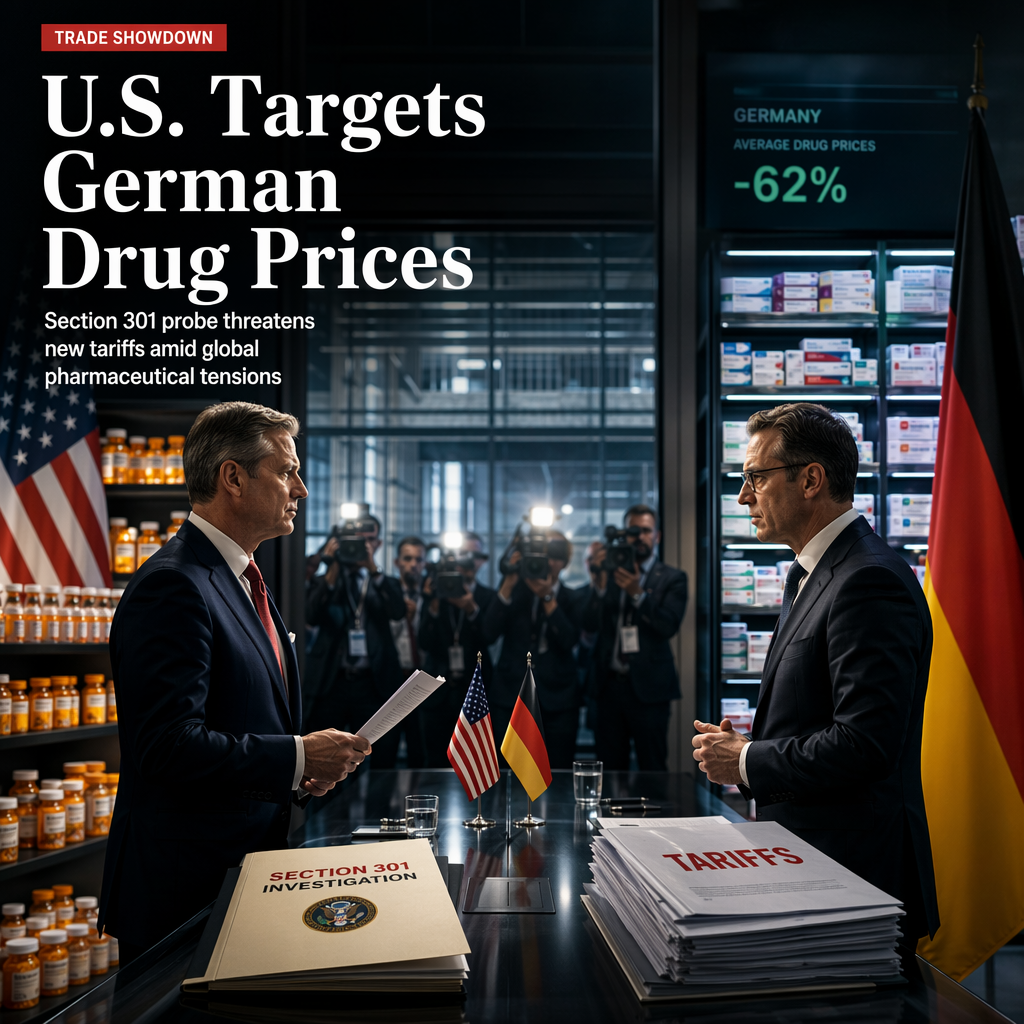
On June 18, the Trump administration initiated a major investigation into German drug pricing practices, targeting what it describes as Germany's 'persistent underpayment for innovative pharmaceutical products' developed in the United States [1]. U.S. Trade Representative Jamieson Greer announced the investigation after Germany proposed paying even less for American-developed drugs, a move that has drawn criticism from the administration [1]. The investigation is being conducted under Section 301 and is expected to continue into the fall, with a public hearing scheduled for September 22 [1].
The article highlights that Germany, like many European countries, has long required pharmaceutical companies to sell drugs at steep discounts, resulting in significantly lower prices for German consumers compared to Americans [1]. According to the source, Americans pay up to four times more than Germans for the most expensive drugs, despite both countries accessing the same medicines [1]. The average cost for U.S. companies to bring a new pharmaceutical to market is cited as $2.7 billion, and the administration argues that Germany's pricing policies unfairly shift these costs onto American consumers and threaten U.S. innovation and jobs [1].
If the investigation determines that Germany's actions are unfair, the Trump administration may impose tariffs on German goods in response [1]. German leaders have expressed outrage at the investigation, warning that it could jeopardize broader trade negotiations between the United States and the European Union [1]. The article suggests that the Trump administration is unlikely to back down without securing a better deal for Americans [1].
CONCLUSION
The Trump administration's Section 301 investigation into German drug pricing marks a significant escalation in trade tensions, with the potential for tariffs if Germany is found to be acting unfairly. The outcome could impact both pharmaceutical markets and broader U.S.-EU trade relations, as the administration seeks to reduce drug costs for Americans and address perceived inequities in international pricing.