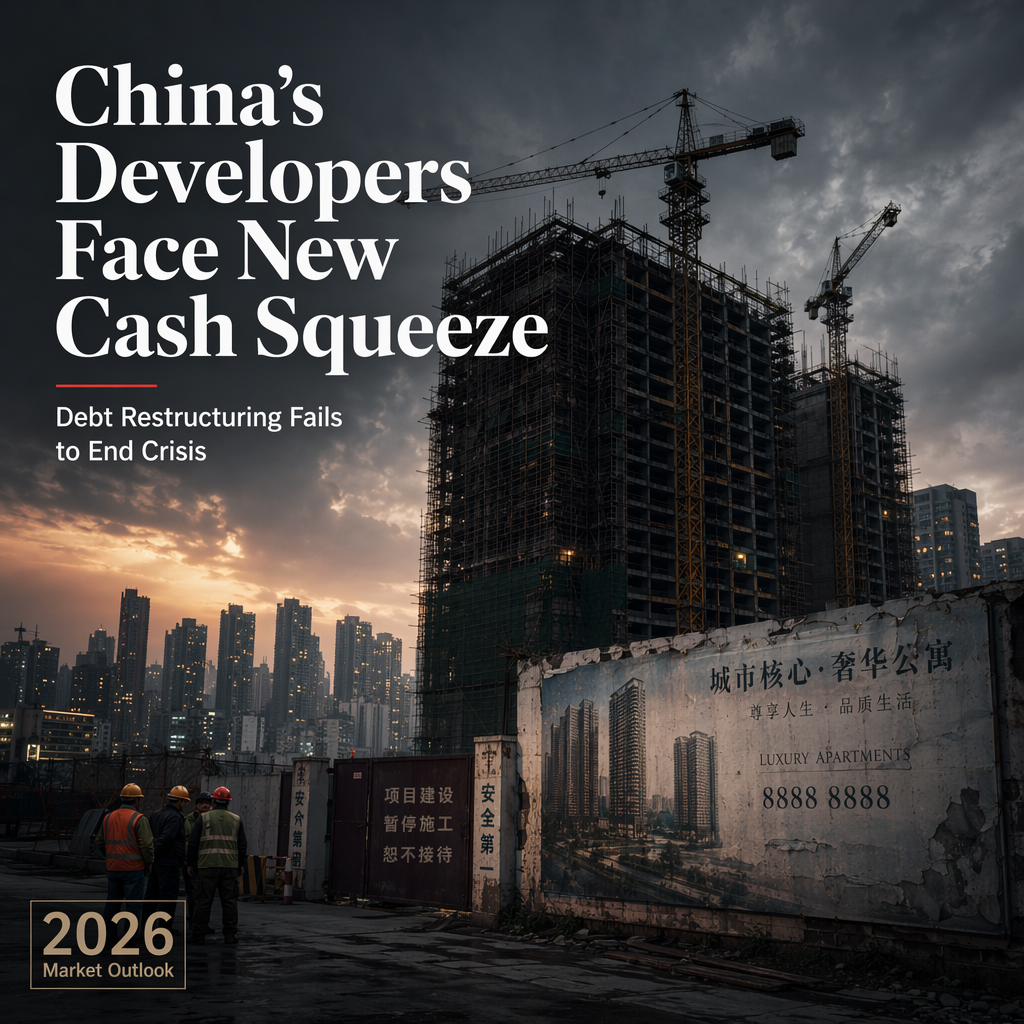
Chinese private property developers that previously restructured their debt are now experiencing a fresh liquidity squeeze in 2026, as the ongoing downturn in the property market continues to strain their finances [1]. Despite earlier debt restructuring efforts following the market crisis in 2021, these developers are still grappling with cash flow pressures due to the lack of sustained recovery in property sales and prices [1]. This has raised concerns about further defaults and instability within the sector [1].
Market analysts highlight that the liquidity crunch is being worsened by cautious lending from banks and a reduction in alternative financing channels [1]. An analyst familiar with the sector stated, "The challenges facing Chinese property developers are far from over. Without a turnaround in market sentiment or more robust policy support, liquidity risk will remain elevated" [1].
The current situation follows a series of high-profile defaults and debt restructuring deals since 2021, with many developers having completed restructuring agreements with creditors [1]. However, the continued weakness in sales and limited access to new funding have left these companies vulnerable to renewed financial stress [1].
As the property market downturn persists, the article notes that further support from the government or a rebound in property transactions will be critical to alleviating liquidity pressures for China's private developers [1].
CONCLUSION
China's private property developers are facing renewed liquidity challenges despite previous debt restructuring, as weak sales and limited financing options persist. Market analysts warn that without improved sentiment or stronger policy support, liquidity risks will remain high. The sector's stability hinges on government intervention or a recovery in property transactions.