
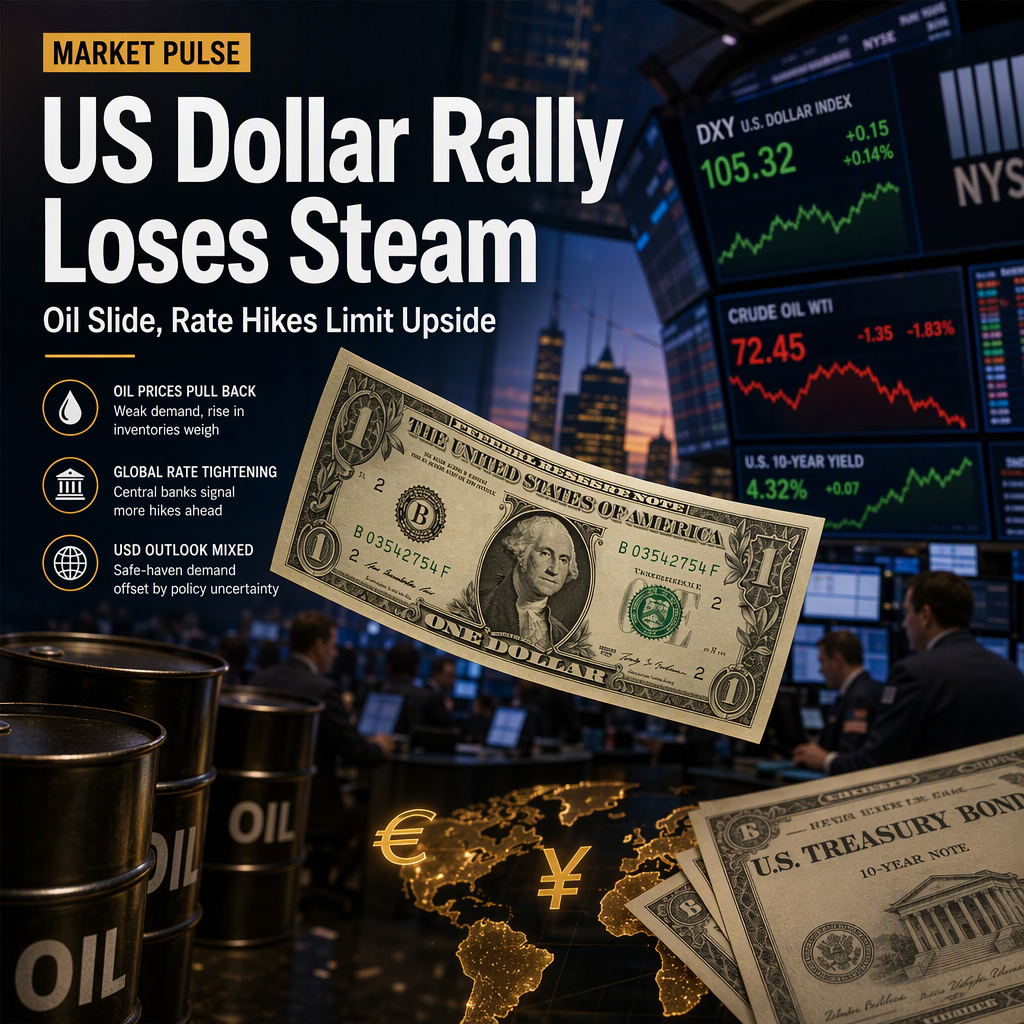
Brown Brothers Harriman’s (BBH) Elias Haddad observes that the US Dollar's recent rally has lost momentum, primarily due to a pullback in crude oil prices and easing global bond sell-offs. The oil price decline was triggered by reports of US and Iranian negotiators considering a seven-day deal to reopen the Strait of Hormuz, which in turn reduced pressure on global bonds and dampened the USD rally [1].
Despite this, Haddad notes that the Dollar remains supported by widening US-G6 interest rate differentials. However, tightening monetary policy by other major central banks is limiting the divergence with the Federal Reserve, making it difficult for the Dollar to sustain a move above its June high [1].
Strong foreign demand for US securities is also providing underlying support for the Dollar. In the twelve months to July, foreign investors accumulated $1,754 billion of long-term US securities, including treasury bonds, corporate bonds, equities, and government agency bonds. This figure is more than twice the -$743 billion US trade deficit, highlighting robust demand for USD assets [1].
Overall, while US economic growth outperformance and foreign appetite for US securities offset some of the constraints, BBH suggests that the Dollar's upside is likely to remain limited due to global central bank tightening and the recent cooling of energy prices [1].
CONCLUSION
The US Dollar's rally has moderated as global rate tightening and a pullback in oil prices constrain its upside. Strong foreign demand for US securities continues to support the Dollar, but BBH expects it will struggle to surpass its June high. Market sentiment remains cautiously positive, with medium impact expected as policy divergence narrows.