
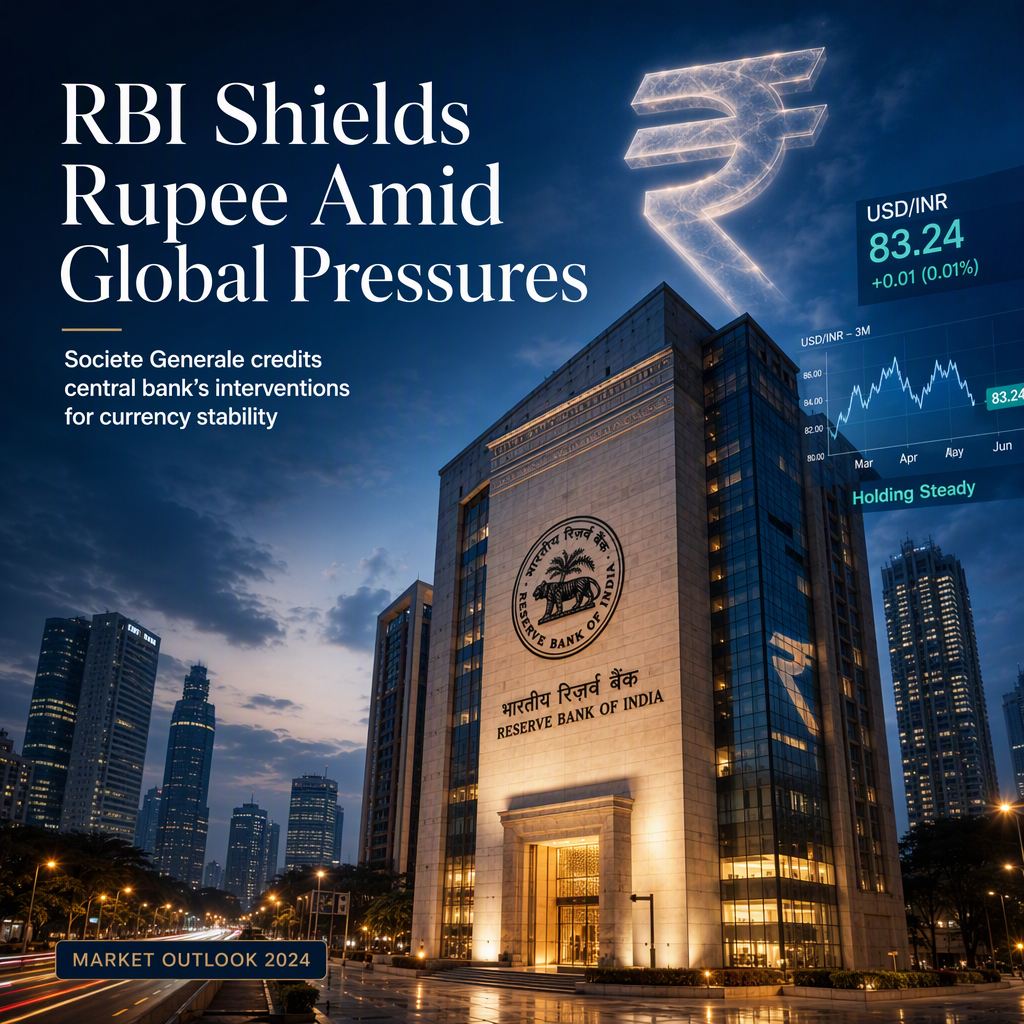
Societe Generale has observed that the USD/INR currency pair has repeatedly tested the 96.00 level but has failed to break higher, attributing this resilience to the Reserve Bank of India's (RBI) visible interventions in the foreign exchange market [1]. Deputy Governor Poonam Gupta expressed optimism, indicating that the rupee could stabilize and potentially appreciate from its current levels [1].
Domestic economic indicators were positive, with both manufacturing and services Purchasing Managers' Indexes (PMIs) showing improvement [1]. However, the Indian rupee continues to face headwinds from higher oil prices and rising global yields, which have exerted upward pressure on local interest rates. As a result, the 10-year Indian Government Bond (IGB) yield is now within 1 basis point of its May high of 7.143% [1].
While the RBI's interventions have capped losses for the rupee, the ongoing global macroeconomic pressures suggest continued volatility in local rates. The combination of supportive domestic activity and external challenges creates a mixed outlook for the currency and bond markets [1].
CONCLUSION
The RBI's active intervention has successfully prevented further depreciation of the Indian rupee against the US dollar, despite external pressures from oil prices and global yields. Positive domestic activity data and optimistic statements from RBI leadership suggest potential stability or appreciation for the rupee, but market participants should remain cautious given persistent global risks.