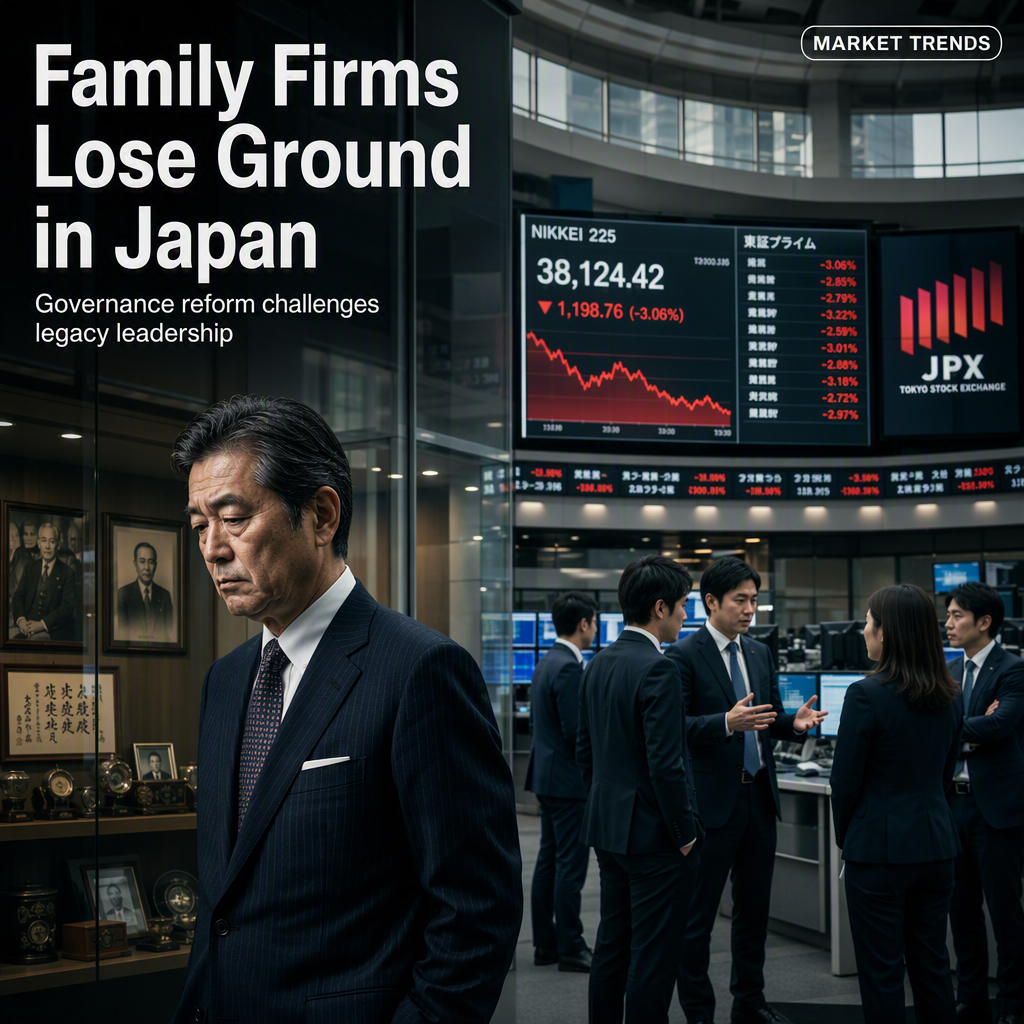
Shares of Japanese businesses where founding family members retain significant management control or major shareholdings have underperformed in recent years, as the advantages historically associated with such companies—like speedy decision-making—are increasingly offset by concerns about transparency and accountability to shareholders [1]. The founder of Nidec stepped down as chairman emeritus earlier this year following governance issues, underscoring rising worries about governance in companies with strong family ties [1].
Market analysis indicates that shares of family-run businesses have lagged behind their peers, particularly as investors weigh the risks of poor governance against the benefits of stable leadership [1]. Analysts warn that unless these companies adapt to new norms for board independence and shareholder rights, their stock performance will remain sluggish [1]. A Tokyo-based institutional investor commented, "The era of unchecked family control is ending. Markets are rewarding companies with clearer governance structures and penalizing those that resist reform" [1].
Technical indicators suggest continued underperformance for stocks dominated by founding families, especially as Japan's corporate governance code pushes for greater transparency and accountability [1]. Support for these stocks has weakened, with resistance levels forming as investors shift focus to companies embracing reform [1]. Trading sentiment remains cautious, and investors are advised to monitor developments in governance reform and consider potential risks associated with family-controlled firms [1]. Price levels for such stocks generally reflect investor skepticism, with limited upside unless substantial changes are made to governance practices [1].
CONCLUSION
Japanese family-owned firms are facing sluggish stock growth as corporate governance reforms gain momentum. Investors are increasingly favoring companies with transparent governance structures, and unless family-controlled businesses adapt, their shares are likely to continue underperforming. The market takeaway is clear: governance reform is now a key driver of investor sentiment and stock performance.