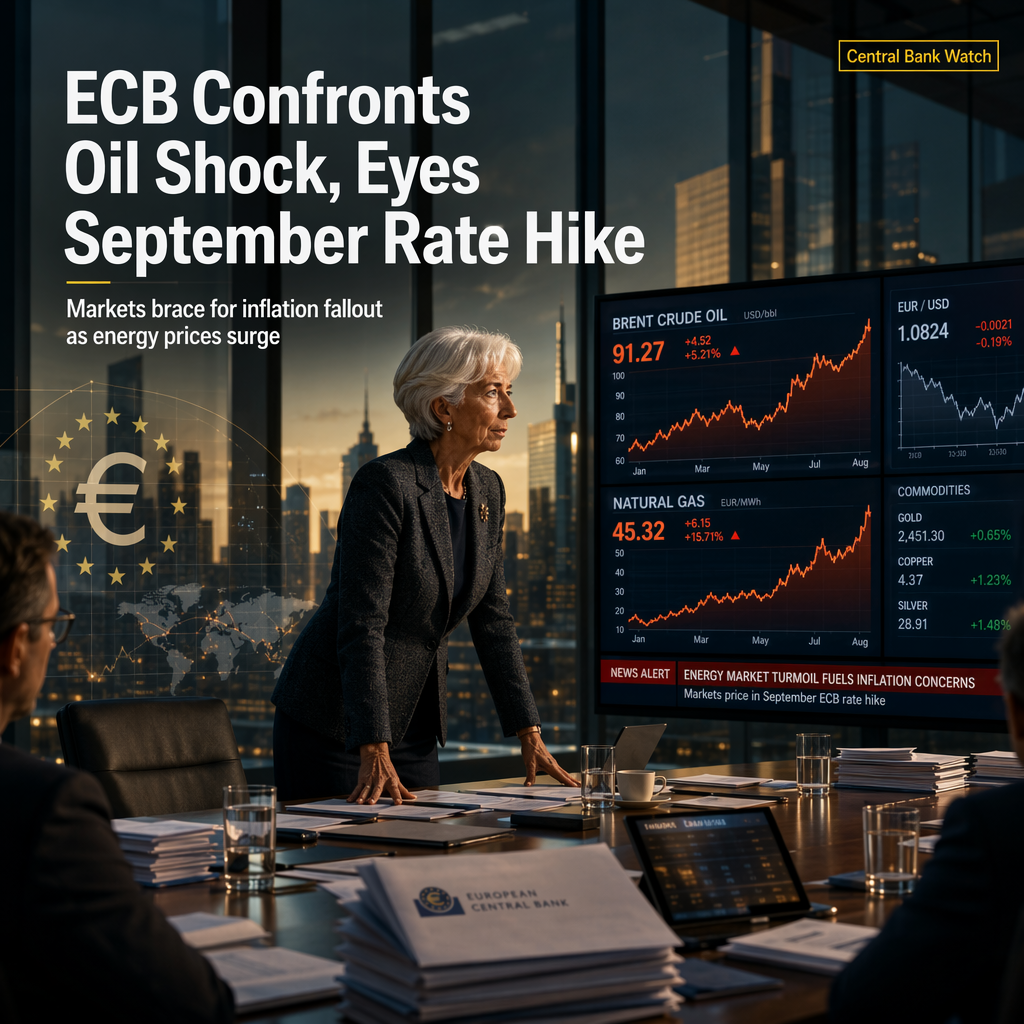
The European Central Bank (ECB) is confronted with renewed risks to its policy path following a sharp surge in oil and natural gas prices since its June meeting, reversing earlier optimism that stemmed from the US–Iran Memorandum of Understanding (MoU) [1]. Oil prices have spiked over $20 since the June council meeting, and natural gas is up 25% compared to June 11, when the ECB last raised its deposit rate by 25 basis points [1]. Societe Generale strategists highlight that money markets are now discounting two additional ECB rate hikes by early 2027, as energy shocks threaten to trigger second-round effects on non-energy goods and wages, although such effects have not yet materialized [1]. They expect policy to remain on hold at the current meeting but see a real risk of further tightening if Gulf tensions persist, with a hike in the deposit rate to 2.50% potentially inevitable in September [1].
Commerzbank’s Antje Praefcke echoes this outlook, noting that inflation is likely to stay just below 3% in the coming months, with core inflation potentially picking up [2]. She expects the next ECB rate move to 2.50% in September, aligning with market expectations, but cautions that the euro may not benefit much from the ECB meeting unless President Christine Lagarde delivers a hawkish surprise [2]. Both sources agree that the ECB will likely maintain a hawkish tone, with September seen as the pivotal moment for the next rate hike [1][2].
In related energy market developments, BNY’s Geoff Yu observes that the Norwegian Krone (NOK) should find demand from improved oil and gas terms of trade and a relatively hawkish Norges Bank. However, elevated holdings and modest FX purchases limit upside, as rising energy receipts reduce non-oil budget purchase needs, keeping Norges Bank’s support for NOK tepid despite increased daily buying [3]. Yu advises caution on NOK and suggests rotating into high-carry commodity exporters such as BRL, CLP, and ZAR, given the strength in energy and commodity markets [3].
Societe Generale strategists also report that South Africa is expected to implement a 25bp rate hike following a sharp June inflation surprise, with headline CPI at 5.0% and core at 4.1% [4]. Price pressures are broadening beyond energy, and medium-term inflation expectations are rising, reinforcing concerns about second-round effects and inflation persistence [4]. The hawkish stance of the South African Reserve Bank (SARB) could see USD/ZAR break below its 50-day moving average support, with markets watching for signals of additional tightening in September [4].
CONCLUSION
The ECB is likely to keep rates on hold for now but faces mounting pressure to tighten policy in September due to surging energy prices and persistent inflation risks. Market participants are pricing in further hikes, and similar hawkish moves are expected from other central banks, such as SARB. The overall sentiment is cautious, with energy-driven inflation shaping central bank outlooks and currency reactions across Europe and emerging markets.