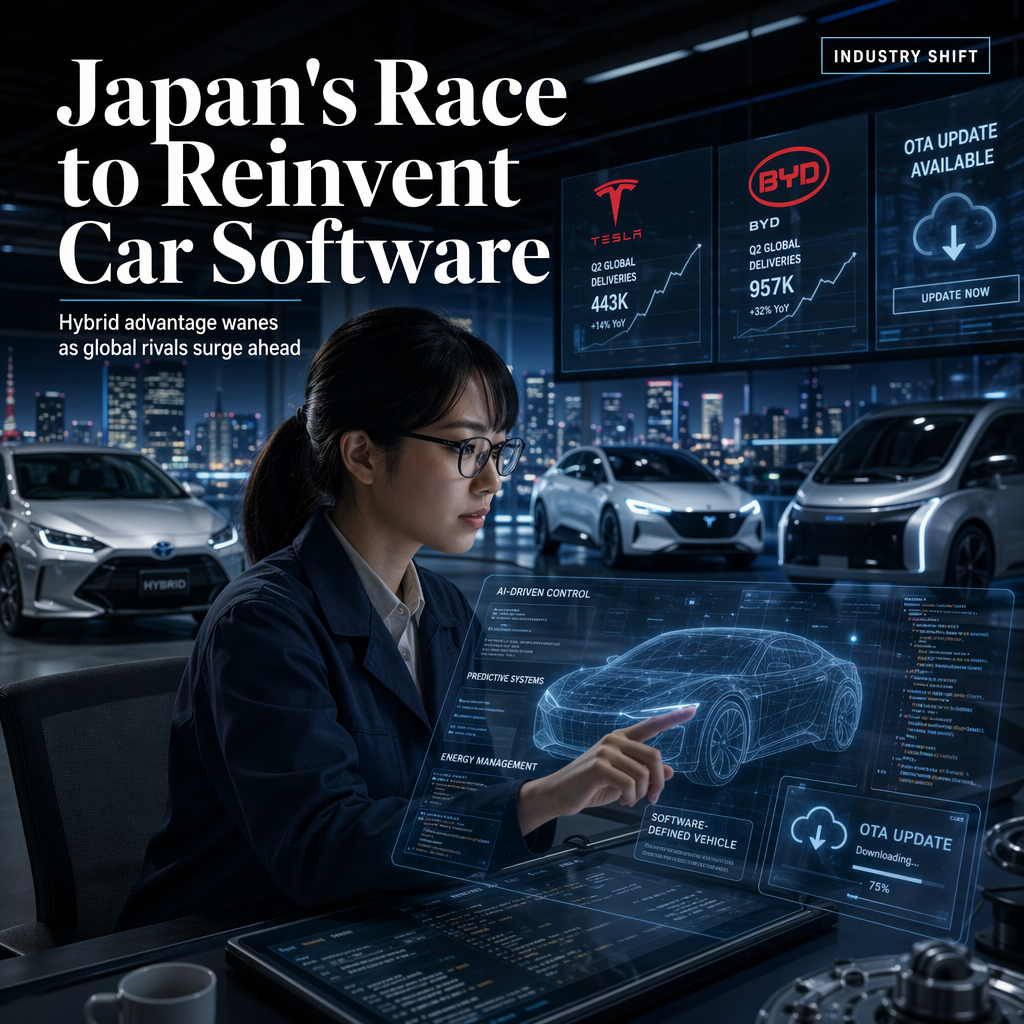
Japanese automakers, long recognized for their pioneering work in hybrid technology, are now facing a critical juncture as the global automotive industry pivots toward intelligent, software-driven vehicles. While their leadership in hybrids and fuel-efficient combustion engines has provided a competitive edge and bought them valuable time during the transition from internal combustion engines to electrification, industry experts warn that this advantage is at risk of becoming obsolete if not leveraged to accelerate software innovation [1].
The market is witnessing rapid advancements in intelligent vehicle technology, particularly from Chinese and American companies that are investing heavily in software capabilities. Features such as autonomous driving, over-the-air (OTA) updates, and AI-powered control systems are increasingly shaping consumer expectations, shifting the competitive landscape from hardware reliability to software sophistication and user experience [1].
Toyota Motor's Woven City project in Shizuoka prefecture stands as a testament to the company's commitment to future mobility solutions, serving as a 'living laboratory' for testing and developing new technologies. However, analysts caution that the true challenge lies in translating such experimental initiatives into mass-market vehicles that can compete with leading players like Tesla and Chinese electric vehicle manufacturers [1].
Market analysts further emphasize that Japanese automakers' reliance on hybrids as a transitional strategy could prove detrimental if not accompanied by aggressive investment in software development. The transition will require significant capital, a shift in corporate culture, strategic partnerships, and the recruitment of top software engineering talent to keep pace with global rivals [1].
CONCLUSION
Japanese automakers have a limited window of opportunity, secured by their hybrid technology leadership, to invest in software and maintain their global standing. Failure to pivot quickly and decisively toward intelligent vehicle development could erode their competitive advantage and shareholder value in the evolving automotive market [1].