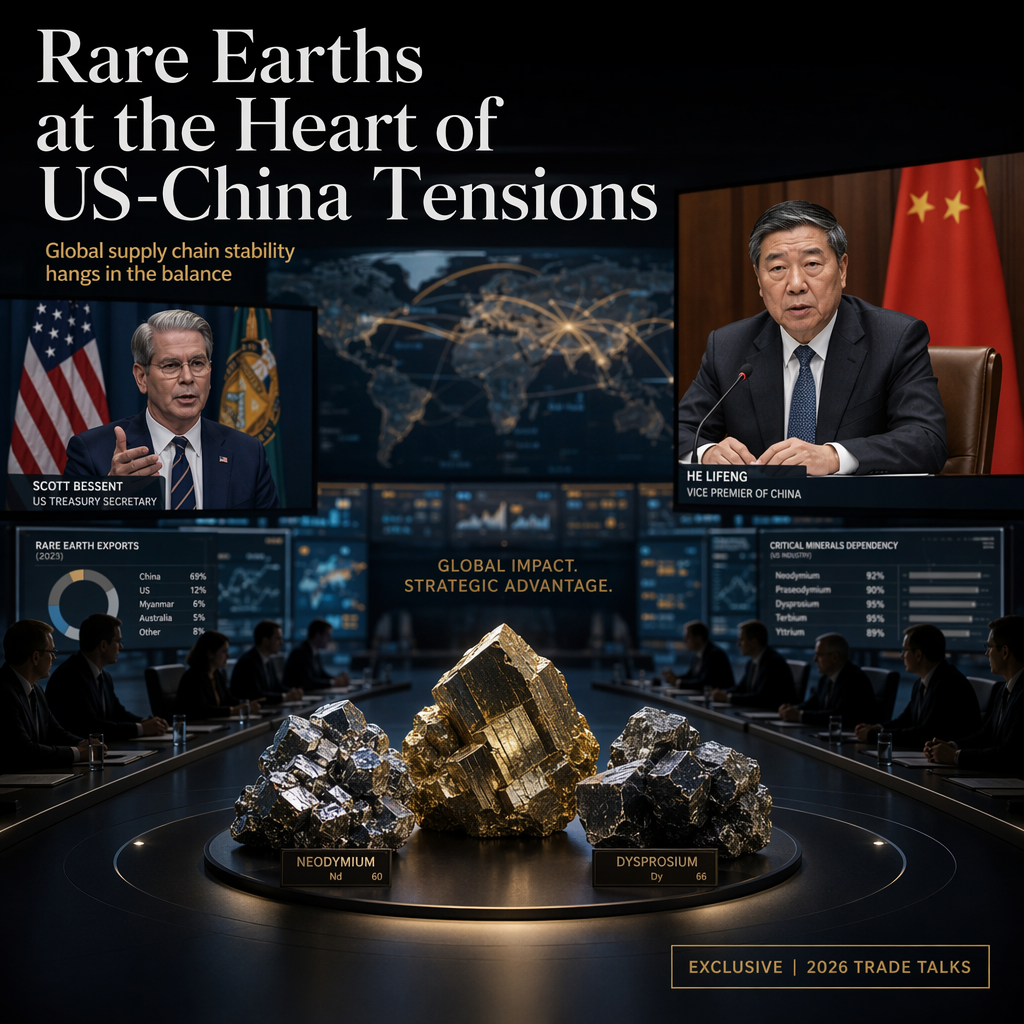
Top economic officials from the United States and China held a virtual meeting on July 30, 2026, to address ongoing tensions, with a particular focus on rare earths and export controls. U.S. Treasury Secretary Scott Bessent urged Chinese Vice Premier He Lifeng to 'fully meet' China's previous pledge regarding rare earths, emphasizing the necessity of stable supplies for global industry and technology sectors. Bessent specifically raised concerns about China's export restrictions and their impact on American manufacturers, especially those in high-tech and defense industries [1].
In response, Chinese officials expressed 'serious concerns' about recent American trade curbs, notably the U.S. ban on certain robotics exports to China. Vice Premier He Lifeng reaffirmed China's commitment to honoring rare earths agreements but attributed disruptions in bilateral trade to U.S. export controls. He Lifeng also warned that continued restrictions could escalate tensions and negatively affect both economies, urging Washington to reconsider its policies [1].
The meeting also addressed broader trade issues, with both sides recognizing the importance of preventing further deterioration in economic relations. The U.S. reiterated that rare earths are critical to national security and advanced manufacturing, while China stated its intention to maintain a stable rare earths supply chain, contingent on fair treatment in international trade [1].
Although no specific market data or price levels were disclosed, industry observers noted that ongoing restrictions could introduce volatility in rare earths markets. Analysts cautioned that supply disruptions might drive up prices for key materials such as neodymium and dysprosium, which are essential for electronics and electric vehicles. Market sentiment remains cautious as stakeholders await further developments from upcoming U.S.-China negotiations [1].
CONCLUSION
The virtual meeting between U.S. and Chinese officials highlighted persistent tensions over rare earths and export controls, with both sides expressing concerns about the other's policies. While China reaffirmed its commitment to stable supply, analysts warn that ongoing restrictions could lead to market volatility and higher prices for critical materials. Market participants are adopting a cautious stance as they monitor future negotiations.