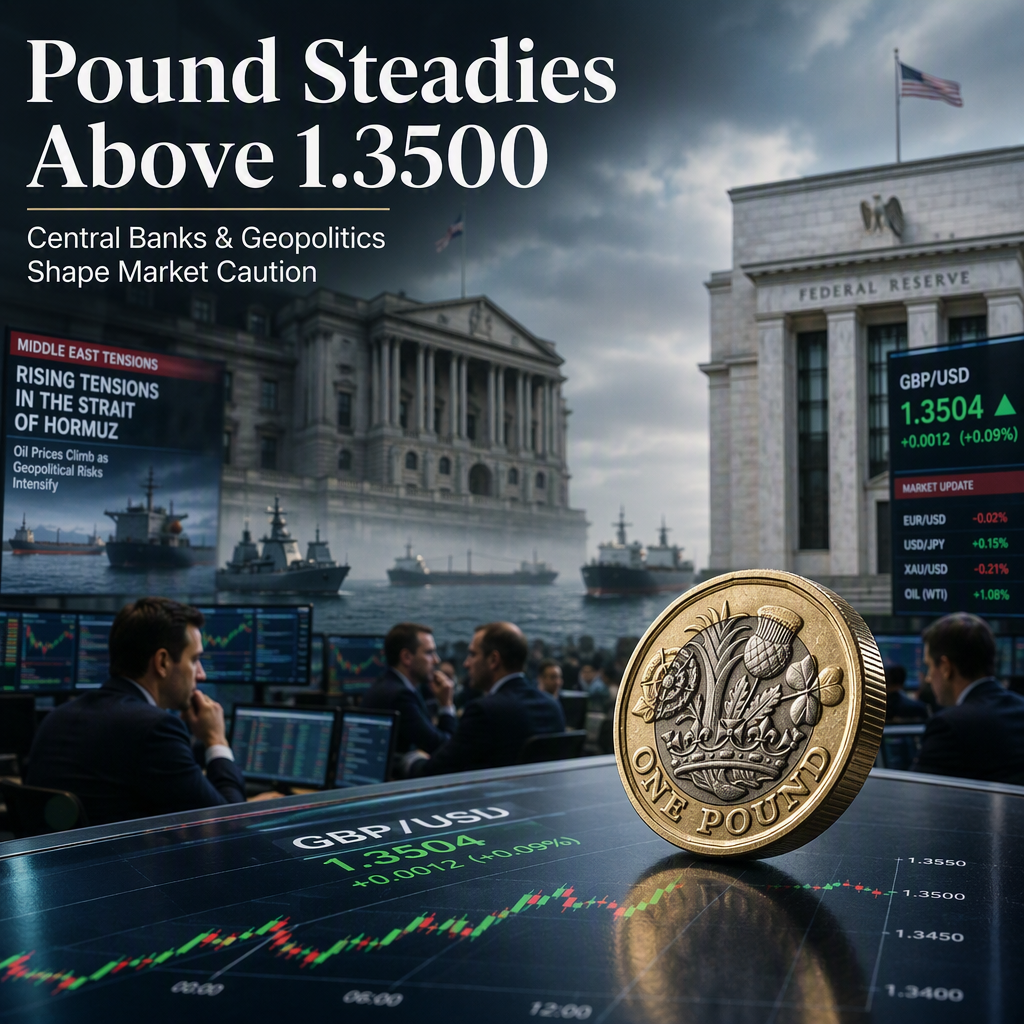
The British Pound (GBP) is consolidating above the 1.3500 level against the US Dollar (USD) at the start of the week, following a bounce from the monthly swing low on Friday. Market participants are showing caution and refraining from aggressive positioning ahead of significant central bank events, with the US Federal Reserve (Fed) and the Bank of England (BoE) set to announce their monetary policy decisions on Wednesday and Thursday, respectively [1].
Recent US inflation data has reinforced expectations that the Fed may raise interest rates by 25 basis points, which, combined with escalating tensions in the Middle East, is supporting the safe-haven USD and limiting gains for the GBP/USD pair. Notably, Yemen’s Iran-backed Houthi fighters claimed responsibility for drone and missile attacks on a military base in southern Saudi Arabia, and an Iranian cargo vessel was struck in the Strait of Hormuz. Additionally, a planned regional meeting between Gulf states and Iran regarding the Strait of Hormuz has been postponed, maintaining a geopolitical risk premium that benefits the USD [1].
On the UK side, the Pound has found some support from a better-than-expected GDP report, with the economy expanding by 0.4% in July versus expectations for no growth. However, the upside for GBP remains capped as markets anticipate the BoE will keep rates unchanged at 3.75%. Investors are now focused on the upcoming UK jobs report on Tuesday and the UK CPI report on Wednesday for further direction [1].
Technically, GBP/USD is trading just below the 200-period Simple Moving Average at 1.3522 and the 38.2% Fibonacci retracement at 1.3516, suggesting a mildly bearish near-term tone. A decisive move above these levels could open the path toward 1.3575 and 1.3671, while support lies at 1.3468, 1.3420, and 1.3352, with a more significant base at 1.3265 [1].
CONCLUSION
The GBP/USD pair is in a holding pattern above 1.3500 as traders await key central bank decisions and monitor geopolitical developments. While UK GDP data provided some support for the Pound, expectations of unchanged BoE policy and a strong USD amid global tensions are capping gains. Upcoming UK jobs and inflation data, along with central bank outcomes, will be critical for the next directional move.