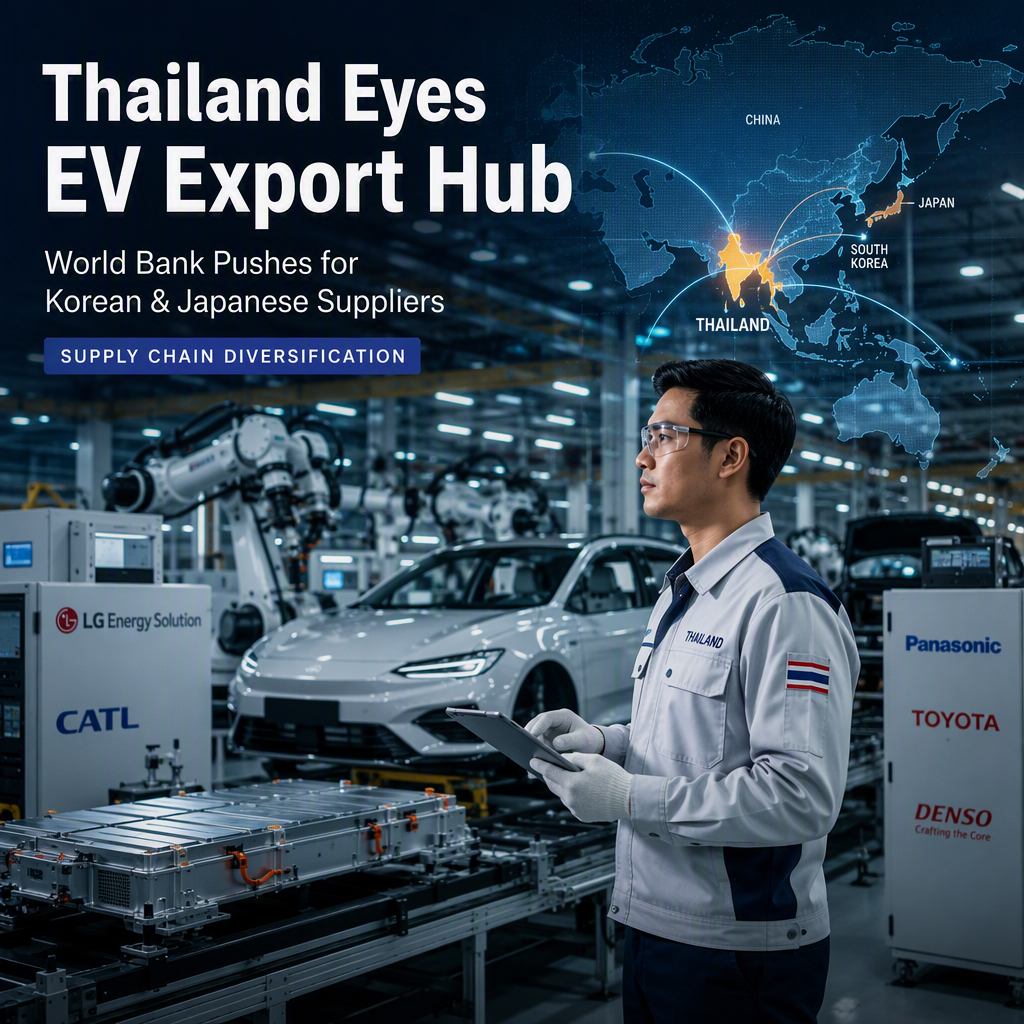
The World Bank has recommended that Thailand intensify its efforts to attract battery and component suppliers from South Korea and Japan in order to establish itself as a regional export hub for electric vehicles (EVs) [1]. In a report released Thursday, the World Bank emphasized the necessity for Thailand to build more diversified supply chains to support its economic growth and reduce reliance on a limited number of suppliers [1].
The report highlights that attracting advanced technology and investment from established EV supply chain leaders in Northeast Asia is critical for Thailand's ambitions in the global automotive market [1]. The World Bank suggests that such diversification would not only enhance Thailand's export competitiveness but also create jobs and promote sustainable economic development [1].
Thailand's Prime Minister Anutin Charnvirakul addressed the Bangkok Business Summit on September 3, underscoring the government's focus on the EV sector, although the article does not specify his statements regarding the World Bank's recommendations [1].
No specific market reactions, analyst opinions, or forward-looking statements beyond the World Bank's recommendations are mentioned in the article [1].
CONCLUSION
The World Bank's call for Thailand to attract Korean and Japanese EV suppliers underscores the nation's potential to become a regional export hub. Diversifying supply chains is seen as key to boosting competitiveness, job creation, and sustainable growth. Market impact is medium, with the focus on long-term structural improvements rather than immediate market movements.