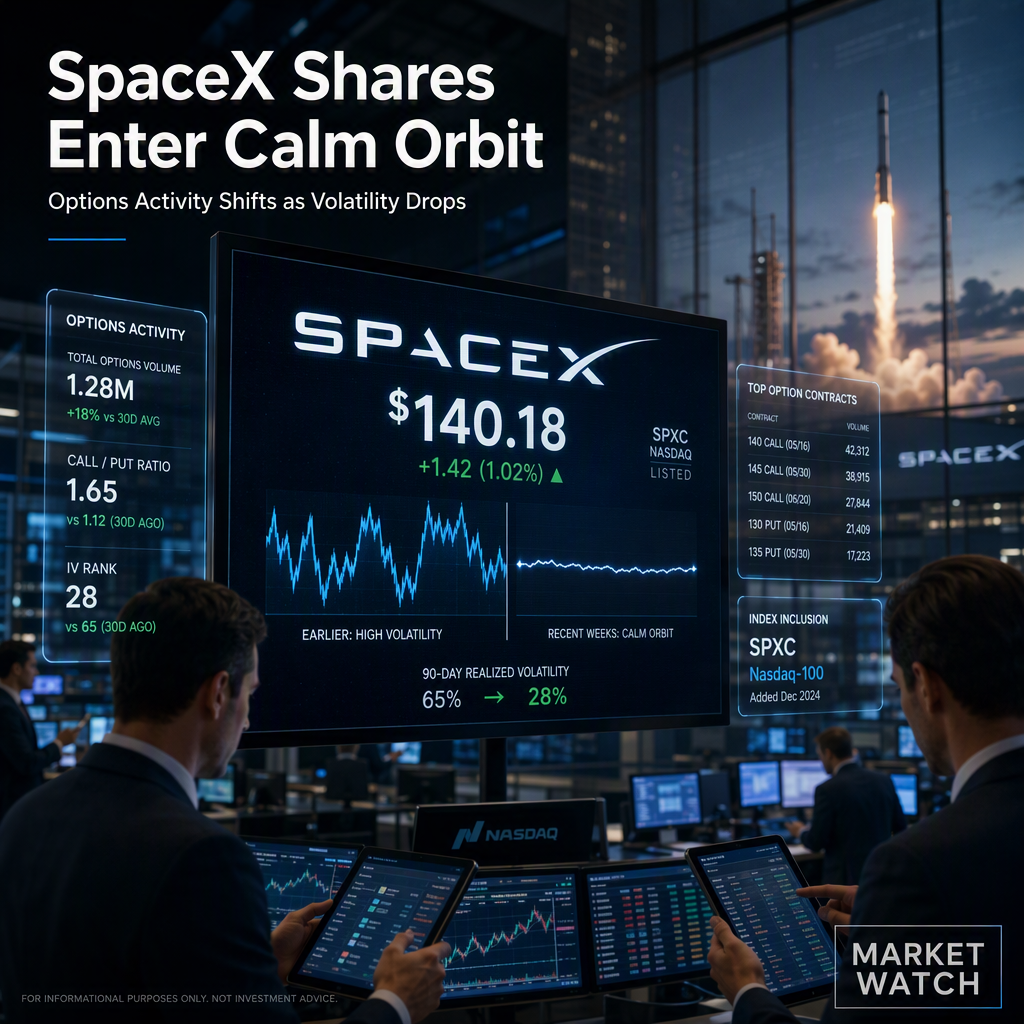
SpaceX shares, after an initial period of extreme volatility following their debut, have entered a phase of relative stability, trading within a $10 range around the $140 level for the past three weeks [1]. Implied volatility for SpaceX has dropped significantly to 57 from over 120 prior to its earnings report, according to ThinkOrSwim data, making it less volatile than at debut, when it would have been the most volatile stock in the S&P 500. Currently, SpaceX would not rank among the top 25 most volatile stocks in the index [1].
Options market activity reflects this new environment. Weekly options contracts expiring September 25 are pricing in a roughly $16 move, or about an 11% implied swing, which is lower than the expected moves for other large-cap stocks such as Intel, Robinhood Markets, Corning, and Dell Technologies [1]. Open interest data from Barchart shows more open put contracts than calls, with a put/call open interest ratio of 1.1, down from an all-time high of 1.2 earlier in the week as trading volume shifts towards calls [1]. On Thursday, approximately 500,000 options contracts were traded in SpaceX, with 335,000 being calls—168,000 of which were likely bought—compared to just 75,000 puts purchased, according to SpotGamma data. The top seven contracts by volume were all calls, with the most popular being the 144-strike expiring the next day, requiring a 3.5% rally in the stock for profitability [1].
Analysts and market participants are noting the impact of SpaceX's inclusion in major indexes like the Nasdaq-100 and Russell 1000, which is believed to have contributed to the stock's newfound stability. Noel Smith, CIO and founder of Convex Asset Management, commented that the current volatility 'feels pretty fair-ish,' and suggested that at current volatility levels (54 or 55), selling volatility might be a reasonable strategy [1]. However, he cautioned that just because volatility is at its lowest relative to itself does not necessarily make options purchases attractive [1].
Investors are advised to be cautious before making significant moves in either puts or calls, as implied volatility, while lower, still exceeds realized volatility, potentially making options appear deceptively inexpensive [1].
CONCLUSION
SpaceX shares have transitioned from high volatility to a period of relative calm, with options activity reflecting this shift. While implied volatility has dropped, analysts suggest caution, as options may not be as cheap as they appear. The market is watching closely to see if this stability persists or if volatility returns.