Crude Oil traded near $83.50 on Thursday, marking a gain of 2.52% and recovering more than $3.00 from a session low just above $80.00 recorded at 07:00 GMT. The price surge was particularly notable in the final twenty minutes before 18:00 GMT, when the barrel broke through its earlier ceiling in the $82.50 area and reached a high just short of $84.00 [1].
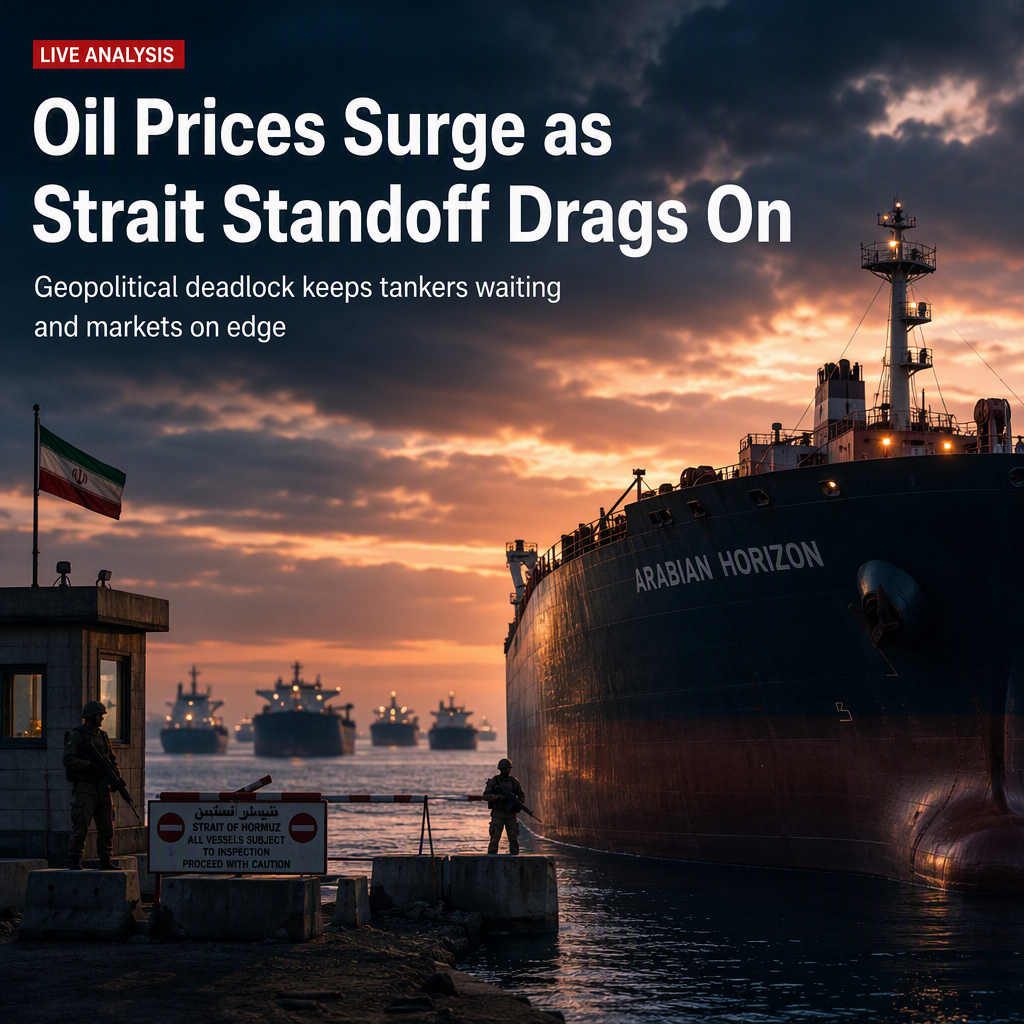
The market's movement was driven by geopolitical tensions surrounding the reopening of the Strait of Hormuz. The only framework for reopening, a June agreement signed at Versailles, remains contested, with both Washington and Tehran refusing to accept the other's interpretation. Washington has rejected the memorandum as too lenient and is instead applying economic pressure to cut Iran's remaining financial lifelines. In response, Tehran's Revolutionary Guard has stated that the Strait of Hormuz will remain closed until the United States resumes implementing the agreement, including export waivers and blockade relief [1].
Diplomatic efforts have so far failed to resolve the deadlock. Pakistan's army chief left Tehran without progress, Oman's foreign minister was criticized by Washington for conceding too much, and Qatar's prime minister arrived Thursday to discuss de-escalation rather than a deal. Meanwhile, the physical constraint on oil supply remains unchanged, with a tanker struck off Oman on Tuesday and the blockade still in full force [1].
From a technical perspective, resistance is noted just below $84.00, with further levels at the August peak above $86.00 and the July spike near $92.00. Support is identified at the 50-day EMA near $81.50, the session low just above $80.00, and the 200-day EMA near $78.50. The bias remains bullish above $81.50, with the daily Stochastic RSI near 76 and climbing, indicating upward momentum. The market's reaction suggests that the ongoing deadlock, without a clear reopening framework, is not leading to significant selling pressure on crude oil [1].
CONCLUSION
Crude oil prices have rebounded amid persistent geopolitical tensions and a lack of progress on reopening the Strait of Hormuz. The market remains bullish above key technical levels, with no immediate resolution in sight. Continued deadlock and physical supply constraints are likely to keep prices supported in the near term.