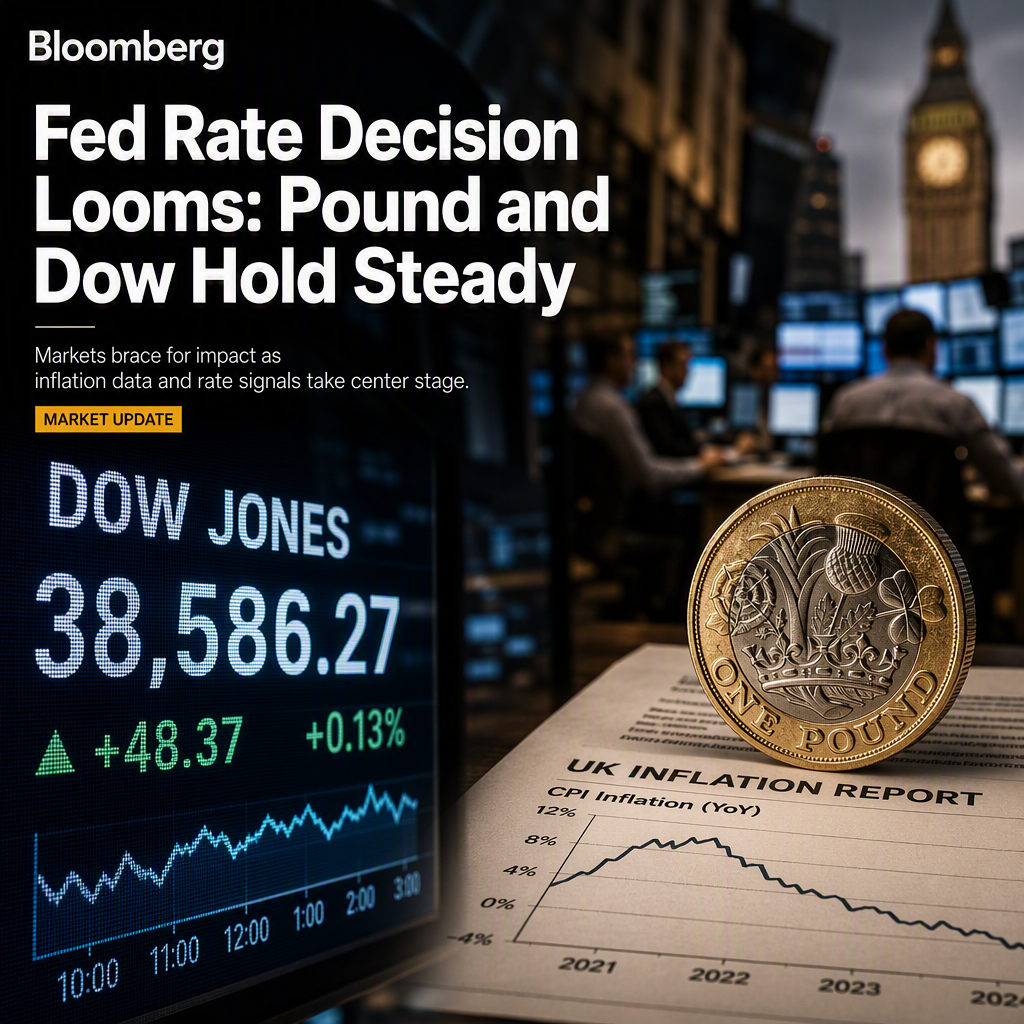
On Wednesday, both the British Pound (GBP) and the Dow Jones Industrial Average traded cautiously ahead of the Federal Reserve's anticipated rate hike, the first since 2023. The GBP hovered just above 1.3450, down 23 pips, after initially spiking on the August UK inflation release before reversing course and losing a total of 53 pips. UK consumer prices rose 3.1% year-on-year in August, up from 2.9% in July, matching forecasts. The core inflation rate remained at 2.6%, and services prices held at 3.4%. The inflation increase was primarily driven by motor fuel, with domestic inflation unchanged. The Bank of England's Bank Rate stands at 3.75%, while the US rate is expected to move from 3.50-3.75% to 3.75-4.00% at 18:00 GMT, ending a three-year pause. This shift means money held in Pounds will no longer offer a rate advantage over Dollars, contributing to the Pound's decline of roughly 230 pips from its August peak [1].
The Dow Jones Industrial Average traded just above 52,100, showing minimal movement as the market awaited the Fed's decision. The expected quarter-point hike is already priced in, with futures putting the odds at 100%. Retail sales in the US rose 1.2% in August, beating the 0.8% forecast and reversing July's 0.5% decline. Gas station sales increased 3.1%, and the control group (excluding fuel, cars, and building materials) rose 1.4%. Companies like Visa (V), Walmart (WMT), McDonald's (MCD), and Home Depot (HD) are positioned to benefit from strong consumer spending. The robust retail sales data supports the Fed's ability to raise rates further [2].
Futures markets and Fed projections diverge on the path of interest rates. Futures anticipate the US rate at 4.15% by December and 4.52% by summer 2027, while the Fed's last projections had it at 3.8% by year-end and 3.6% by the end of next year. British futures expect the Bank Rate to reach 4% by November and around 4.25% in early 2027, with both being marked up, but the Dollar is being marked up faster. The Bank of England is forecast to hold rates at its Thursday meeting, with a vote split of six to hold and three to raise, mirroring July's outcome [1][2].
The White House has advocated for the Fed to hold rates, but futures and market pricing overwhelmingly expect a hike. The release of forecasts alongside the Fed's decision is seen as the key market-moving element, as it will clarify the future trajectory of US monetary policy. Long-term yields are noted as a greater cost to Dow constituents than the immediate quarter-point hike [2].
CONCLUSION
Both the Pound and Dow Jones have responded cautiously to inflation and consumer data, with markets largely pricing in the expected Fed rate hike. The divergence between futures and official projections suggests ongoing uncertainty about the future path of interest rates. The release of the Fed's forecasts is anticipated to be the main driver of market movement following the rate decision.