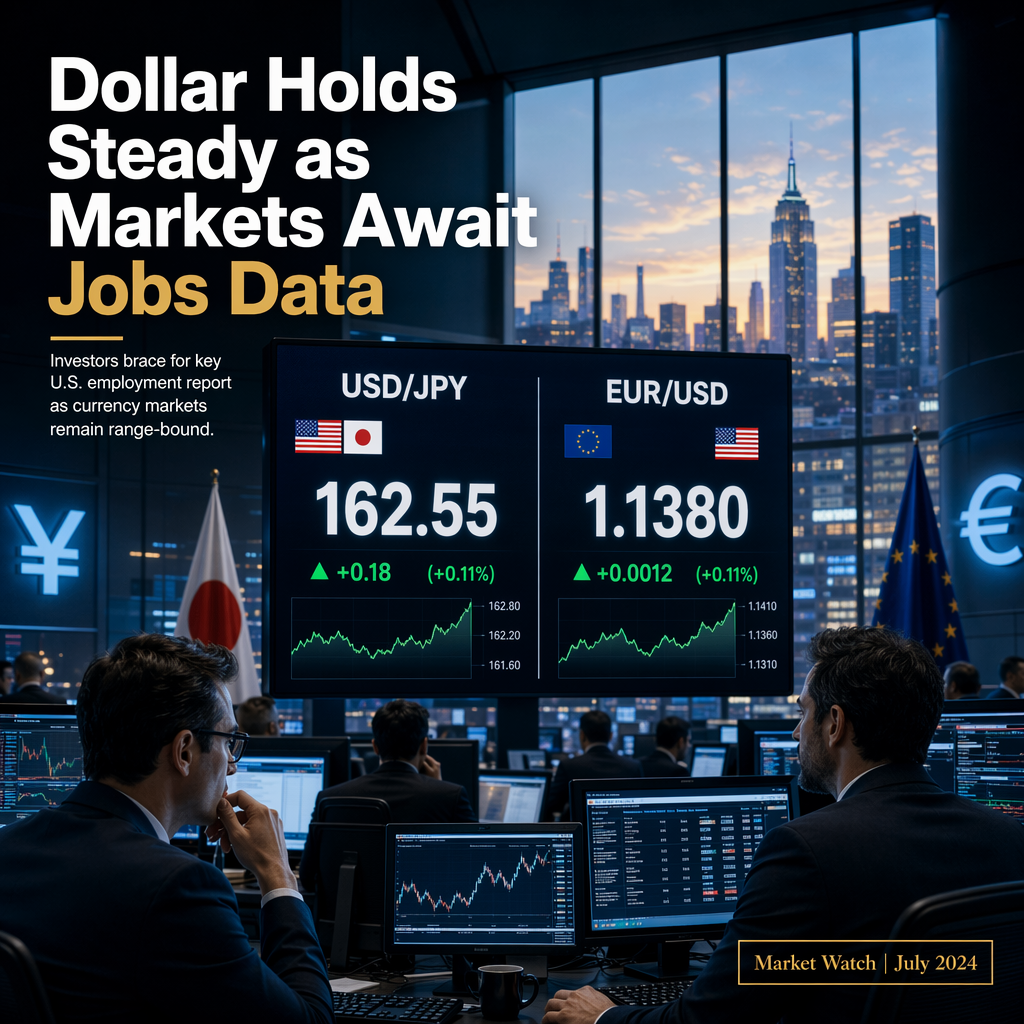
The US Dollar (USD) held steady against the Japanese Yen (JPY) near 162.55 during early Asian trading hours on Thursday, as traders awaited the release of the US June employment report later in the day [1]. Market participants remained cautious, with concerns about potential currency intervention from Japanese authorities capping the upside for USD/JPY. Japan's top currency diplomat, Atsushi Mimura, stated that intervention two months ago to support the yen had been effective, and Finance Minister Satsuki Katayama reiterated the government's readiness to act against excessive currency moves [1].
Recent US labor market data has supported the outlook for US economic growth and increased expectations for further Federal Reserve (Fed) rate hikes this year, which could underpin the Greenback against the Yen [1]. Economists expect the US Nonfarm Payrolls (NFP) to show 110,000 job additions in June, with the unemployment rate holding steady at 4.3% [1]. The ADP National Employment Report showed private employment rising by 98,000 jobs in June, below both the previous month's 112,000 and the market consensus of 113,000 [1]. Fed funds futures traders are pricing in nearly a 64% chance of a Fed rate hike by September, according to the CME FedWatch tool [1].
Meanwhile, the Euro (EUR) posted modest gains against the US Dollar, with EUR/USD trading near 1.1380 in early Asian hours on Thursday [2]. The USD edged lower against the Euro following less hawkish remarks from Fed Chairman Kevin Warsh, who at the ECB Forum on Central Banking declined to signal any policy move for July but emphasized the Fed's commitment to a 2% inflation target and central bank independence [2]. Krishna Guha at Evercore noted that Warsh's comments provided no fuel for speculation on a near-term July rate hike, suggesting the Fed does not currently see cause for an immediate hike [2].
On the Eurozone front, softer inflation data could limit further gains for the Euro. Eurozone inflation, as measured by the Harmonized Index of Consumer Prices (HICP), fell to 2.8% year-on-year in June from 3.2% in May, below the market expectation of 3.0% [2]. Core HICP inflation also slowed to 2.4% from 2.6%, under the consensus of 2.6% [2]. These figures may prompt traders to reduce bets on further European Central Bank (ECB) rate hikes [2].
CONCLUSION
Markets are in a holding pattern ahead of the US June employment report, with the US Dollar steady against both the Yen and Euro. Expectations for US rate hikes remain elevated, but softer inflation in the Eurozone and cautious Fed commentary are tempering currency moves. The upcoming jobs data is likely to be a key driver for the next market direction.