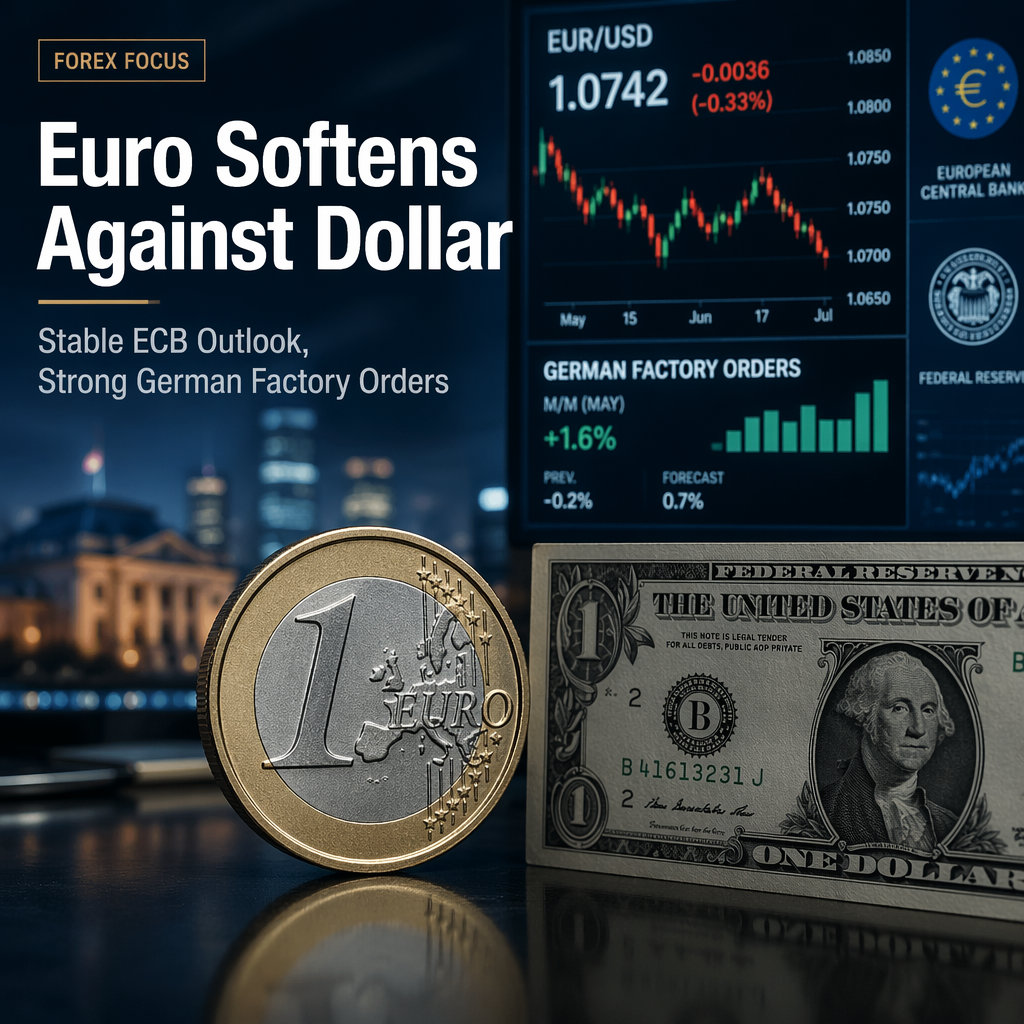
The Euro traded with a softer tone against the US Dollar, with EUR/USD quoted around 1.1418, marking a 0.2% decline versus the USD and positioning the Euro as a mid-performer among G10 currencies in an environment characterized by broad-based US Dollar strength [1]. Key economic data releases from the Euro area, including the Producer Price Index (PPI) and retail sales, were reported to be in line with expectations, while German factory orders delivered a positive surprise by exceeding forecasts [1].
Short-term rates in the Eurozone have shown signs of stabilization over the past week, and the rise in implied yields on medium-term contracts has contributed to the normalization of the yield curve, which had been inverted since mid-March [1]. Market participants are not anticipating any policy change at the upcoming European Central Bank (ECB) meeting scheduled for July 23, while pricing in a 50% probability of a 25 basis point hike at the subsequent meeting on September 10 [1].
From a technical perspective, the Euro's Relative Strength Index (RSI) has recovered from a deeply oversold late June reading below 30 to the low 40s, indicating a gentle drift back toward the neutral threshold at 50. The medium-term trend for EUR/USD remains largely neutral, with a flat range projected from mid-2025, bounded between 1.1300 and 1.2100. Near-term support is identified at 1.1380, with resistance above 1.1480 [1].
CONCLUSION
The Euro's modest decline against the US Dollar reflects stable ECB policy expectations and a normalization in the rates market, despite positive German factory orders. Market sentiment remains neutral to slightly bearish, with technical indicators suggesting limited directional bias in the near term.