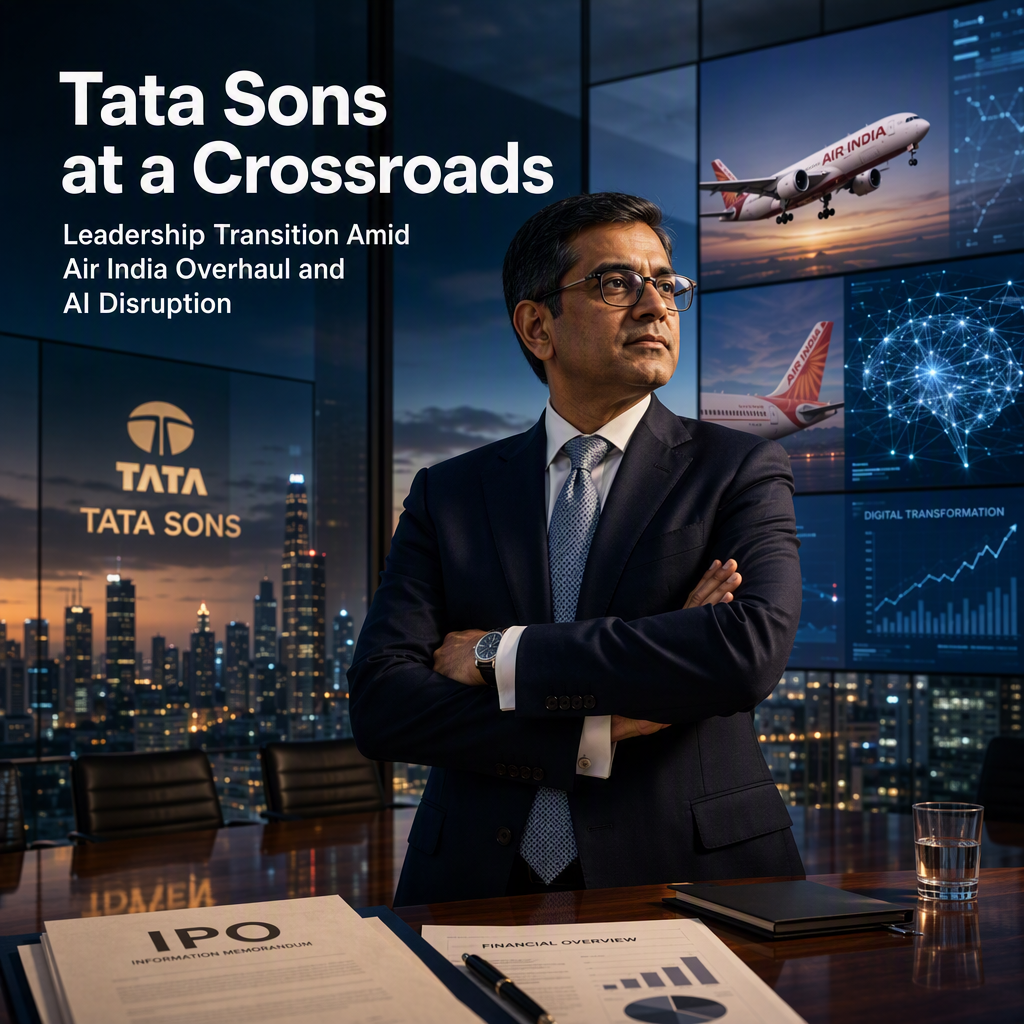
Tata Sons, one of India's largest conglomerates, is preparing for a leadership transition as Natarajan Chandrasekaran's tenure as chair comes to an end. Chandrasekaran, who became the first non-family member to chair Tata Sons in 2017, will be succeeded by a new leader who faces a complex set of challenges, according to industry analysts and market observers [1].
A primary focus for the incoming chair will be the ongoing turnaround of Air India. The company is expected to continue its overhaul, emphasizing operational efficiency, fleet modernization, and customer service improvements. Achieving financial stability and profitability at Air India remains a critical target, with analysts closely monitoring progress in cost management and revenue growth [1].
Another significant challenge is the rapid advancement of artificial intelligence technologies. Tata Sons must invest in digital transformation and innovation, integrating AI across its business portfolio. This includes addressing talent acquisition, cybersecurity, and regulatory concerns as AI becomes increasingly central to the conglomerate's operations and strategy [1].
The conglomerate also faces strategic decisions regarding the public offerings of its subsidiaries. Disagreements over IPO timing and execution have been cited as sources of internal friction. Market analysts emphasize the importance of clear communication with investors, strong governance, and transparent financial reporting to maintain confidence and maximize shareholder value [1].
Global expansion brings additional complexities, including geopolitical risks, currency fluctuations, and competition from multinational rivals. The next chair will need to strengthen risk management and pursue prudent acquisitions or partnerships to bolster Tata Sons' international market share. Furthermore, the leadership transition itself is significant, as the company seeks to balance the Tata brand's legacy with modern business practices [1].
A Mumbai-based market analyst summarized the situation: "The successor to Chandrasekaran will face an agenda that is both ambitious and fraught with complexity. Air India and AI are just the beginning. The conglomerate's ability to adapt quickly will determine its future growth trajectory" [1].
CONCLUSION
Tata Sons' upcoming leadership transition comes at a pivotal moment, with the new chair set to address major challenges including Air India's turnaround, AI integration, and capital market strategies. Market sentiment is cautious but attentive, as the conglomerate's ability to adapt and execute will be critical for future growth and investor confidence.