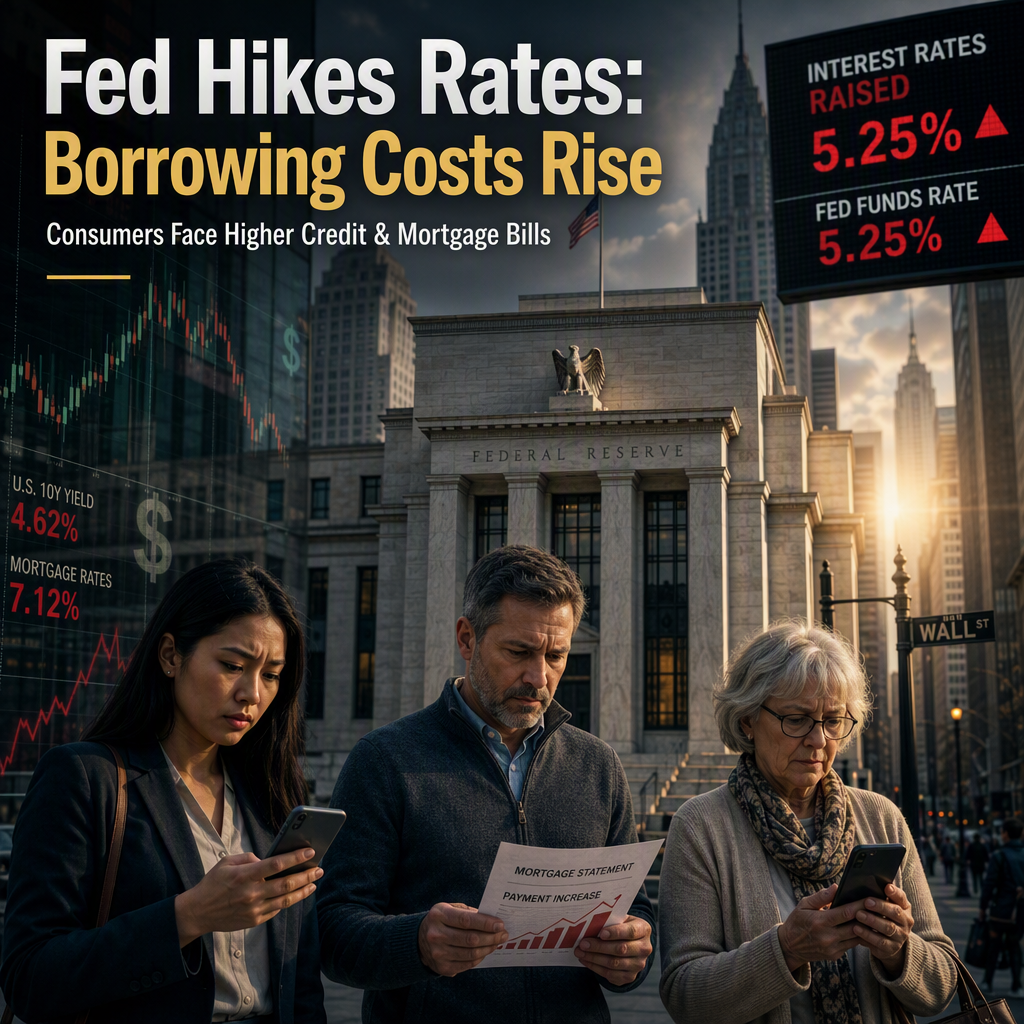
On September 17, 2026, the Federal Reserve raised its benchmark interest rate by 0.25% for the first time since 2023, aiming to slow inflation by making borrowing more expensive [1]. This increase will have immediate effects on American consumers, particularly in areas such as credit cards and mortgages. Credit card rates are expected to rise, making it more costly for consumers to carry existing balances, while those with adjustable-rate mortgages will see their monthly payments increase [1]. New mortgages will also come with higher interest rates, potentially making homeownership less affordable for buyers, and existing homeowners with variable-rate loans are advised to review their terms and consider refinancing [1].
According to Brian Cheung, the rate hike is intended to tamp down inflation by reducing spending, though the cost of food and gas may not decrease immediately; higher rates could eventually ease price pressures if demand slows [1]. Cheung recommends that consumers pay down variable-rate debt and shop for better loan and credit card rates [1]. Market analysts view the Fed's move as a cautious approach to managing inflation without derailing economic growth, and many are watching for signs of additional rate increases if inflation remains elevated [1].
Traders are monitoring bond market support and resistance levels, as yields have moved higher following the announcement. Technical indicators suggest that volatility may persist in the short term as investors digest the implications of the Fed's policy shift [1]. Overall, sentiment is mixed: while the rate hike aims to curb inflation, there is concern about its impact on household budgets and consumer spending power. Consumers are encouraged to track their expenses closely and remain vigilant about changes in interest rates and loan terms [1].
CONCLUSION
The Federal Reserve's 0.25% rate hike is expected to increase borrowing costs for consumers, particularly affecting credit cards and mortgages. While the move is designed to curb inflation, it may strain household budgets and contribute to market volatility in the near term. Analysts and consumers alike are advised to monitor further Fed actions and adjust financial strategies accordingly.